
991227 travellers read
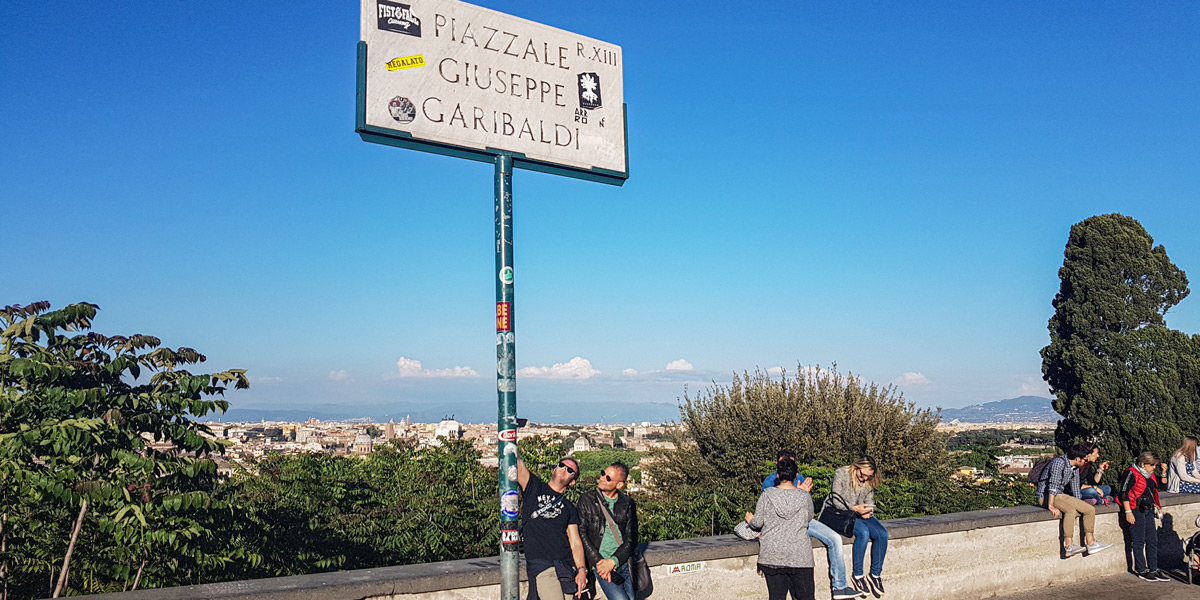
Piazzale Garibaldi is where several versions of the Janiculum meet. Runners cross the gravel at dawn. Families stop beside the monument on Sunday afternoons, and people gather along the parapet before sunset.
The broad city view is the obvious attraction, but many of its landmarks merge into the roofscape. A telephoto lens separates them. A short walk behind the statue also reveals a second view of St Peter’s dome that is easy to miss from the main terrace.
The Italian word piazzale usually describes a large open space rather than a traditional square enclosed by buildings. Here, two arms of the Passeggiata del Gianicolo meet on a panoramic terrace. Rows of marble busts along the promenade commemorate people associated with the Roman Republic and the Risorgimento.
Giuseppe Garibaldi occupies the centre. Emilio Gallori’s equestrian monument was unveiled on 20 September 1895, during events marking twenty-five years since Rome’s capture by the Kingdom of Italy.
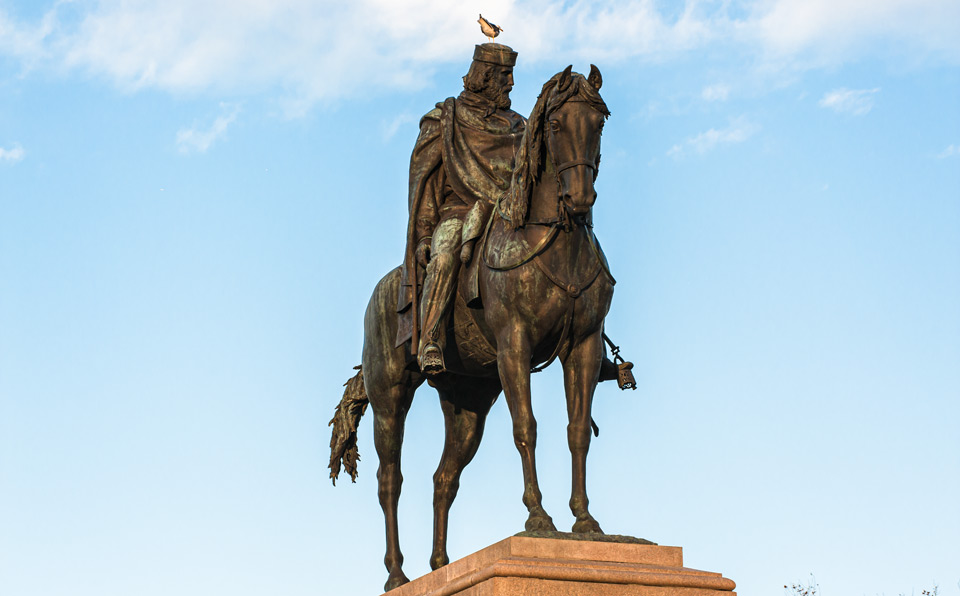
Reliefs and allegorical groups around the pedestal connect the defence of the Roman Republic in 1849 with the campaigns for Italian unification. Our guide to the Giuseppe Garibaldi monument explains the figures and inscriptions. From elsewhere on the piazzale, the statue works as an orientation point above the trees.
Near midday, conversation on the terrace is interrupted by one loud report from the slope below. The Cannone del Gianicolo fires a blank round at exactly noon.
Pope Pius IX introduced the time signal on 1 December 1847, so Rome’s church bells could follow one official reference. The ceremony moved to the Janiculum in 1904. Today the cannon stands in a small emplacement directly below Piazzale Garibaldi.
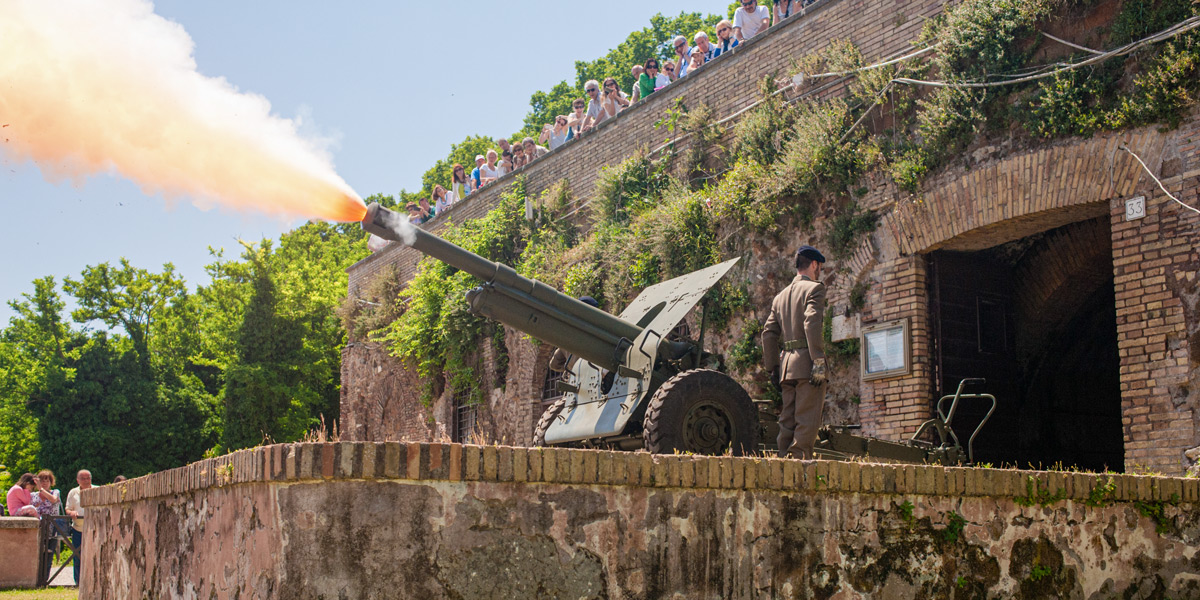
The soldiers return the gun to storage within minutes, and the noise on the piazzale resumes. The separate cannon guide explains the history of the ceremony and where to stand to watch it.
The main parapet gives a wide panorama of central Rome. Individual buildings become much easier to identify through a telephoto lens. Around 200 mm on a full-frame camera is enough to pull several landmarks clear of the roofs and atmospheric haze.
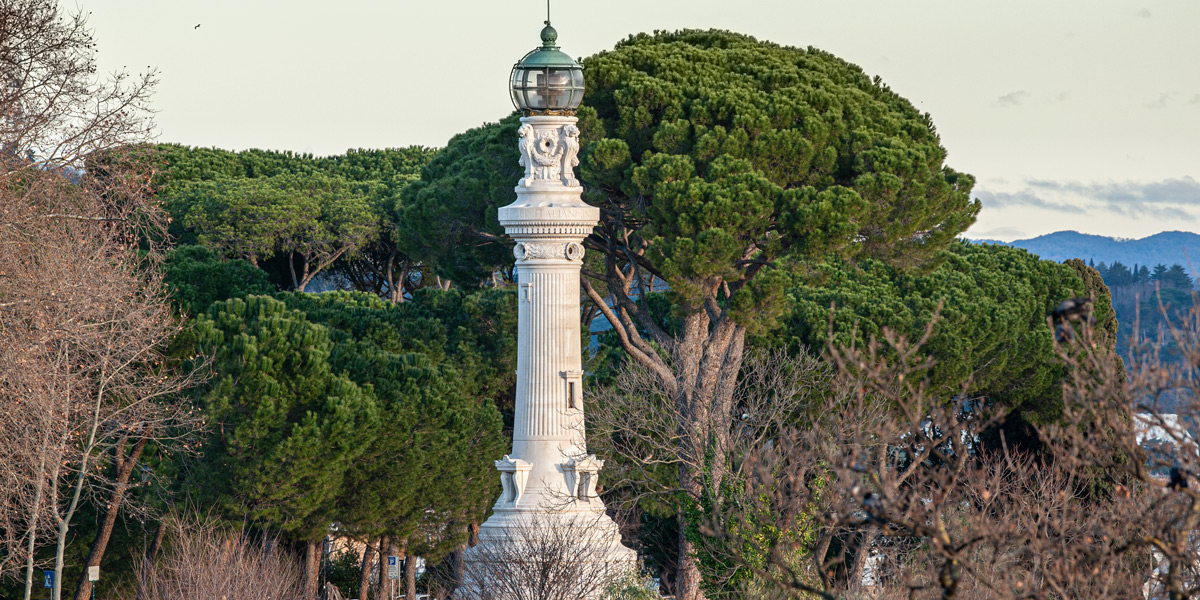
At the left edge of the promenade stands the Faro del Gianicolo. The white Botticino-stone lighthouse rises above the umbrella pines and ends in a glass lantern. Manfredo Manfredi designed it as a gift from the Italian community in Argentina. It was inaugurated in 1911, the fiftieth anniversary year of Italian unification.
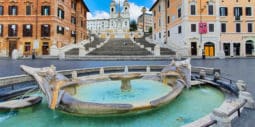
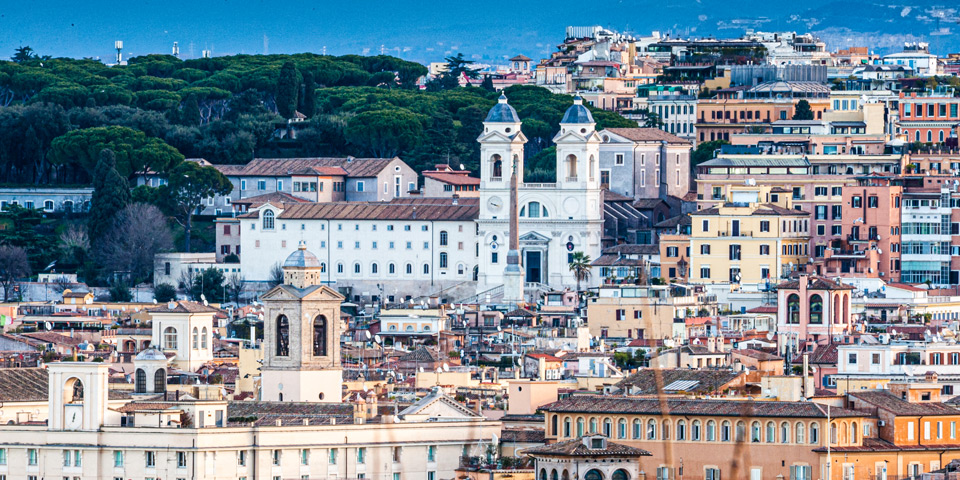
Across the city, the Pincian Hill rises behind the historic centre, and a telephoto reveals the twin bell towers of Trinità dei Monti above the Spanish Steps, with the obelisk visible between them.
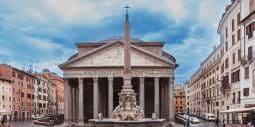
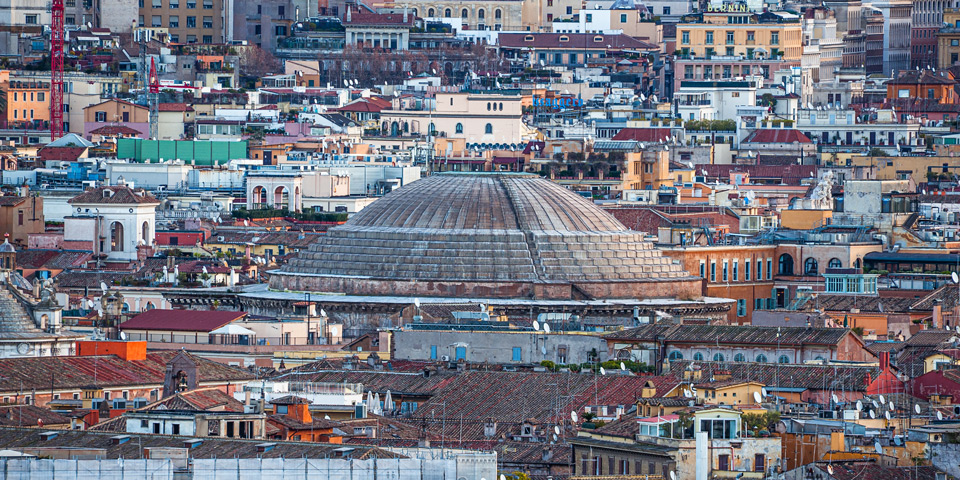
The Pantheon is harder to recognise. Its portico and pediment disappear behind intervening buildings, so only the stepped upper rings of the dome rise above the terracotta roofs. The current building took shape during Hadrian’s reign in the early second century. From the Janiculum, its most famous feature looks surprisingly close to the surrounding roofscape.
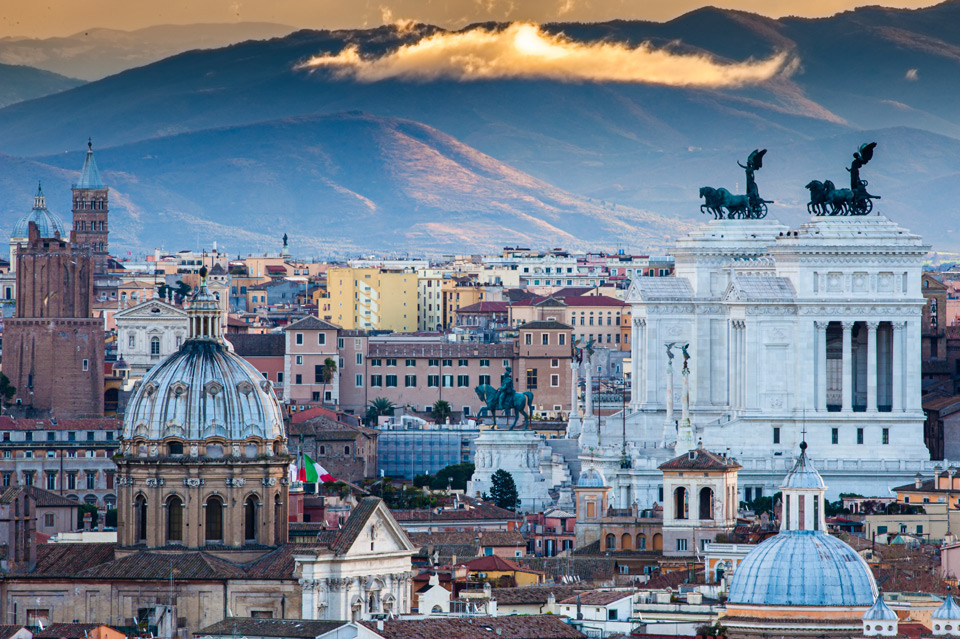
Farther right, the white marble mass of the Vittoriano is much clearer. A long lens separates its columns and the two bronze quadrigae from the bright silhouette.
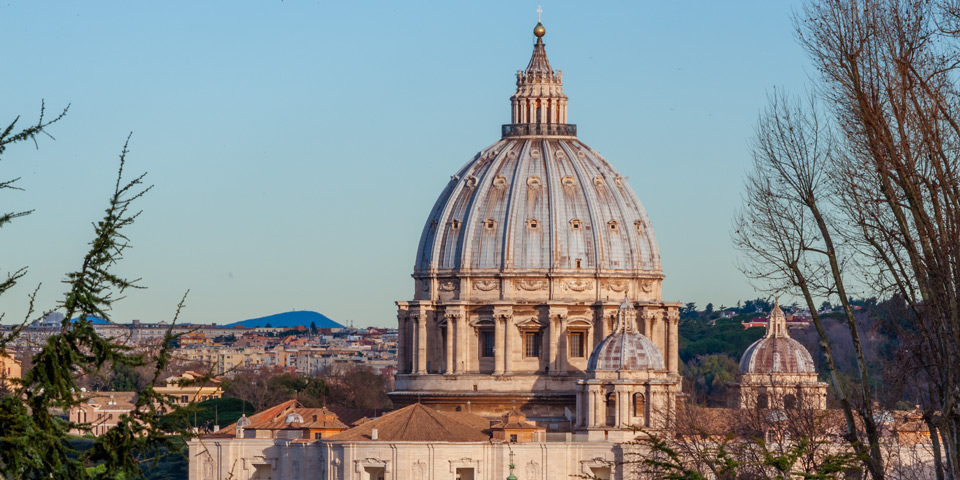
Turn towards the Vatican for St Peter’s dome. Even a moderate zoom shows individual ribs and windows beneath the lantern. The open view from this side of the piazzale produces a clean architectural portrait.
After photographing the dome from the open terrace, walk behind the Garibaldi monument to the opposite edge of the piazzale. The same dome appears between umbrella pines, framed by branches instead of open sky.
There is no sign or formal viewpoint. Look for the low wall in the shade and move along it until the trees line up with the dome. The walk from the main parapet takes about thirty seconds.
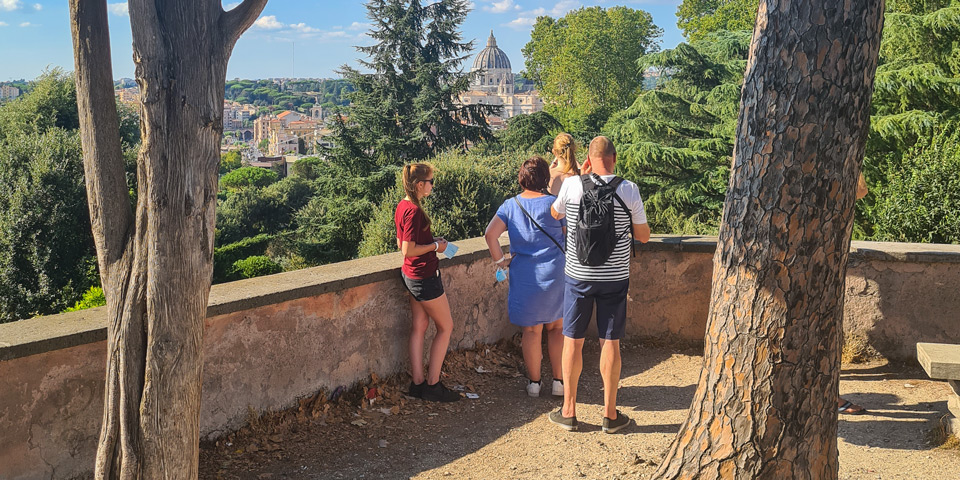
Use the main parapet to read Rome as a skyline. The wall behind the statue gives you a quieter final frame. From there, the promenade continues north towards the Janiculum lighthouse or south towards the Anita Garibaldi monument.
RomeItaly.guide © 2026. Created with love by Roman experts and guides.