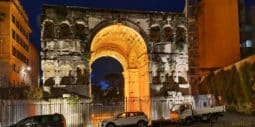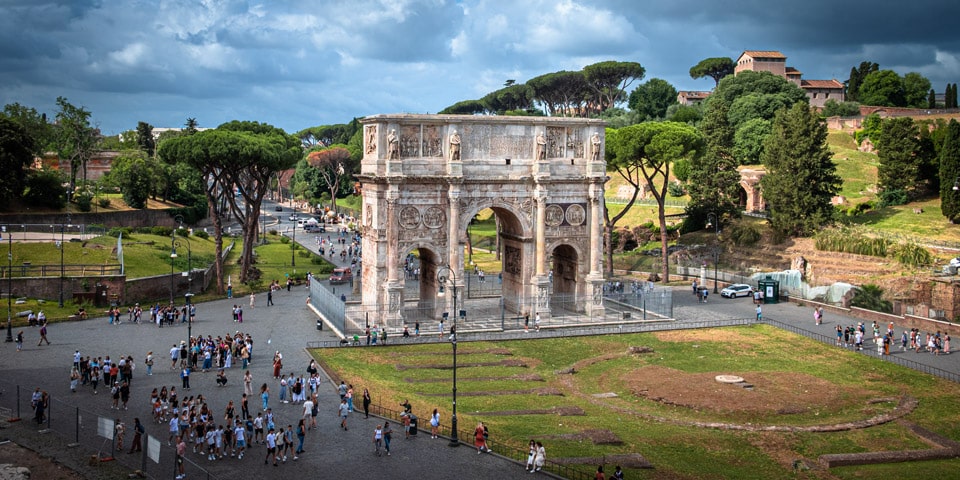

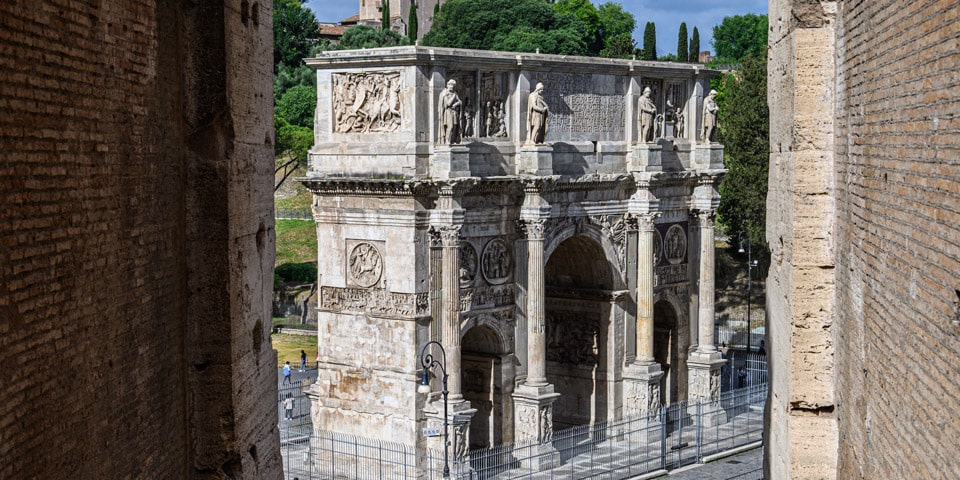
The Arch of Constantine stands beside the Colosseum, on the ancient triumphal route. It was dedicated in AD 315 to commemorate Constantine’s victory over Maxentius at the Milvian Bridge in AD 312.
Contents
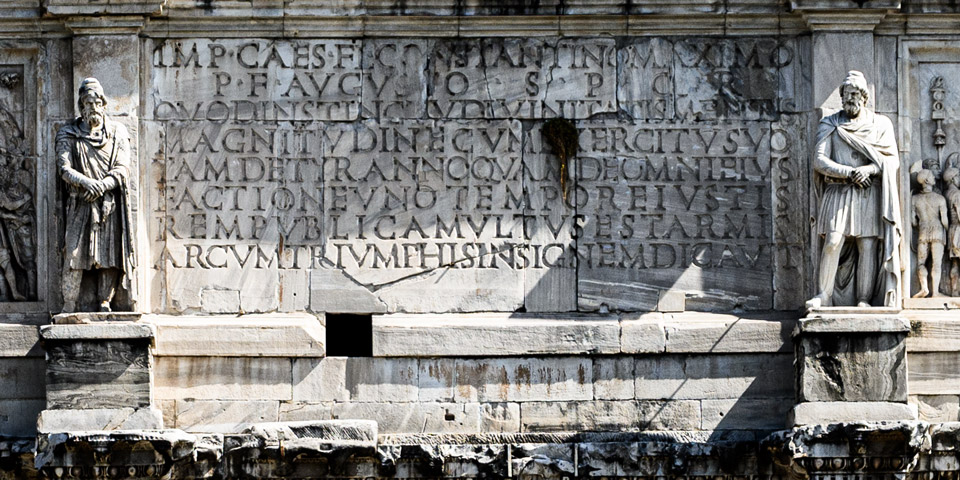
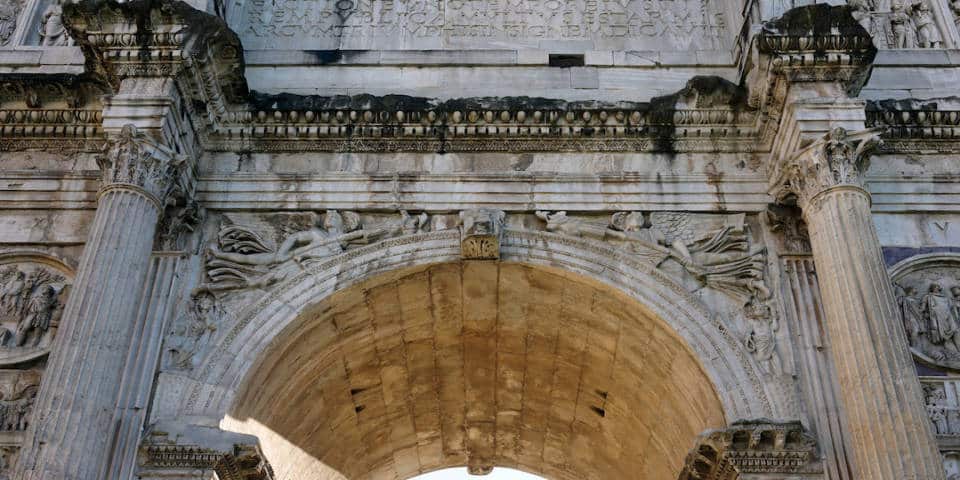
What the inscription says
The Latin dedication above the central arch names the Senate and People of Rome as the dedicators. It credits the emperor’s victory to divine inspiration and his own judgement. The wording does not name a specific deity. The reference to a tyrant alludes to the defeated Maxentius.
Look for reliefs from different reigns
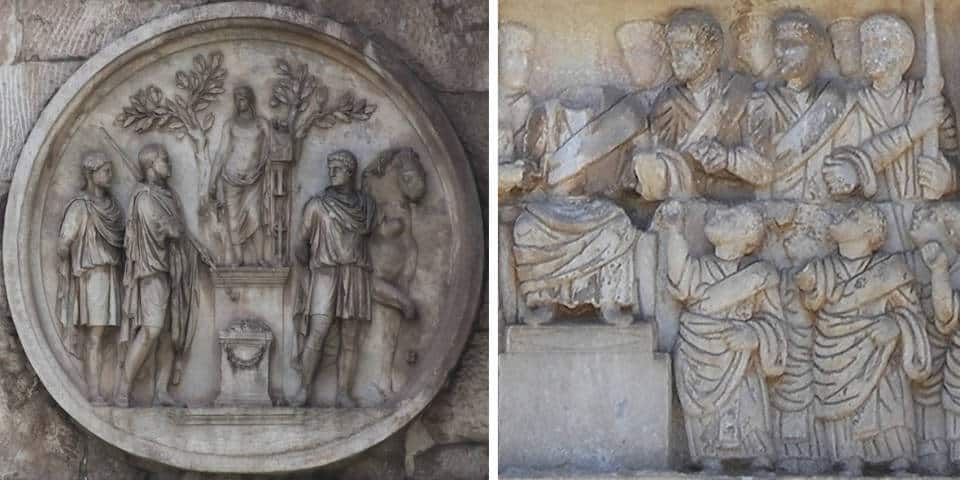
The arch has three openings. A narrow early fourth-century frieze above the smaller arches records episodes from Constantine’s campaign. The larger panels and roundels above it come from older imperial monuments. The contrast is visible in the proportions of the figures and the way the scenes are arranged.
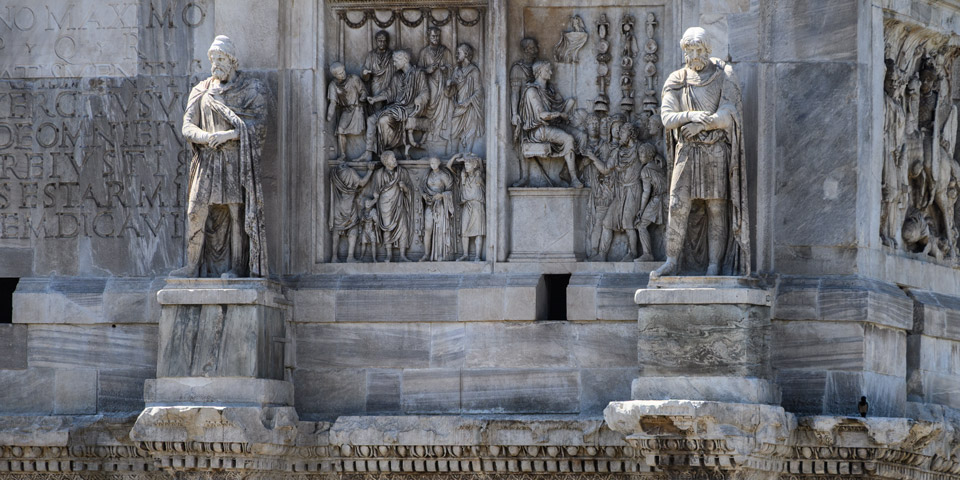
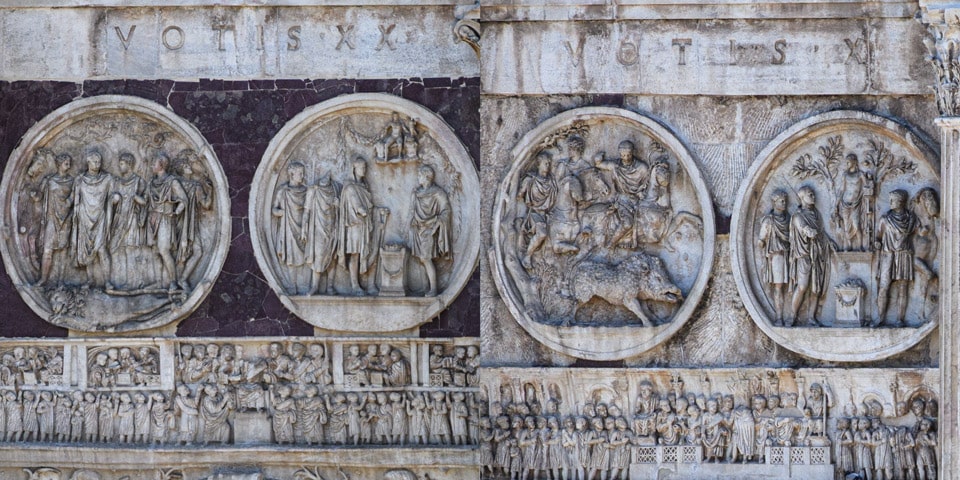
Look for the circular hunting and sacrifice scenes from the reign of Hadrian. High above them are panels from the time of Marcus Aurelius. Figures of Dacians, associated with Trajan’s Forum, stand across the top. Some imperial portraits were recut for the new dedication.
Visiting the Arch of Constantine
You can see the monument from the public area beside the Colosseum without a ticket. Look at both broad faces and leave time to walk towards the Roman Forum. The nearby remains of the Meta Sudans mark the site of a Flavian fountain.
See the archaeological park’s description for more on the arch and fountain.