992122 travellers read
Raphael’s Rooms are four painted rooms in the former papal apartments, now on the Vatican Museums route. Start with the School of Athens if time is short. If you can linger, compare the rooms finished during Raphael’s life with those completed by his workshop.
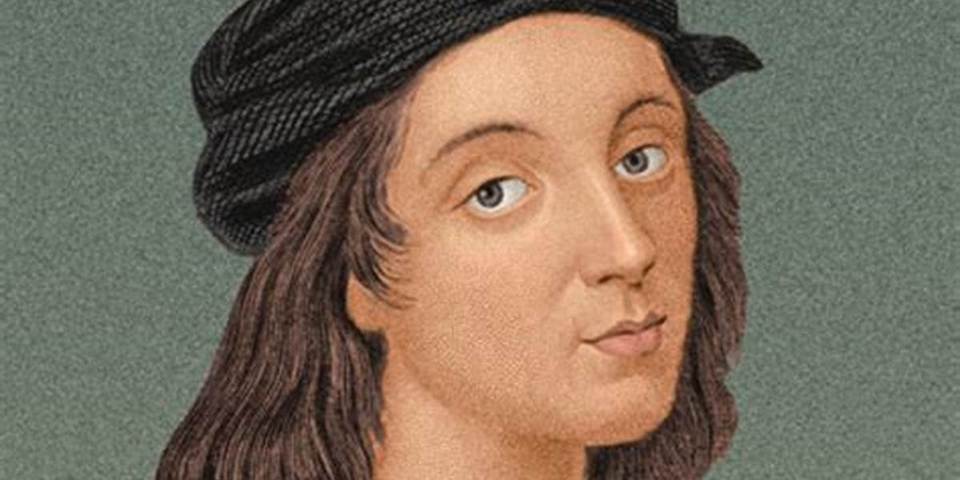
Pope Julius II commissioned Raphael to decorate rooms in the Apostolic Palace. Work began in 1508 and continued under Leo X. Raphael died in 1520, and his assistants completed parts of the commission. His name covers work with several different authorships, especially in the Hall of Constantine and the Room of the Fire in the Borgo.
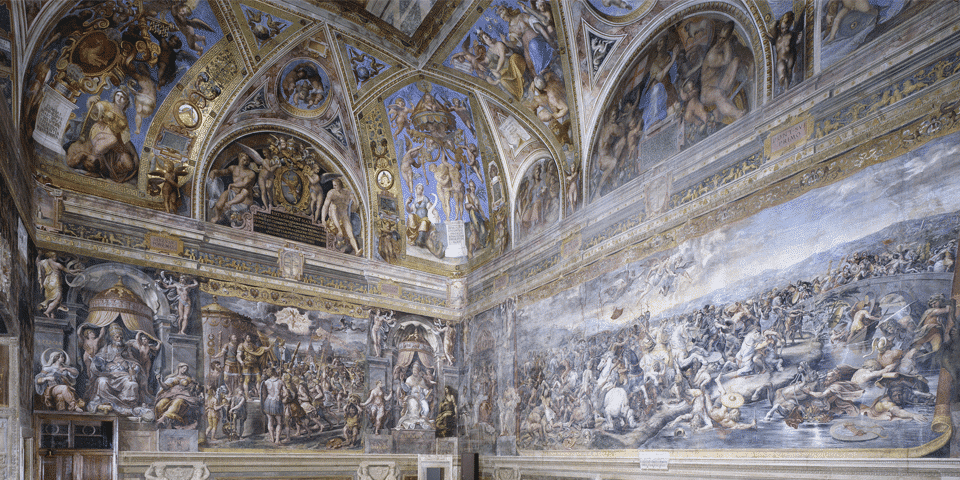
Four large scenes tell stories about Constantine and the rise of Christianity. Raphael planned the decoration. His workshop completed the main wall scenes after his death. The Vatican Museums’ restoration account discusses the figures of Justice and Friendship, which the conservators attribute to Raphael himself.
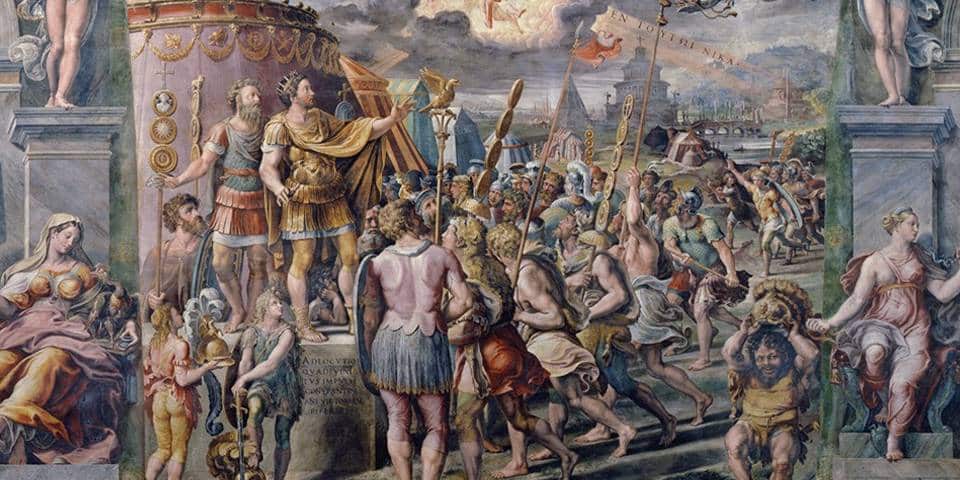
Constantine looks up at the sign that Christian tradition says appeared before his victory over Maxentius.
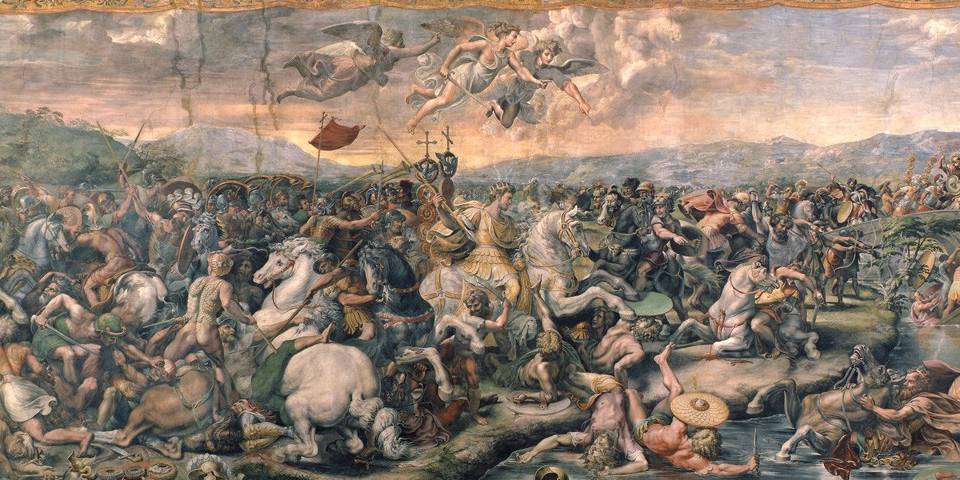
Look for Maxentius and his troops in the water as Constantine’s army presses forward at the Milvian Bridge in AD 312.
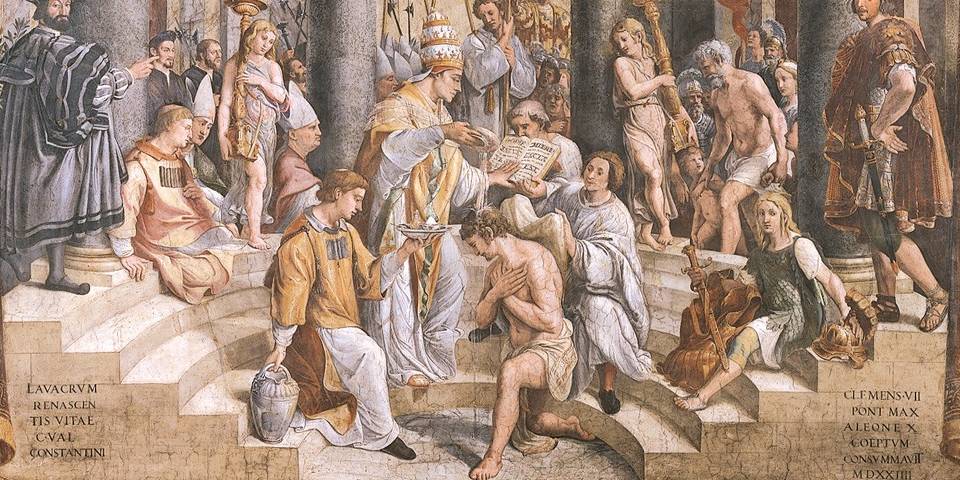
The fresco shows Pope Sylvester I baptising Constantine. It illustrates a later tradition. Historical accounts place Constantine’s baptism near the end of his life, in the East.
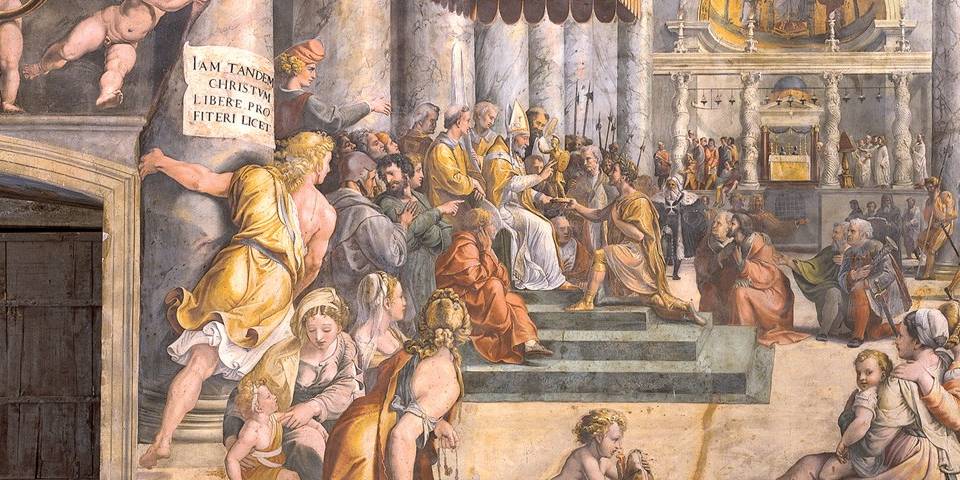
The emperor is shown granting authority to the pope. The scene invokes the Donation of Constantine, a document later shown to be a medieval forgery.
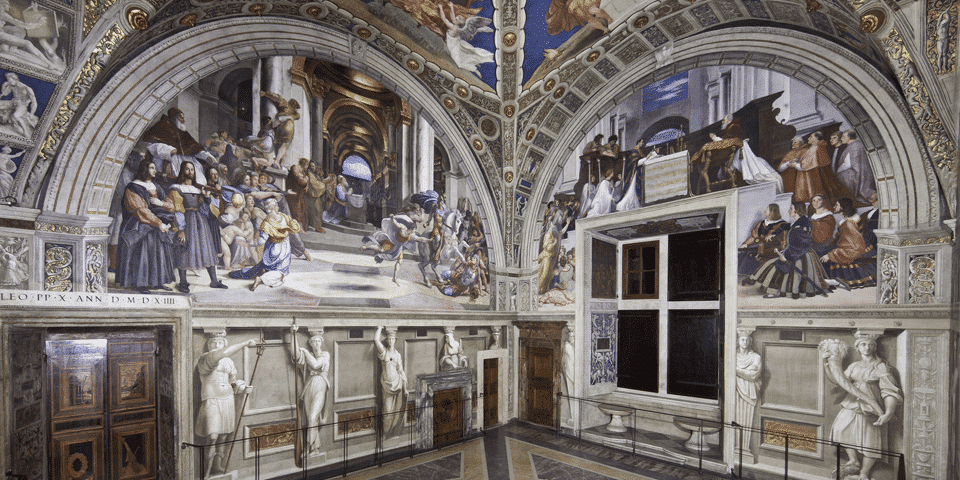
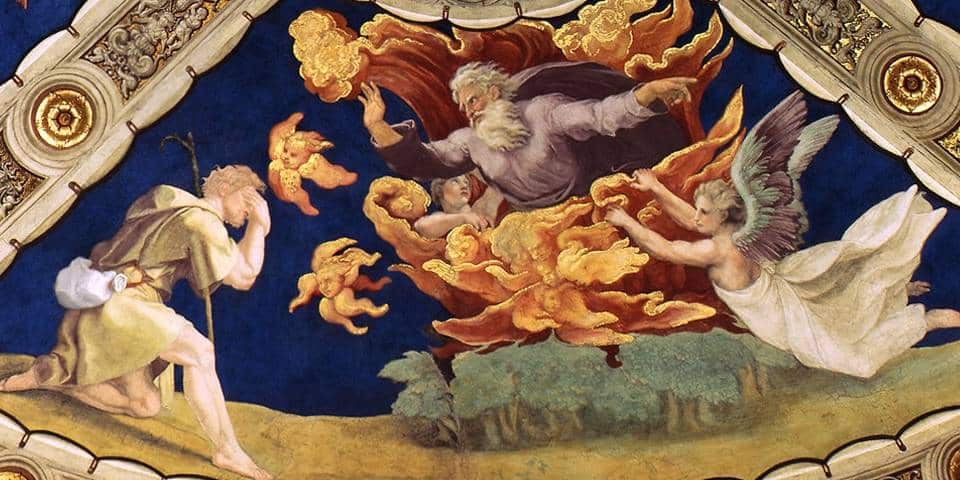
Look at how the paintings of divine intervention use the room’s architecture and windows.
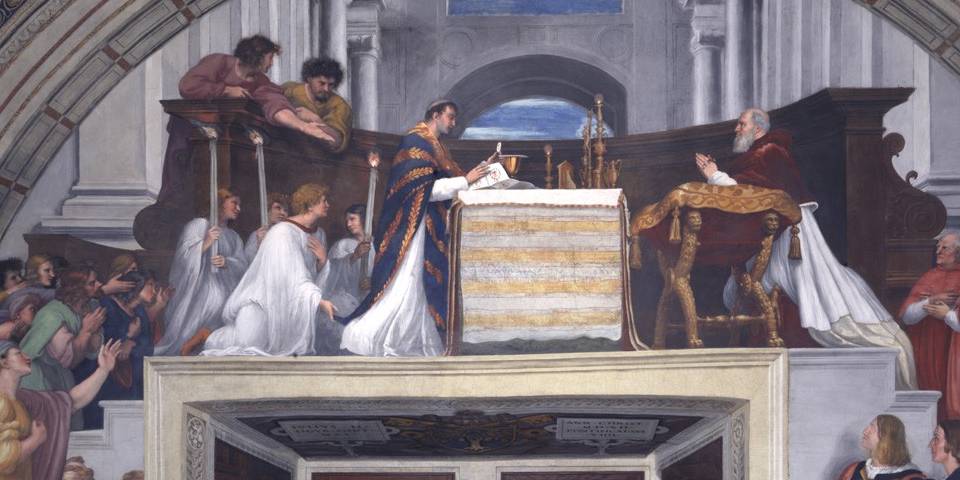
A priest celebrates Mass at Bolsena in a story about a miraculous bleeding host. Pope Julius II appears at the right-hand side of the altar as a witness within the composition.
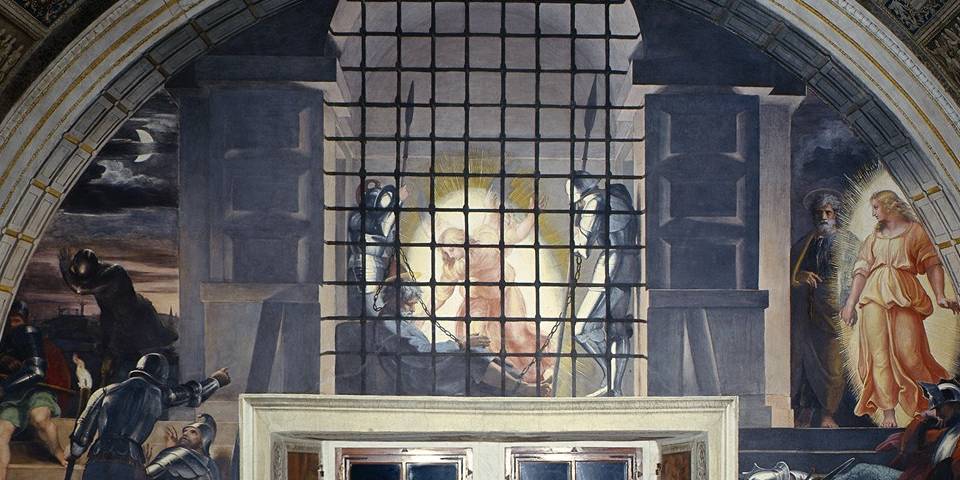
An angel leads Peter out of prison. The angel, the moon and a torch provide different sources of light across the scene.
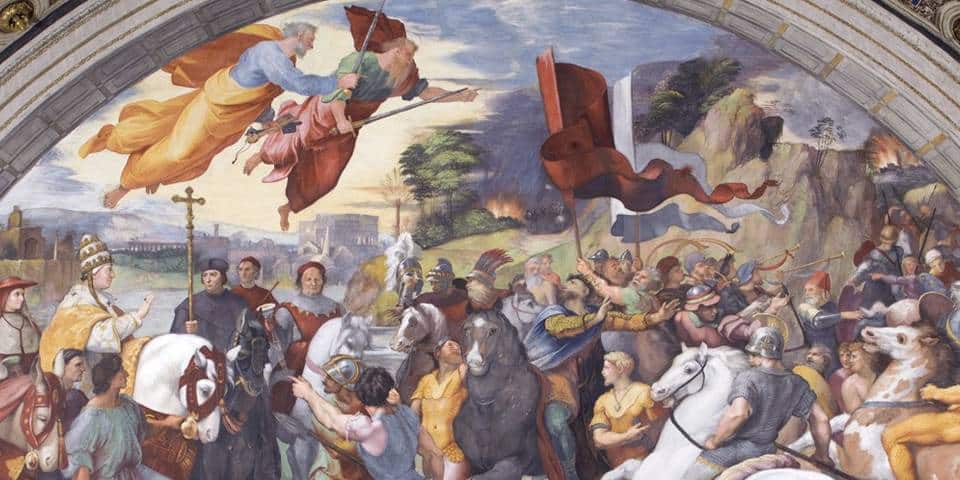
Pope Leo I meets Attila. The fresco sets the encounter against a landscape with Roman landmarks. Saints Peter and Paul appear above the pope.
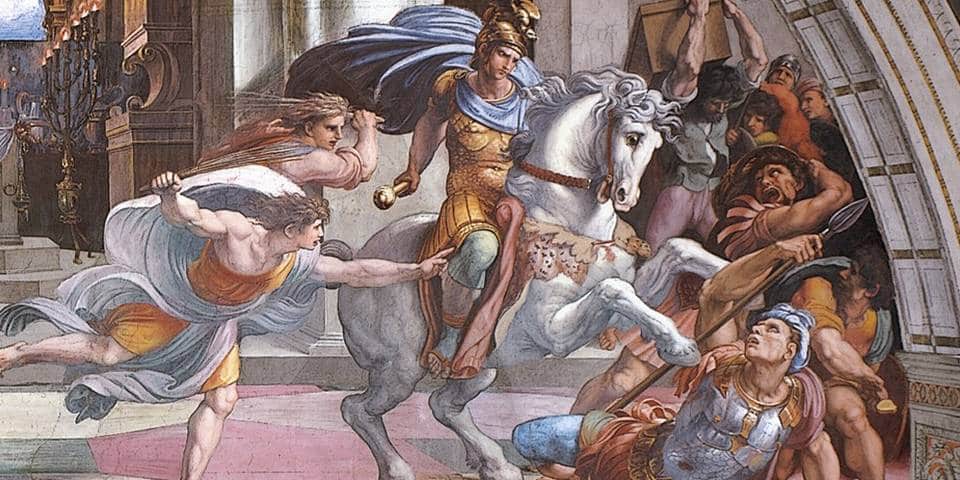
A horseman and two figures drive Heliodorus from the Temple of Jerusalem after he tries to seize its treasure. On the other side, Julius II watches from a carried chair.
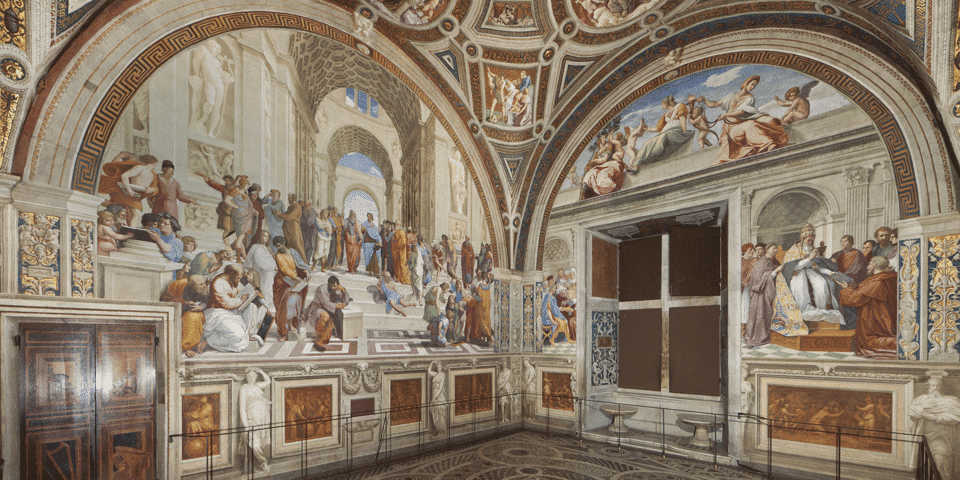
Julius II used this room as a library and study. The wall paintings are arranged around theology, philosophy, poetry and law.
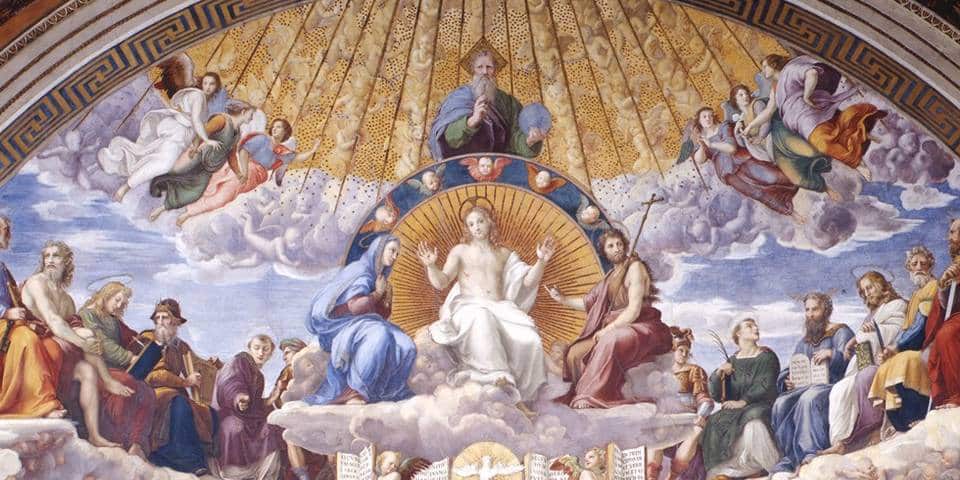
The Eucharist on the altar anchors the composition. Figures gathered on earth look towards the saints and the Trinity above.
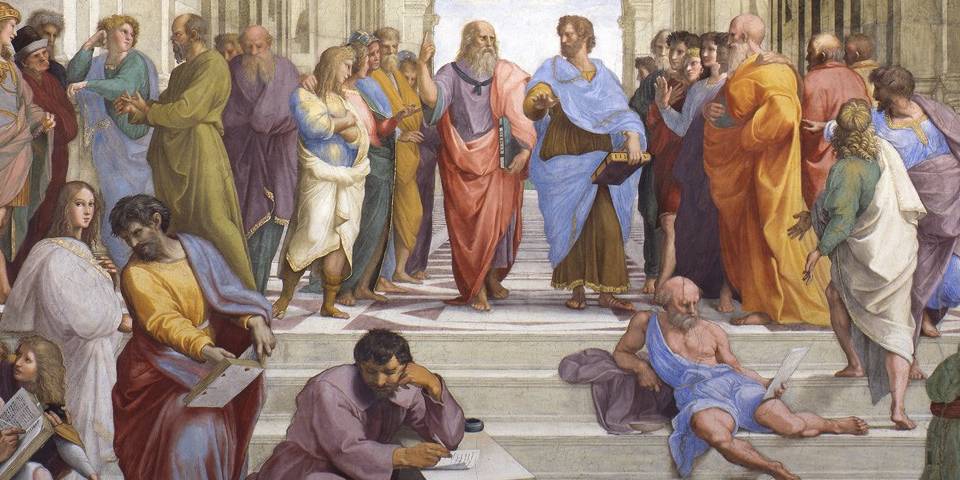
Plato and Aristotle stand together beneath the central arch. Plato points upward with the Timaeus under his arm. Aristotle holds the Ethics and extends his hand towards the ground. Look for the small groups of thinkers around them, including the figure drawing a geometric construction at lower right.
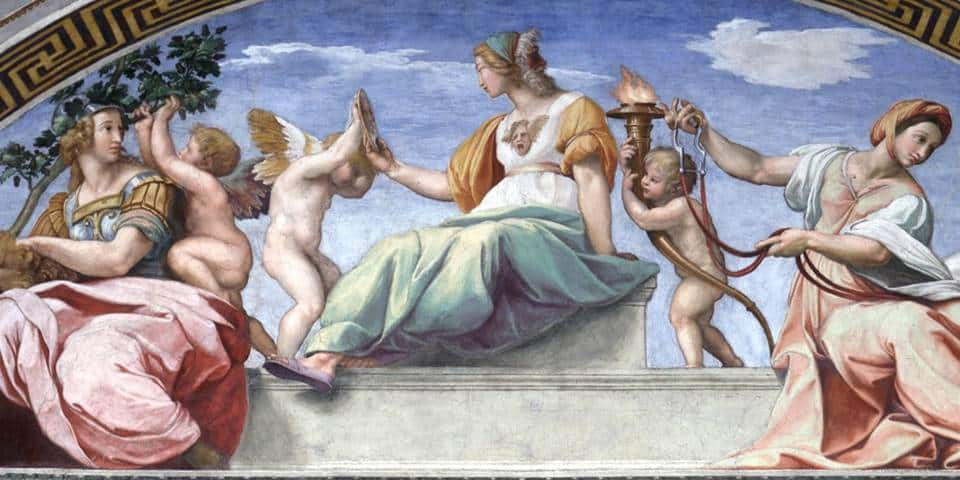
Above the window are the virtues, with scenes of legal texts being presented to Emperor Justinian and Pope Gregory IX below.
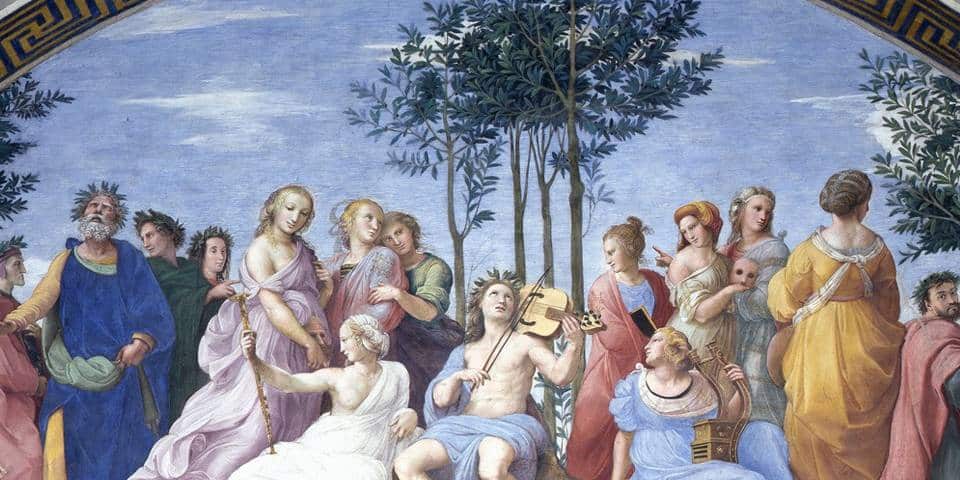
Apollo plays a stringed instrument among the Muses and poets. Dante and other writers from different centuries appear together on the mountain.
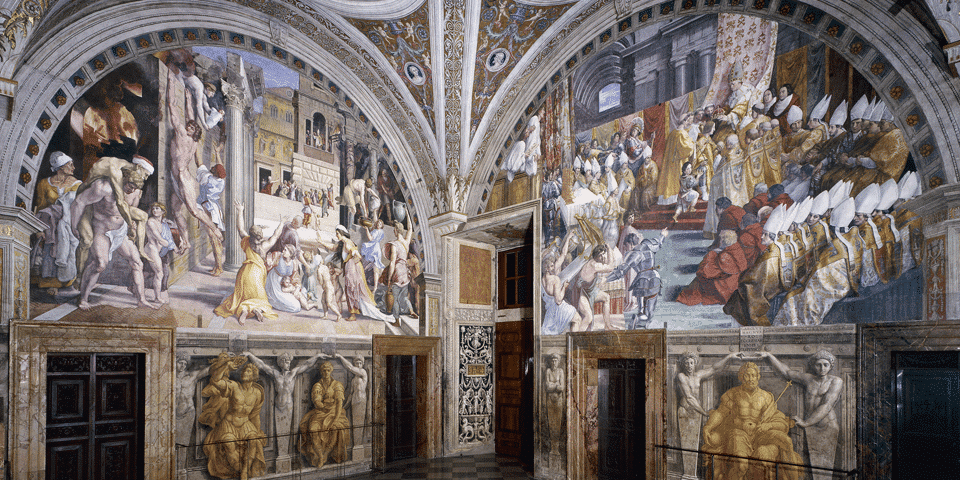
Under Leo X, this room served as a dining room. The wall paintings draw on episodes associated with Popes Leo III and Leo IV. The ceiling retains paintings by Perugino.
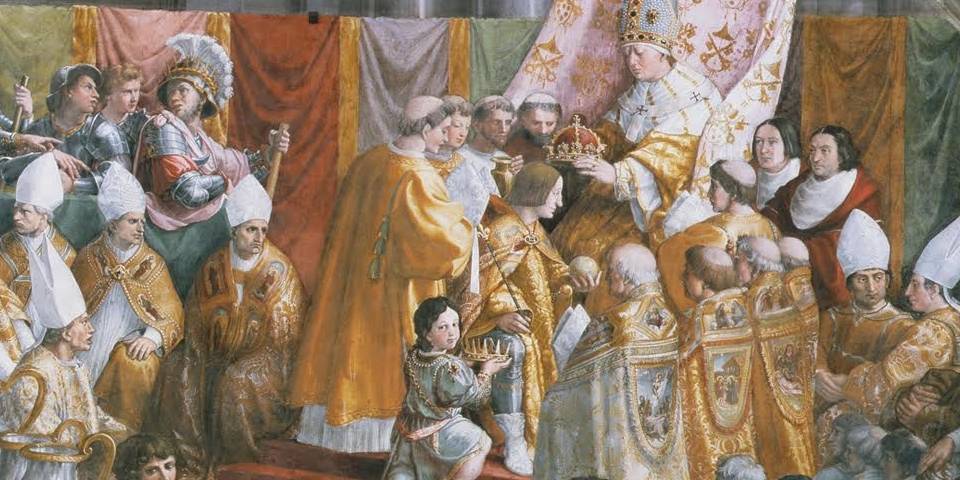
Pope Leo III crowns Charlemagne in St Peter’s on Christmas Day in AD 800.
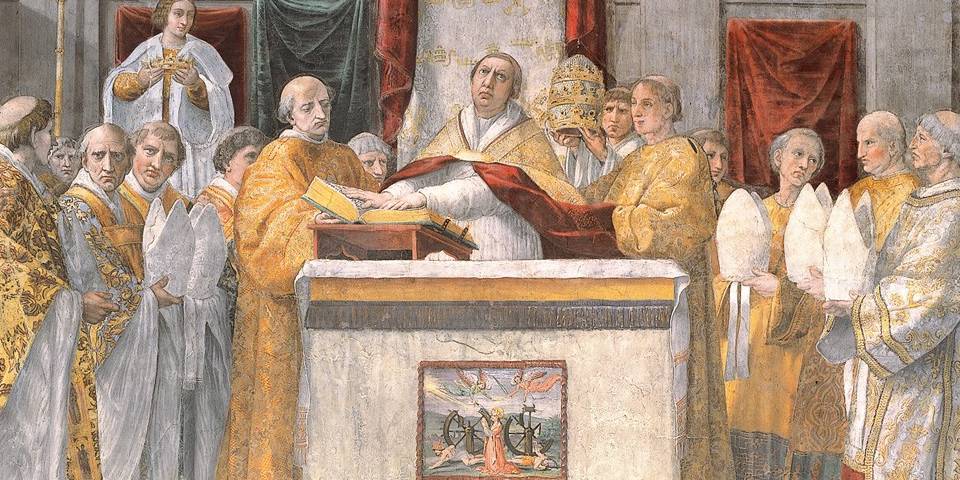
The scene depicts Leo III taking an oath in response to accusations against him.
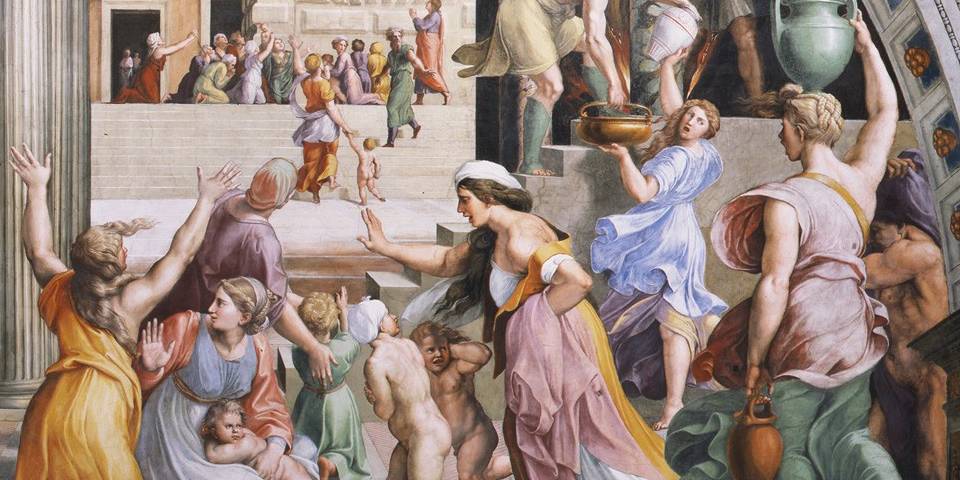
Residents flee a fire near St Peter’s. In the distance, Pope Leo IV gives the blessing said to have put it out.
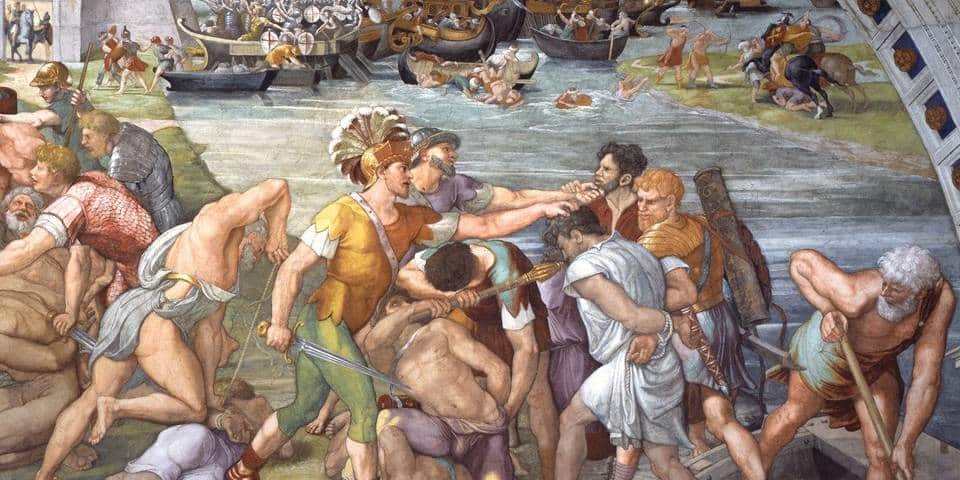
The scene recalls a naval victory at Ostia in AD 849. For the site and surviving ruins, see our Ostia Antica guide.
The rooms form part of the Vatican Museums visit. There is no stand-alone ticket. Start with the museum’s room guide for artwork details and the official ticket office for booking. For the approach to the museums and entry details, see the Vatican Museums ticket guide.
The rooms are in the Apostolic Palace and are reached on the museums’ visitor route. Pick up or download the official museum map if you want to find them without a guide.
The School of Athens is in the Room of the Segnatura, on the wall opposite the Disputation over the Most Holy Sacrament.
Raphael designed or worked on much of the programme. His assistants also painted some scenes and completed the commission after his death.
RomeItaly.guide © 2026. Created with love by Roman experts and guides.