
991228 travellers read
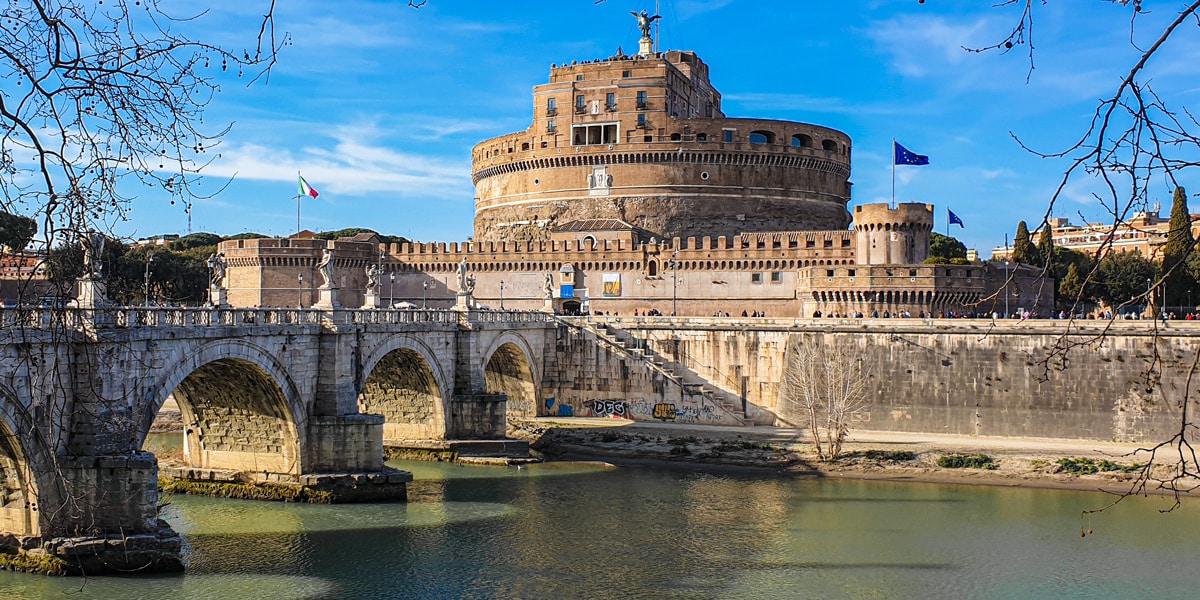
Castel Sant’Angelo began as an emperor’s tomb. During the next eighteen centuries it served as a fortress, prison, papal refuge, Renaissance residence, and finally a museum. The building still carries evidence of every phase.
The museum route makes that history unusually easy to follow. Visitors enter through Hadrian’s mausoleum, climb through medieval defences and papal rooms, and finish beside the bronze angel on the upper terrace. This guide follows the same sequence from the bottom upwards.
Emperor Hadrian began the mausoleum around AD 135 for himself and his family. He died before its completion. His successor, Antoninus Pius, finished it in AD 139, one year after Hadrian’s death.
For almost a century, the building received the ashes of members of the imperial dynasty. Hadrian, Antoninus Pius, Marcus Aurelius, Commodus, Septimius Severus, and Caracalla were interred here.
The entrance passage, known as the dromos, aligns with the bridge outside. Marble once covered its bare masonry, and a colossal statue of Hadrian stood near its end. The empty architectural setting gives some idea of the scale, although the decoration has disappeared.
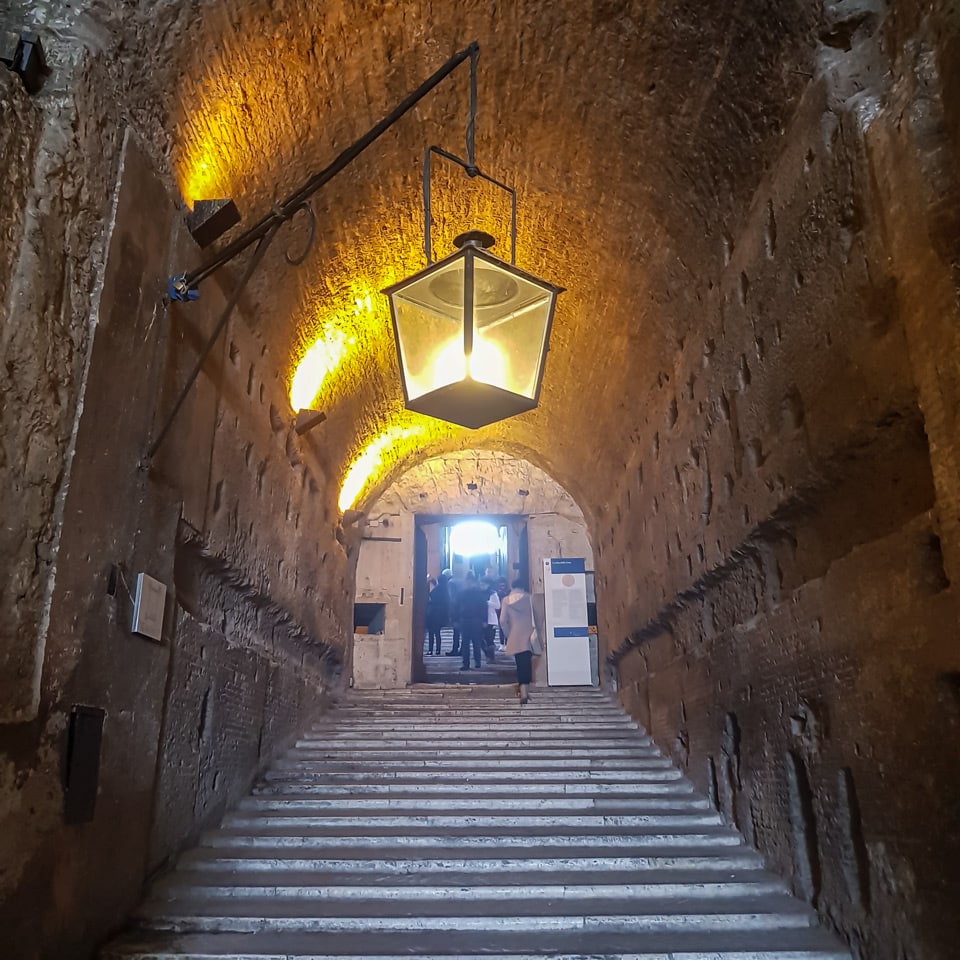
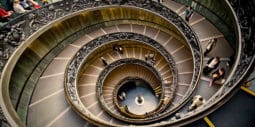
From there, the broad helical ramp climbs through the concrete cylinder towards the original burial chamber. Hadrian’s architects created a ceremonial route large enough for an imperial funeral procession. Later builders reused it as the principal line of movement through the fortress.
That decision still shapes the visit. Most castle museums spread through adjoining rooms. Castel Sant’Angelo sends you steadily upwards. Every new level introduces a later period of Roman history.
The castle’s present name comes from a story set during the plague of AD 590. According to tradition, Pope Gregory the Great led a penitential procession through Rome and saw the Archangel Michael above Hadrian’s tomb. Michael placed his sword back in its sheath, signalling that the epidemic would end.
The monument became known as the Castle of the Holy Angel, or Castel Sant’Angelo. Different statues of Michael have crowned it over the centuries. Its military value and continued papal use also protected the ancient structure. Many other Roman monuments suffered extensive dismantling.
The medieval papacy recognised the defensive value of Hadrian’s massive concrete drum. The castle guarded the river approach to the Vatican and offered a secure refuge during attacks. Popes added bastions, artillery positions, residential rooms, and a raised covered passage to the Vatican called the Passetto di Borgo.
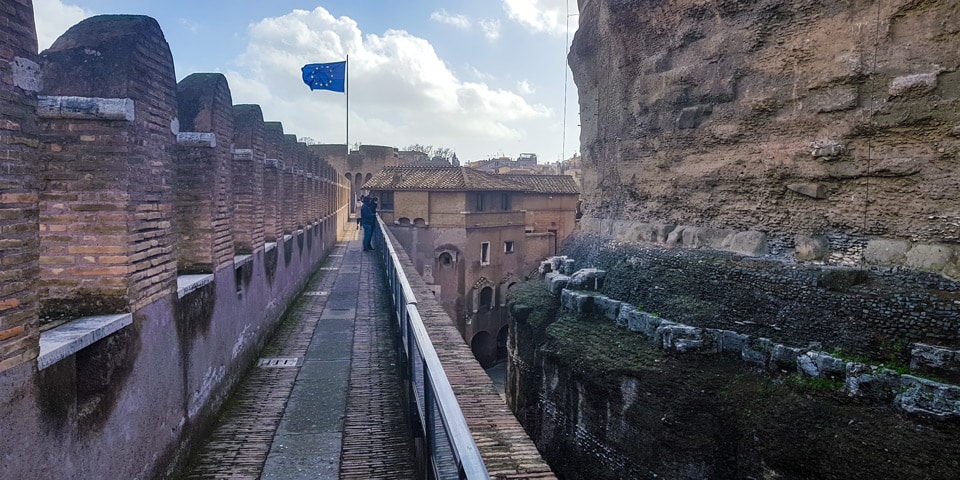
The Passetto proved its purpose during the Sack of Rome in 1527. Soldiers serving Emperor Charles V entered the city and attacked the defenders around St Peter’s. Pope Clement VII escaped along the corridor and remained inside Castel Sant’Angelo while imperial troops occupied Rome. Members of the Swiss Guard died defending his retreat.
Benvenuto Cellini later claimed that he operated the castle’s cannon during the siege and fired the shot that killed an enemy commander. His memoir turns the episode into a personal adventure, so historians treat some details cautiously. The broad outline is secure: Cellini was present, the castle resisted the attack, and Clement VII reached it through the Passetto.
The same walls also enclosed papal prison cells. Cellini returned as a prisoner after the man he had defended became his jailer. He escaped by lowering himself from the fortifications, then broke his leg during the descent. Political opponents and accused heretics joined other high-profile prisoners here over the centuries. Giordano Bruno is traditionally included among the figures associated with the castle’s prison history before his execution in 1600.
The proximity of cells and ceremonial rooms tells an important part of the building’s story because papal government used Castel Sant’Angelo as a refuge, arsenal, residence, court prison, and visible symbol of authority.
Higher in the castle, military corridors lead into a Renaissance residence. Popes staying here expected more than protection. They commissioned painted apartments, private bedrooms, reception halls, and carefully decorated passages within the fortress.
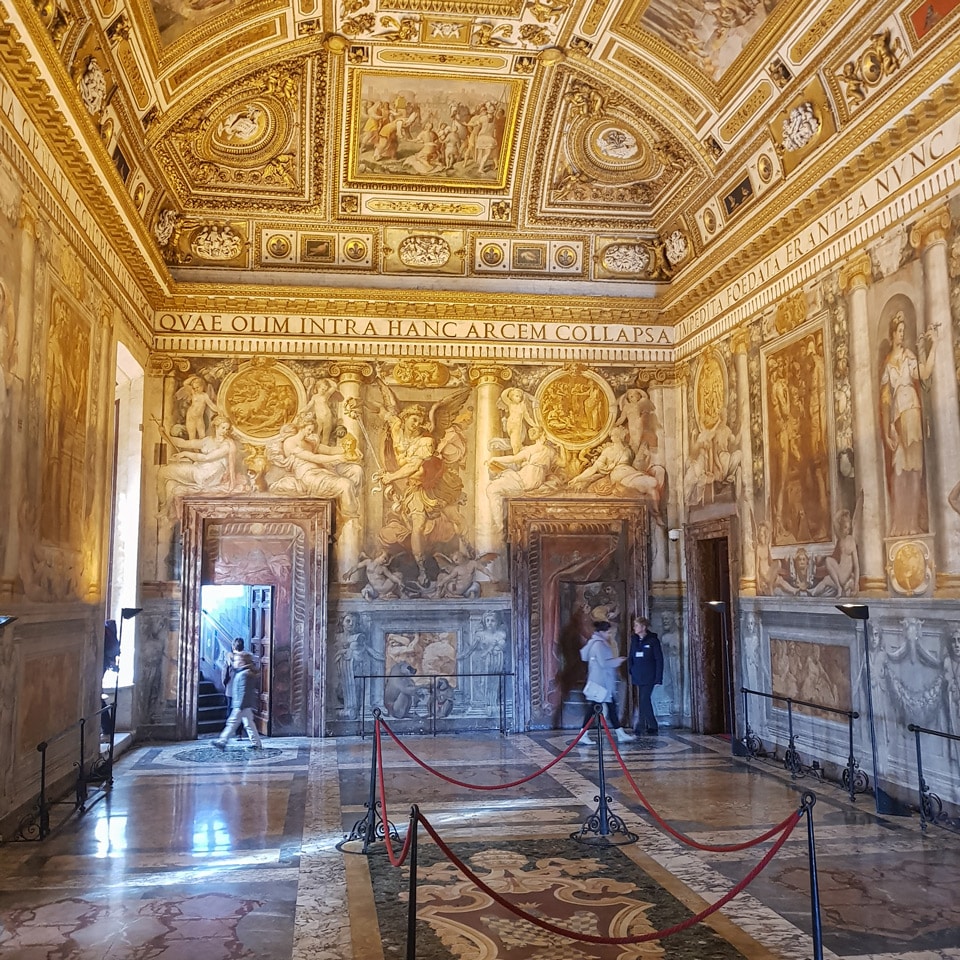
The principal room is the Sala Paolina, created for Pope Paul III during the 1540s. Its gilded and densely painted walls expressed papal authority on a monumental scale during the Counter-Reformation.
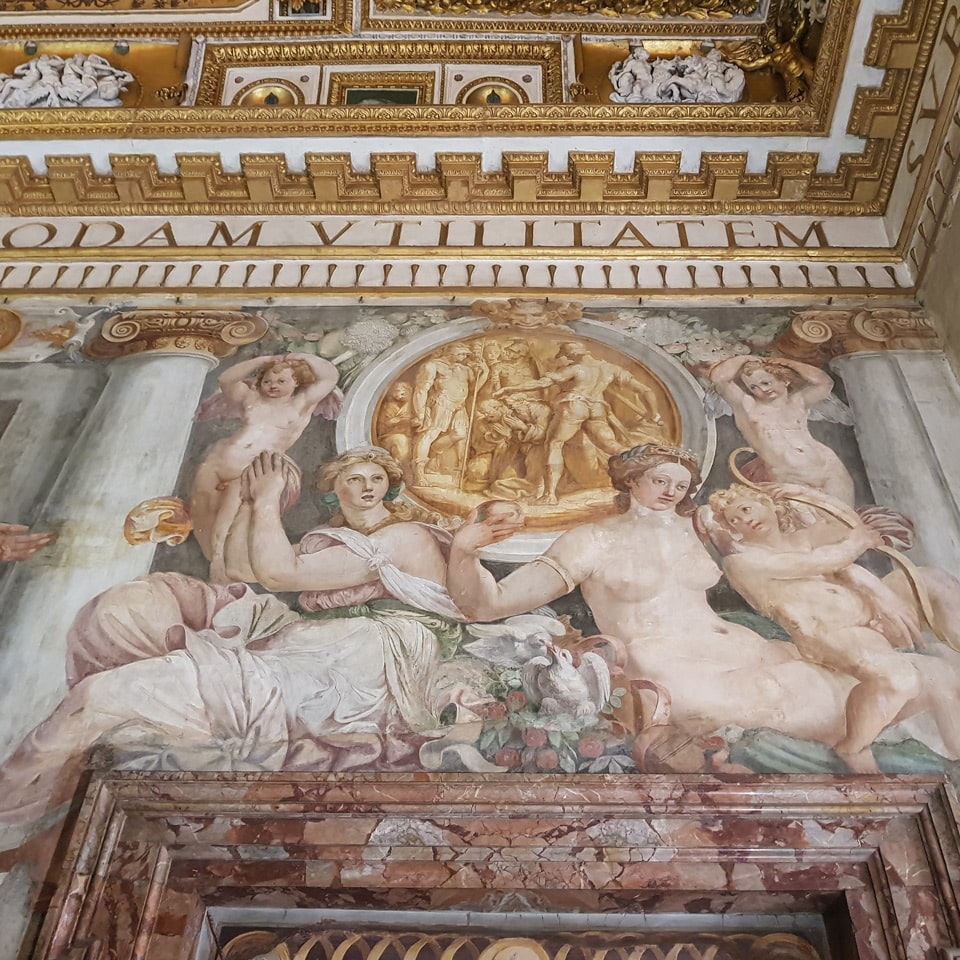
Perino del Vaga and his workshop painted the room from 1545 to 1547. Episodes from the life of Alexander the Great complimented the pope, whose birth name was Alessandro Farnese. One painted figure appears to step through an architectural opening. From across the room, the illusion can resemble a real doorway.
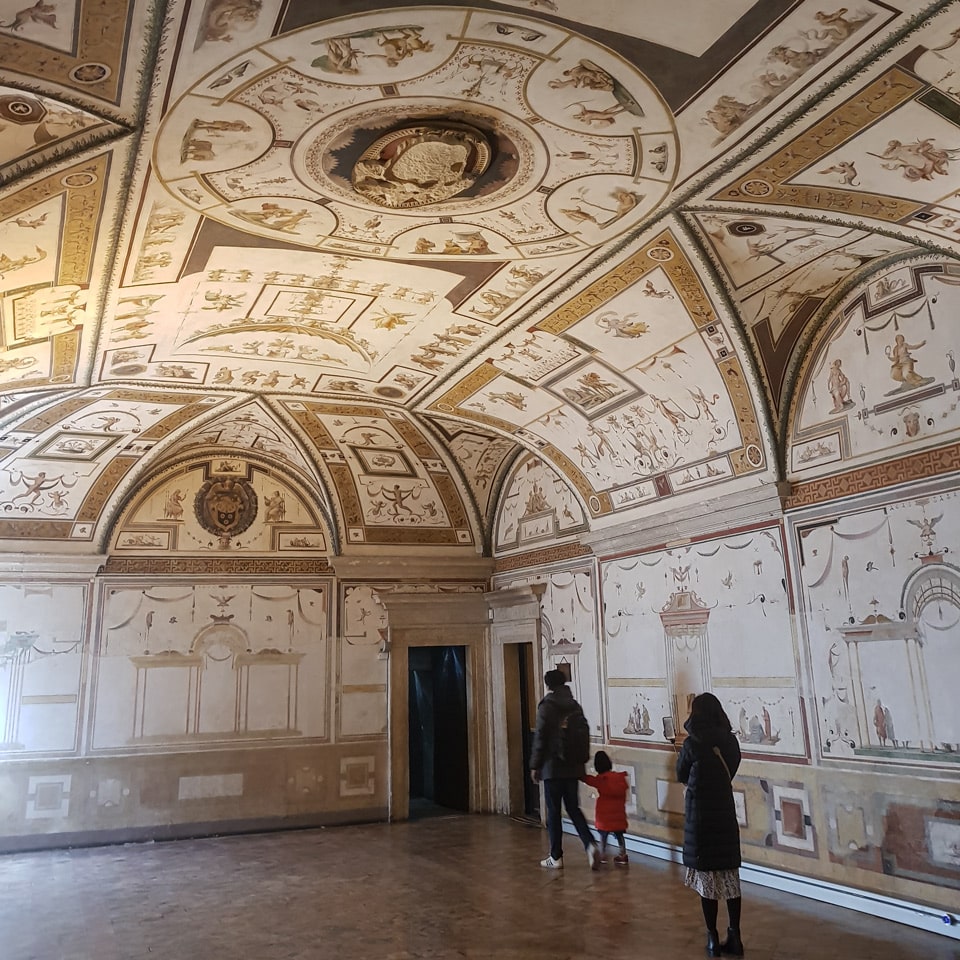
The adjoining private rooms include Paul III’s bedroom and the Cupid and Psyche room. Its frieze presents the ancient love story as a Renaissance allegory of the soul’s journey towards the divine. Gilded coffers and painted grotesques cover the ceilings alongside Farnese emblems.
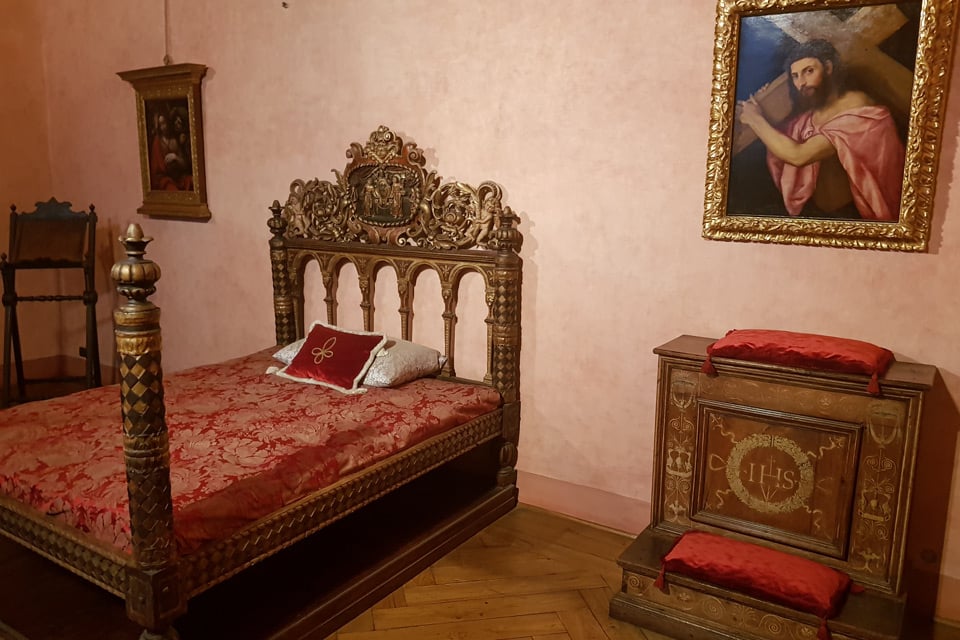
The National Museum’s smaller painting collection appears among these rooms. One memorable work is a portrait of a young woman holding a unicorn, encountered amid a building dominated by fortification and papal power.
The Sala del Tesoro served as the papal strongroom. Oak panelling bears the name of Paul III, and massive iron-bound chests recall the gold and coin stored here alongside sensitive documents.
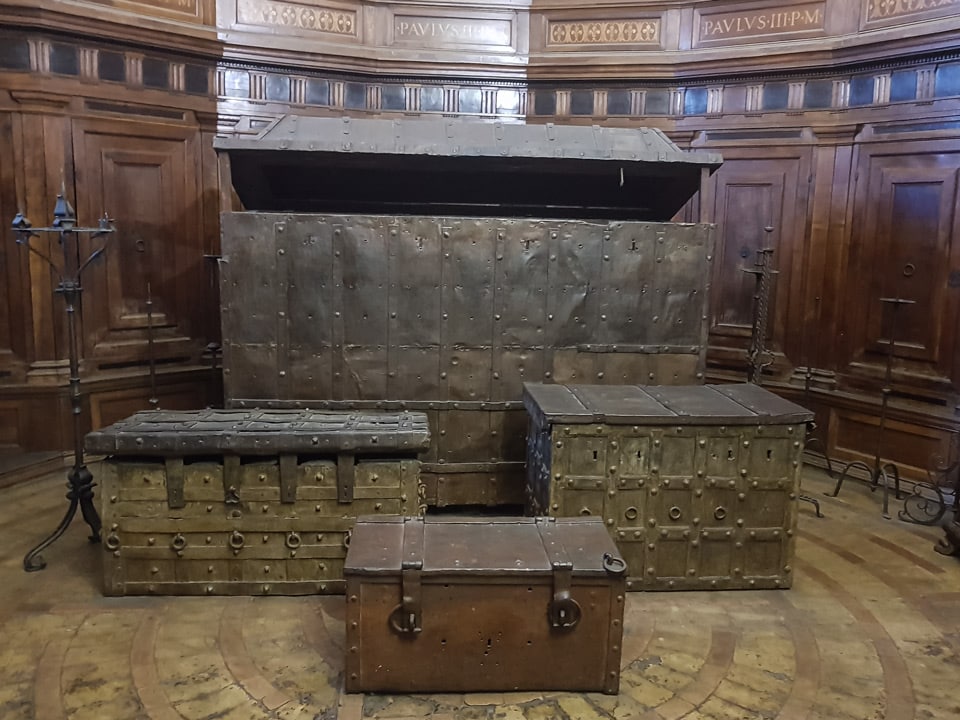
The position near the protected upper rooms was deliberate. Anyone attempting to reach the treasury had to pass through guarded ramps and the occupied interior of the fortress. Large coffers were secured with elaborate locks and iron rings. The smaller strongbox could be moved if the contents needed to leave the castle quickly.
Weapons displayed nearby explain how those defences worked. The collection includes plate armour, crossbows, ceremonial swords, and early firearms.
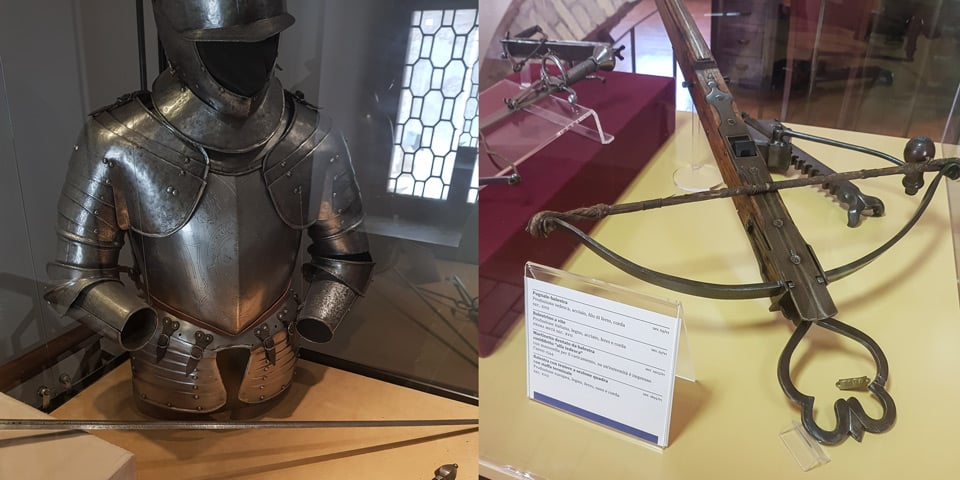
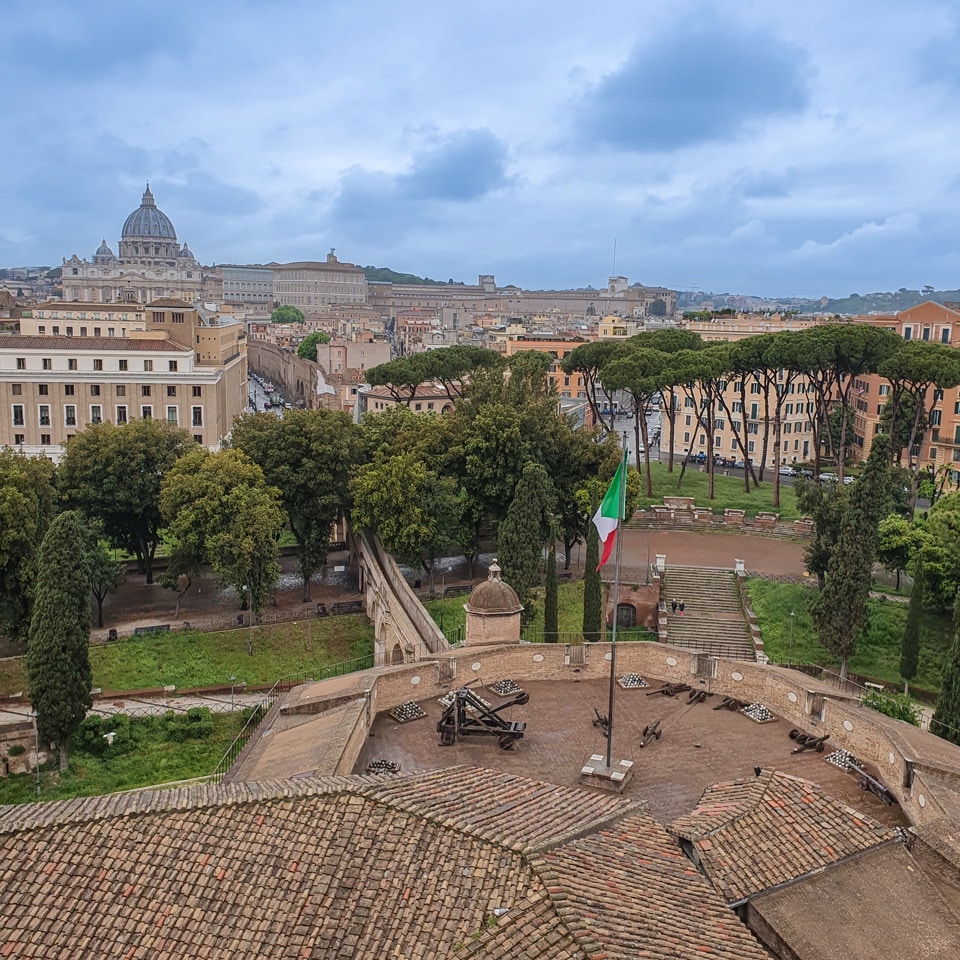
Heavier equipment occupies the ramparts. Cannon and piles of stone or iron shot line the platforms. Reconstructed siege engines show the practical military role of a building that also contained frescoed apartments.
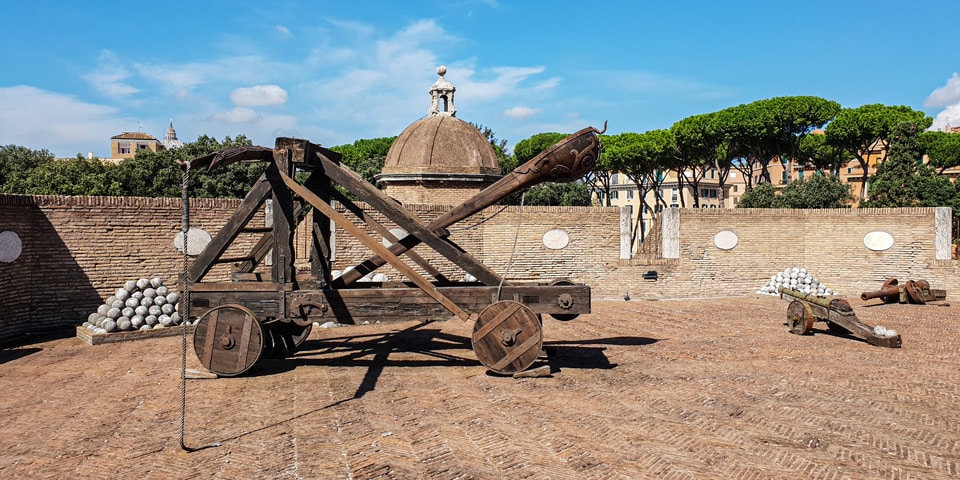
From this level, the dome of St Peter’s appears directly beyond the weapons. The view makes the strategic relationship between the castle and the Vatican immediately clear.
The route ends on the upper terrace. Puccini set the final act of Tosca here, where the heroine jumps from the ramparts after the execution of Mario Cavaradossi.
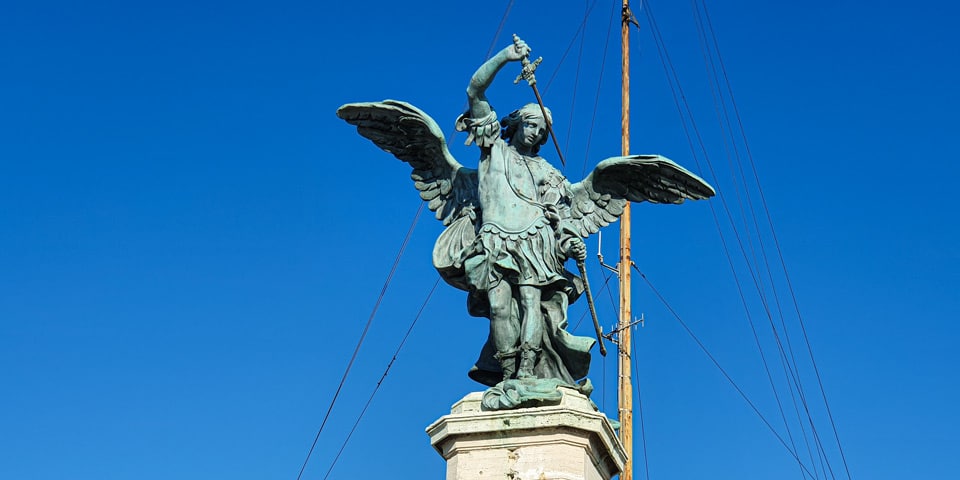
Above the terrace stands Peter Anton von Verschaffelt’s bronze Archangel Michael, installed in 1753. The figure returns his sword to its sheath, re-enacting the plague legend that gave the castle its name. An earlier marble angel by Raffaello da Montelupo now stands in the courtyard below.
The terrace overlooks the Tiber and Ponte Sant’Angelo. Ten Baroque angels based on designs by Gian Lorenzo Bernini line the bridge. Bernini carved two of the original figures himself; the versions on the bridge were executed by members of his workshop, while his originals are kept in Sant’Andrea delle Fratte.
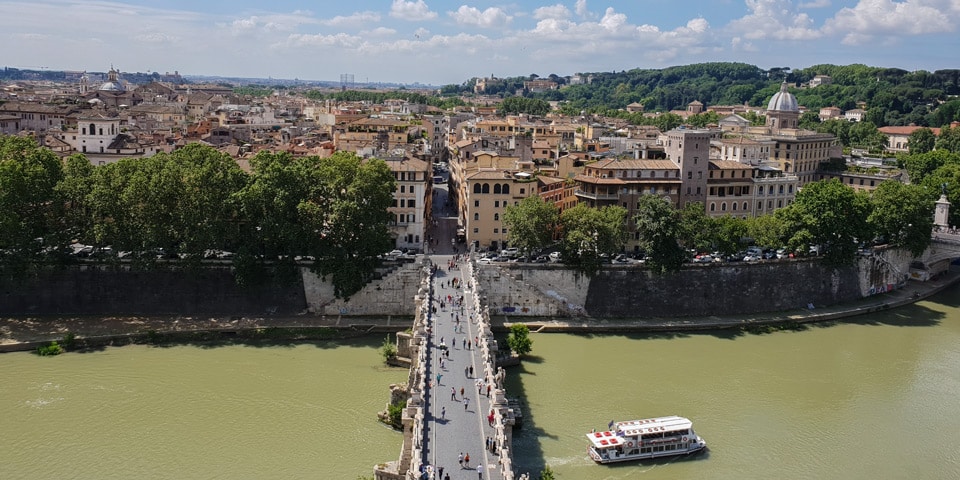
The dome of St Peter’s Basilica rises above the rooftops in the opposite direction. The Passetto di Borgo remains visible as a narrow fortified line running towards the Vatican.
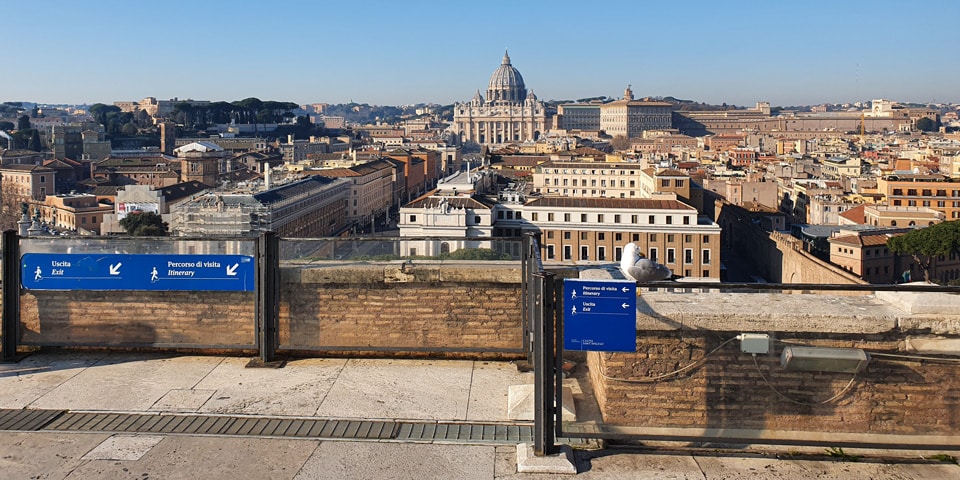
Looking down from the terrace connects the route you have just climbed. The ancient tomb, papal refuge, artillery platforms, bridge, and escape corridor occupy one continuous defensive landscape. The geography finally makes sense.
The exterior and bridge can be appreciated without entering the museum. The interior adds the ancient ramp, prison spaces, papal apartments, treasury, armoury, and upper terrace. Those layers are the main reason to buy a ticket.
Allow about two hours for a first visit. The museum follows a sustained upward route using Hadrian’s ramp and later staircases. Lifts serve some levels, although several areas remain inaccessible without steps. Comfortable shoes help.
The castle has no church dress code, so the restrictions applied at St Peter’s do not apply here. Large bags may have to be left in the cloakroom. Current practical details belong in the information panel at the beginning of the page, where they can be updated without changing the article.
My own priority inside is simple: take time on the ancient ramp, look closely at the Sala Paolina, and leave enough energy for the terrace. That sequence contains the three experiences that distinguish Castel Sant’Angelo from other museums in Rome.
RomeItaly.guide © 2026. Created with love by Roman experts and guides.