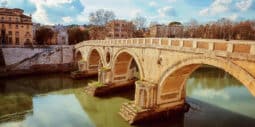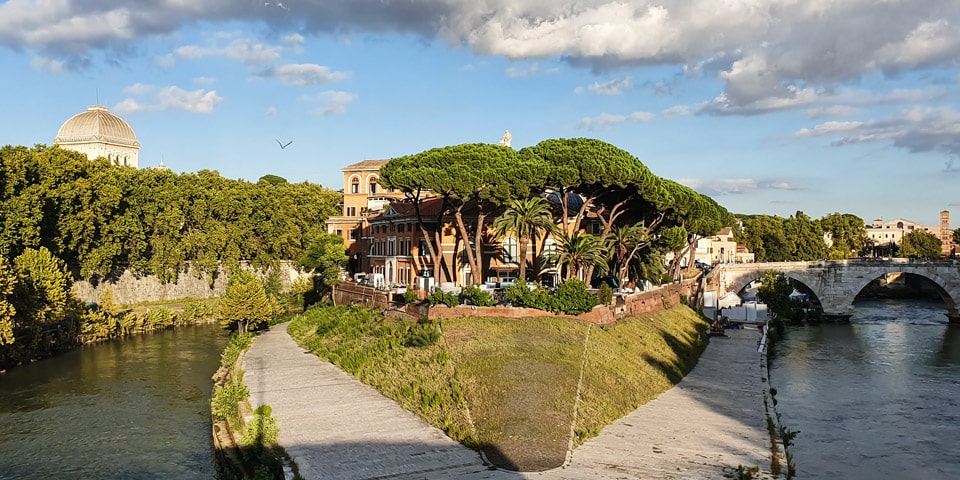

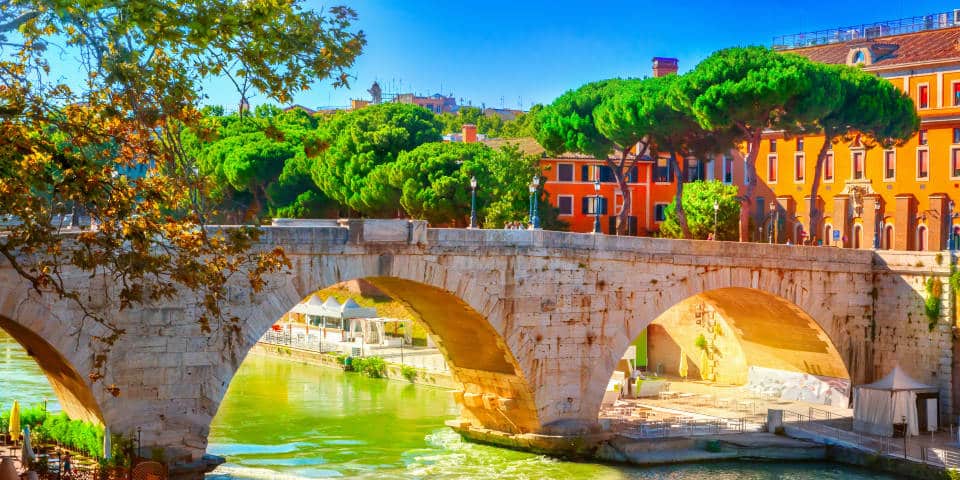
Tiber Island links the historic centre and Trastevere by Ponte Fabricio and Ponte Cestio. It is a short walk across the island, with a stop at San Bartolomeo if the church is open. The story of a sacred snake choosing the island belongs to Roman tradition.
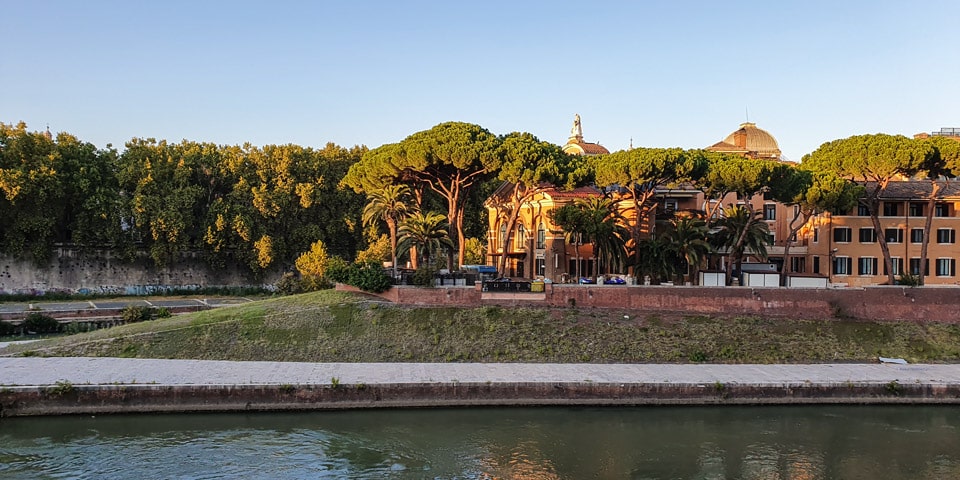
The Tiber Island (Italian: Isola Tiberina) is a unique part of Rome, situated on a sheet of water between the right and left banks of the Tiber River (Italian: Tevere). A neat, boat-shaped piece of land is the only island in the river! It is connected to the two banks of the capital with the help of bridges since the days of antiquity.
Contents
Things to Know Before Visit Tiber Island
What is on Tiber Island in Rome today?
Today, Tiber Island hosts the Basilica of St Bartholomew, the Fatebenefratelli Hospital, and various other historic and religious sites. It also features restaurants and cafes, making it a vibrant part of modern Rome while retaining its historical essence.
How much does it cost to go to Tiber Island?
Visiting Tiber Island is free of charge. There is no admission fee to walk around the island and explore its historical landmarks and scenic views.
What is the legend of Tiber Island?
The legend of Tiber Island revolves around the expulsion of King Tarquinius Superbus in 509 BCE. According to the myth, the Romans threw their grain stores into the Tiber River, which accumulated mud and silt to form the island. Another legend states that the island was formed around the body of Tiberinus, a king of Alba Longa, who drowned in the river.
Is Tiber Island worth visiting?
Yes, Tiber Island is worth visiting. It offers historical significance, including the ancient Temple of Aesculapius, picturesque views of the Tiber River, and the Basilica of St Bartholomew, providing a blend of ancient and medieval Roman history.
Why is Tiber Island important?
Tiber Island is important due to its historical and mythological significance. It housed the ancient Temple of Aesculapius, a centre for healing, and has been a crucial part of Rome’s history and infrastructure, serving as a strategic crossing point and a symbol of health and healing.
What is the obelisk on Tiber Island?
The obelisk on Tiber Island is a miniature Roman replica of an Egyptian obelisk from the 1st century BCE. It once stood in the middle of the Temple of Aesculapius, serving as a symbol of healing and medical knowledge, although it no longer exists in its original form.
Why is Tiber Island shaped like a ship?
Tiber Island is shaped like a ship because, during the 1st century BCE, the Romans built retaining walls in the shape of a ship’s bow and stern. This design was intended to honour the legend of the Greek god Aesculapius arriving in Rome aboard a ship.
Parameters
The size of the island is quite modest: 270 metres long (885,8 ft) and 67 metres wide (219,8 ft); its surface is about 0,018 square kilometres (0,194 square ft). The exact geographical location is: 41 ° 53’27 “N 12 ° 28’38” E.
History
The ancient name of the island is “Insula Inter-Duos-Pontes” that means “the island-between-the-two-bridges”. The Pons Fabricius (Italian: Ponte Fabricio, meaning “Fabricius’ Bridge”) connects the road leading to the Campus Martius (Latin for the “Field of Mars,” Italian: Campo Marzio) on the left bank of the Tiber River to the north-eastern part of the island. Meanwhile, the Pons Cestius (Italian: Ponte Cestio, meaning “Cestius’ Bridge”) allows you to walk from the southern part of the island to Trastevere, located on the right bank of Rome.
Legend
There is a legend about the Roman tyrant Tarquinius Superbus, who ruled an empire in the 6th century BC. He was so cruel and unjust to his people that the Romans dethroned him and drowned in the river. The tyrant’s body has gone to the bottom, where the river mud and dirt form an underwater grave. Over time, the place above this grave grew into the Tiber Island.
Since the Romans hated the dethroned ruler, the island remained not civilized until the 3rd century BC. By the end of the 3rd century, they decided to arrange a hospital – the Temple of Aesculapius on the territory of the island during the height of the plague.
Another legend says that the island, as a place for the construction of the temple, was chosen not just by chance. The Romans took a serpent as an ancient symbol of medicine and paddled with it in a boat down the Tiber. The coiled serpent left the boat and swam to the island. Thus, god Aesculapius (Latin for Asclepius) let them know where he wanted to see his temple.
Historians tend to believe that the temple was built on the island because of its remoteness from the principal place of Romans’ residence. Over time, the temple of Aesculapius acquired a high status among the inhabitants of the capital, and the Tiber Island became a revered and sacred place. The banks of the island were covered with travertine to make it look like a ship. In the centre of the island, an obelisk was placed to symbolize a mast.
Christian times
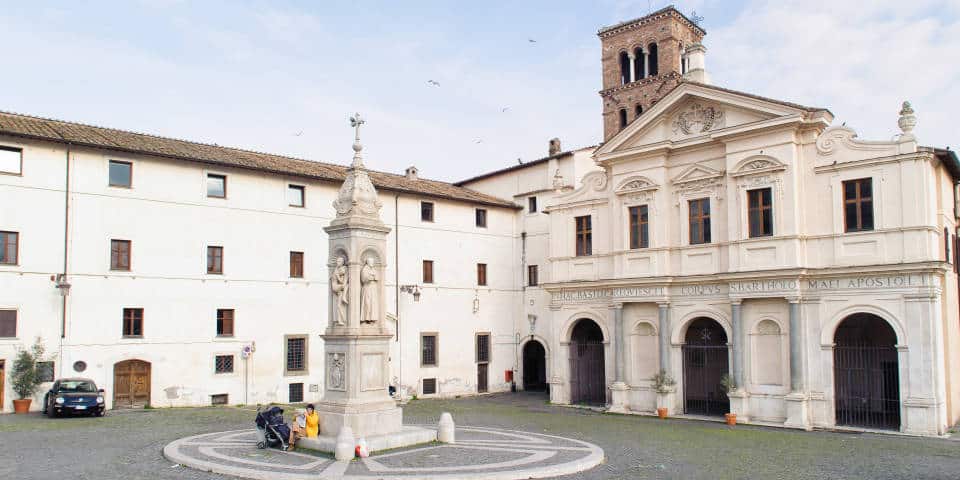
In 998, Roman Emperor Otto III built a basilica on the Tiber Island dedicated to the memory of the Czech Saint Adalbert of Prague (Latin: Adalbertus Pragensis). In the 12th century, the temple got its present name – Basilica di San Bartolomeo. At the beginning of the 20th century, Tiber Island acquired its second name – Isola di S. Bartolomeo. The Pons Cestius is also often called Ponte S. Bartolomeo.
In 1584, the island became famous again as a place associated with medicine: a hospital (Italian: Ospedale Fatebenefratelli), which operates even today, was opened there. The building is located in the western part of Tiber Island and is subordinated to the Hospitaller Order of St John of God (Italian: L’Ordine Ospedaliero di San Giovanni di Dio).
The ancient obelisk was destroyed in the Middle Ages. In 1868, Pope Pius IX ordered to replace it with a new pillar. Architect Ignazio Jacometti created a monument decorated with statues of the four saints: St Bartholomew, St Paulinus of Nola, St Francis, and St John. Fragments of the ancient obelisk are now kept in the museum in Naples.
Places to Explore
- The Basilica of St Bartholomew on the Island (Basilica di San Bartolomeo all’Isola).
- San Giovanni Calibita (Chiesa di San Giovanni Calibita) – a 14th-century church.
- Caetani Tower (Torre dei Caetani)/
- The Pons Aemilius (Ponte Emilio), today called Ponte Rotto – picturesque remains of the first stone bridge over the Tiber on the territory of Rome.
- Temple of Aesculapius (Tempio di Esculapio) – ruins of the ancient sanctuary of the deity considered to be a patron of medicine.
Cultural Events
The island has been hosting an annual cinematographic festival, “Isola del Cinema”, every summer since 1995. From the middle of June until September, Romans and visitors of the Italian capital can watch new Italian, European, and world cinema on the big screen installed in the open air. In addition, there are meetings with representatives of the film industry, poetry and literary events, short film competitions, etc.
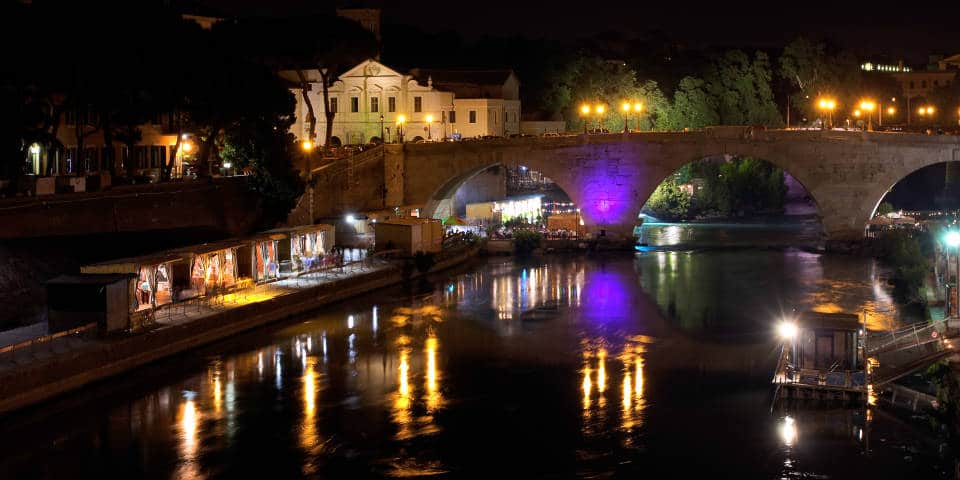
From the middle of June till the end of the summer on the waterfront from the island to the Pons Cestius, there is an evening fair with cocktails, snacks, and live music – don’t miss it.