RomeItaly.guide
  • About us
  • Where to Stay
    • Best 3-Star Hotels
    • Hostels for Solo Travellers
    • Hotels with Views
    • Near the Colosseum
    • Near Termini Station
  • Ancient Sites
    • Baths of Diocletian
    • Castel Sant’Angelo
    • Colosseum
    • Pantheon
    • Roman Forum
  • Visiting Vatican
    • Sistine Chapel
    • Vatican Museums
    • St Peter’s Basilica
    • St Peter’s Dome
  • Museums & Galleries
    • Ara Pacis Augustae
    • Borghese Gallery
    • Palazzo Farnese
  • Hills
    • Aventine
    • Capitoline
    • Janiculum
    • Pincian
  • Fountains & Squares
    • Acqua Paola
    • Altar of the Fatherland
    • Bernini’s Elephant
    • Four Rivers Fountain
    • Piazza Navona
    • Spanish Steps
    • Turtle Fountain
    • Trevi Fountain
  • Parks & Gardens
    • Knights of Malta Keyhole
    • Orange Garden
    • Rose Garden
    • Villa Doria Pamphilj
    • Villa Borghese
    • Villa Sciarra
    • Umbrella Pine Trees
  • How to Get
    • Fiumicino Airport ➡️ Rome
  1. Home /
  2. Roman Emperors

Julius Caesar: Life and Legacy

Written by: Kate Zusmann

Gaius Iulius Caesar

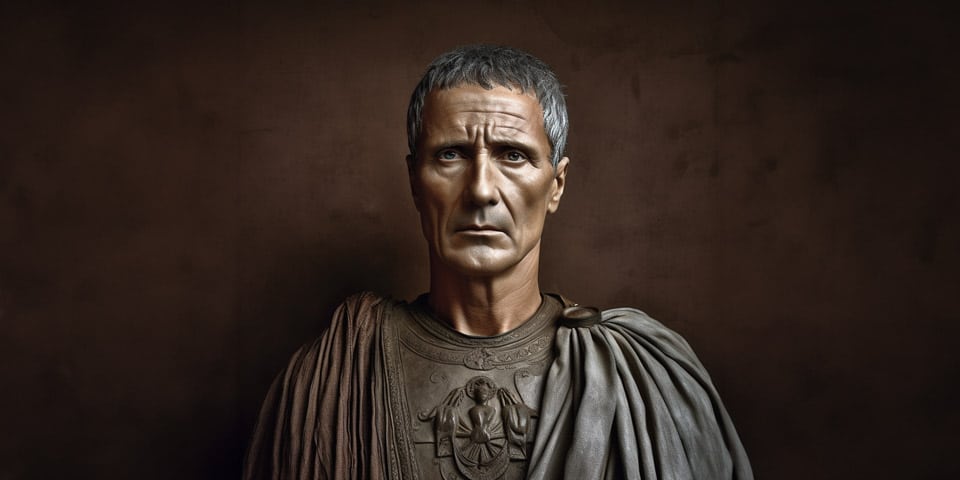
Julius Caesar (100–44 BC) was a general, politician and dictator of the late Roman Republic. He was never a Roman emperor: the imperial period began after his death under his adopted heir, Augustus. His campaigns, civil war and assassination reshaped Roman politics, and several places in central Rome still tell that story.

Contents
  1. Julius Caesar: a short biography
  2. Places connected with Caesar in Rome
    1. Forum of Caesar
    2. Largo di Torre Argentina
    3. The Appian Way
  3. Was Julius Caesar an emperor?
  4. When and where was Caesar killed?

Julius Caesar: a short biography

Caesar was born into the patrician Julii family in 100 BC. After early military service and a series of political offices, he became consul in 59 BC. He had formed an informal alliance with Pompey and Crassus, often called the First Triumvirate. The alliance helped each man advance his political interests, but it was neither a formal constitutional office nor a lasting peace.

As governor in Gaul, Caesar led campaigns from 58 to 50 BC and wrote an account of them. His victories gave him soldiers, wealth and considerable political influence. Relations with Pompey and the Senate deteriorated after Crassus died. In 49 BC Caesar crossed the Rubicon with his army, triggering a civil war. He defeated Pompey’s forces at Pharsalus in 48 BC; Pompey was later killed in Egypt.

Caesar returned to Rome as its dominant political figure. He introduced reforms to the calendar and government and was eventually made dictator perpetuo, or dictator for life. A group of senators killed him on 15 March 44 BC at the Curia of Pompey. The assassination did not restore the old Republic. Further civil wars followed, ending with the rise of Augustus.
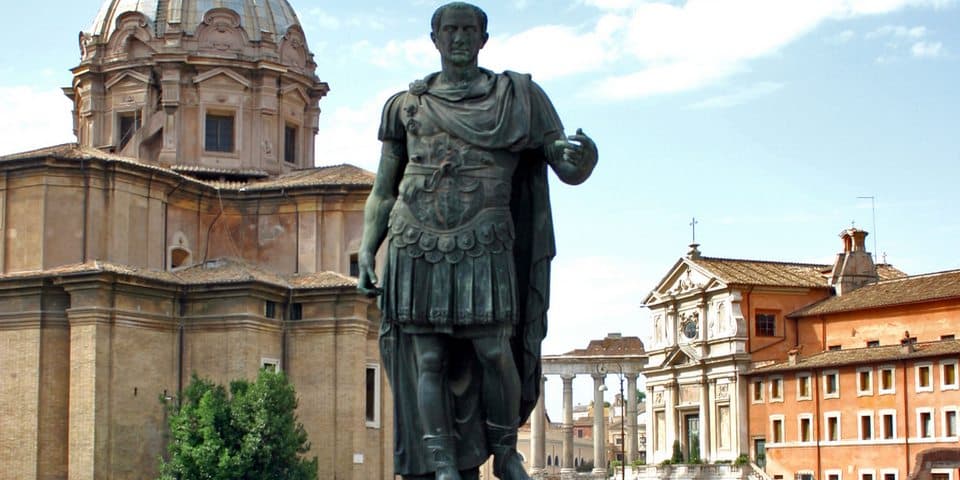
Statue of Julius Caesar near his forum in Rome

Places connected with Caesar in Rome

Forum of Caesar

Caesar began building his own forum in 54 BC alongside the older Roman Forum. It included a temple to Venus Genetrix, whom the Julii claimed as an ancestor. The temple was inaugurated in 46 BC, although the forum was not yet complete. What you see today includes later alterations. Read the official Rome tourism account before visiting.
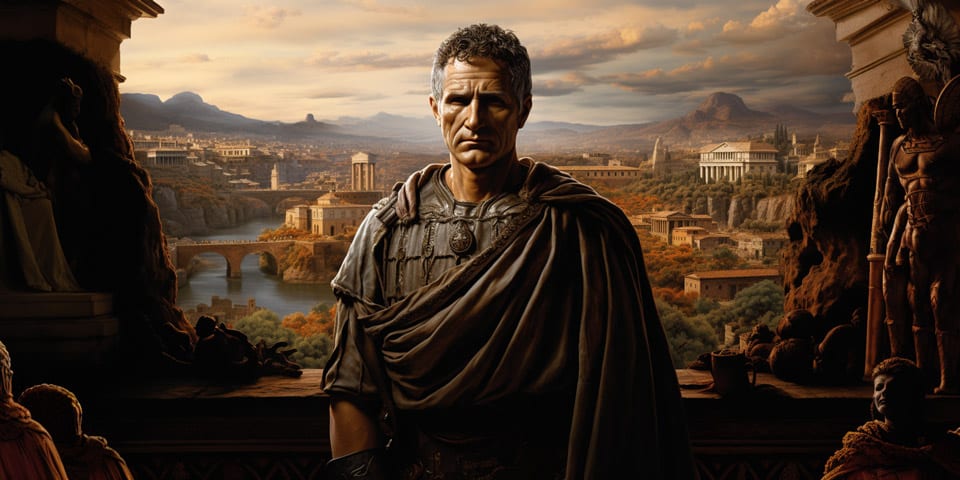
Julius Caesar and the monuments of Rome

Largo di Torre Argentina

The assassination took place at the Curia of Pompey, a senate meeting hall in the complex of Pompey’s Theatre, rather than in the main Roman Forum. The remains of the curia are within the Sacred Area of Largo di Torre Argentina. Rome’s official site guide explains the archaeology and current visitor arrangements. Check opening times and admission before setting off.
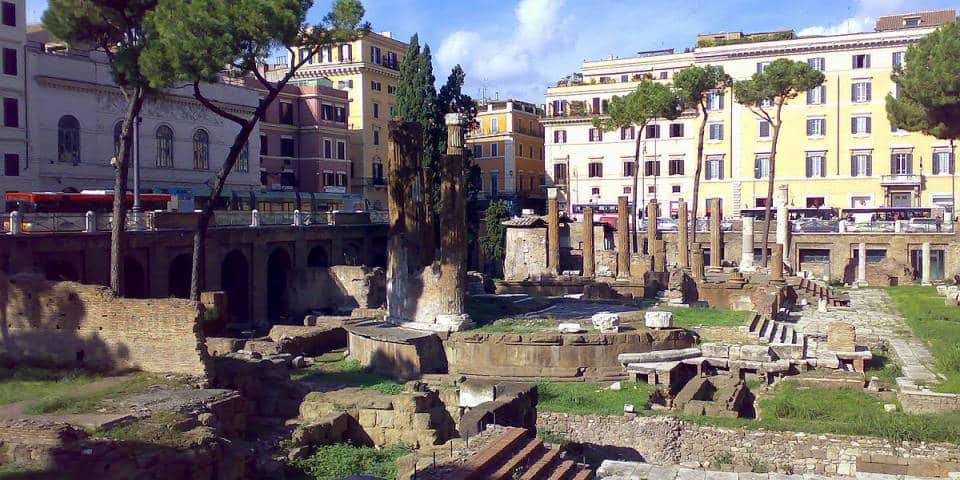
Archaeological area at Largo di Torre Argentina

The Appian Way

The Appian Way was built long before Caesar, starting in 312 BC. He later held a role in its upkeep. A walk along the ancient road puts his life in the wider setting of the Republic, but the surviving paving is not a monument built by Caesar himself.

Was Julius Caesar an emperor?

No. Caesar held the title of dictator within the Republic. Augustus, his adopted heir, became Rome’s first emperor after the ensuing civil wars. Caesar’s name later became associated with imperial titles, which can make the distinction confusing.

When and where was Caesar killed?

He was assassinated on the Ides of March, 15 March 44 BC, at the Curia of Pompey. The archaeological remains are at Largo di Torre Argentina, where visitor access is managed separately from the Roman Forum.

Author: Kate Zusmann

Kate Zusmann

I’ve lived in the Eternal City for the past 12 years. They say every corner of Rome holds a story, and I’m here to share some of the most fascinating historical facts and local legends.

Dive Deeper into Rome's Stories

Vatican Museums Visitor Guide

992122 travellers read

The Vatican Museums

Rome Italy Tourist Attractions

29415 travellers read

Top 30 Attractions in Rome

Beste Hotels in Rom mit Aussicht

11418 travellers read

Best Hotels with Views in Rome

How to Book Vatican Museums & Sistine Chapel Tickets

16764 travellers read

How to Book Vatican Museums & Sistine Chapel Tickets

St. Peter's Basilica dome seen through the trees from the far side of Piazzale Garibaldi, Rome

12098 travellers read

Janiculum Hill (Gianicolo): Viewpoints and Walking Route

Portrait of Emperor Claudius

18 travellers read

Emperor Claudius

Roman monument associated with the Five Good Emperors

18 travellers read

The Five Good Emperors of Rome

Portrait of Emperor Caracalla

17 travellers read

Emperor Caracalla

Portrait of Marcus Aurelius

14 travellers read

Emperor Marcus Aurelius

Show more

About us

About us ROME.US Authors Kate Zusmann and Artur Jakucewicz
We're Kate and Artur, a duo bound by our shared fascination with the Eternal City – Rome. Our paths, driven by a mutual passion for its timeless stories and architectural marvels, converged in a way we had never imagined.

Explore Rome

  • Souvenirs and gifts from Rome

    Best Souvenirs from Rome: 25 Gift Ideas

  • St Peter's Basilica in the Vatican City

    St Peter’s Basilica in the Vatican City

  • The Fountain of Neptune

    The Fountain of Neptune

  • Piazza Venezia in Rome

    Piazza Venezia in Rome

  • Full front view of the Giuseppe Garibaldi equestrian monument in Rome with the ITALIA E VITTORIO EMANUELE dedication inscription on the base

    Monument to Giuseppe Garibaldi — Rome’s Bronze General on the Janiculum

RomeItaly.guide

This website uses cookies. For more info read the cookies policy

RomeItaly.guide © 2026. Created with love by Roman experts and guides.
  • American English
  • Español
  • Deutsch
  • Polski
  • Русский
  • Français