991513 travellers read
Written by: Artur Jakucewicz
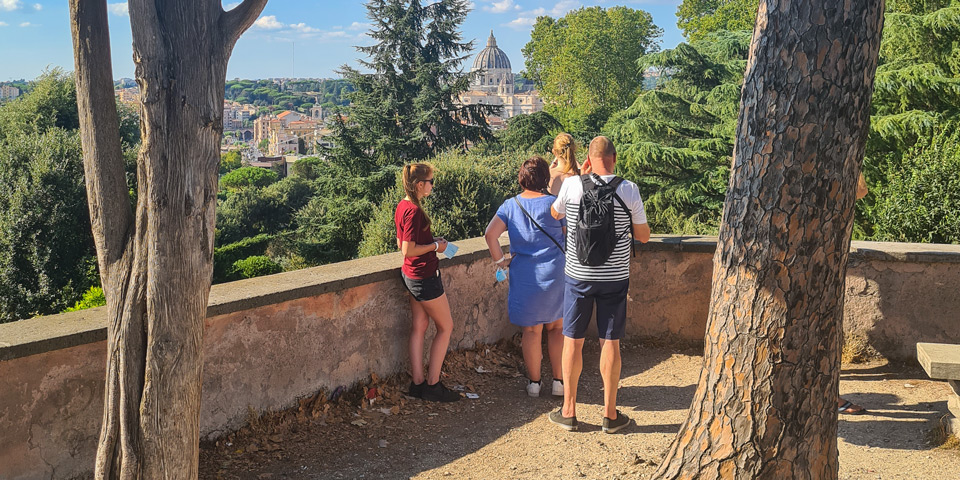
The best way to understand the Janiculum is to walk along its ridge. Known in Italian as the Gianicolo, the hill rises west of the Tiber and lies outside Rome’s traditional Seven Hills. Its viewpoints overlook the historic centre. The promenade also preserves the memory of the Roman Republic of 1849 and the long struggle to make Rome part of a united Italy.
After years of walking this hill, I recommend approaching from the Vatican side, continuing south along the ridge, then descending past Acqua Paola and San Pietro in Montorio into Trastevere. Allow about half a day for the Janiculum route itself if you want to see the noon cannon, read the monuments, and enter both the church and Tempietto. Time inside St Peter’s Basilica is additional.
Route at a glance: start at St Peter’s Square and finish in Trastevere. The principal stops are Scalinata di Sant’Onofrio, Anita Garibaldi and the lighthouse, Piazzale Garibaldi, the patriots’ busts, Porta San Pancrazio, Acqua Paola, the Garibaldi Ossuary, and San Pietro in Montorio. Depending on where you finish in Trastevere, expect approximately 3.5 to 4 kilometres and 70 to 90 minutes of actual walking. With the cannon and monument stops, the route normally fills three to four hours. The difficulty is moderate because the climb comes first; most of the final section is downhill.
An early visit to St Peter’s Basilica works well before this walk. From St Peter’s Square, the practical landmark for the ascent is the Scalinata di Sant’Onofrio, labelled “The Mexican Steps” on Google Maps. This label refers to the Sant’Onofrio stairway, not the Spanish Steps on the other side of central Rome.
The walk from St Peter’s Square to the foot of the stairway is roughly one kilometre and takes about 15 to 20 minutes. From there, follow the climb towards Passeggiata del Gianicolo. The remaining section to the Faro del Gianicolo is about 450 metres, with roughly 32 metres of ascent, and normally takes another 8 to 10 minutes.
To save your energy, walk from the Vatican to the Lgt Sassia/S. Spirito (H) stop. Buses 115 and 870 climb to Psg Gianicolo/Anita Garibaldi; the ride can take about seven minutes when traffic is light. Roman buses serve stops on request, so tell the driver where you need to get off, follow the route on your phone, and press the stop button in advance. Check the live service on the day of your visit because routes and waiting times can change.
The northern approach brings you to two monuments facing one another. On one side stands the memorial to Anita Garibaldi.
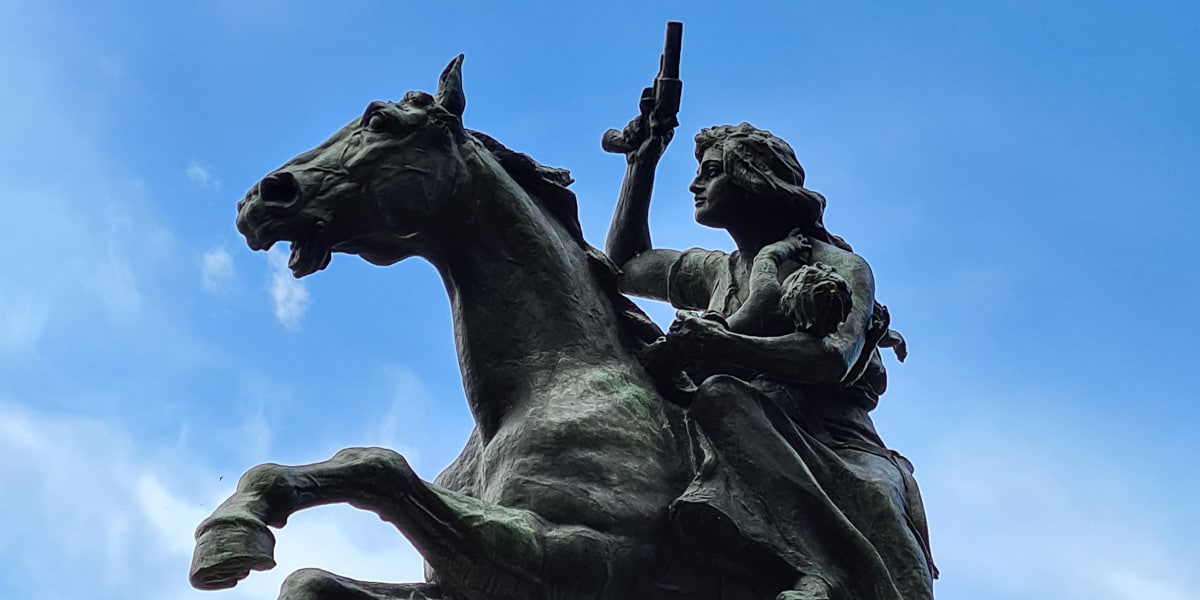
Mario Rutelli portrayed her on a rearing horse, holding a pistol while carrying her infant son. Her remains were placed inside the pedestal when the monument was inaugurated in 1932, turning the image of a fighter and mother into her actual tomb.
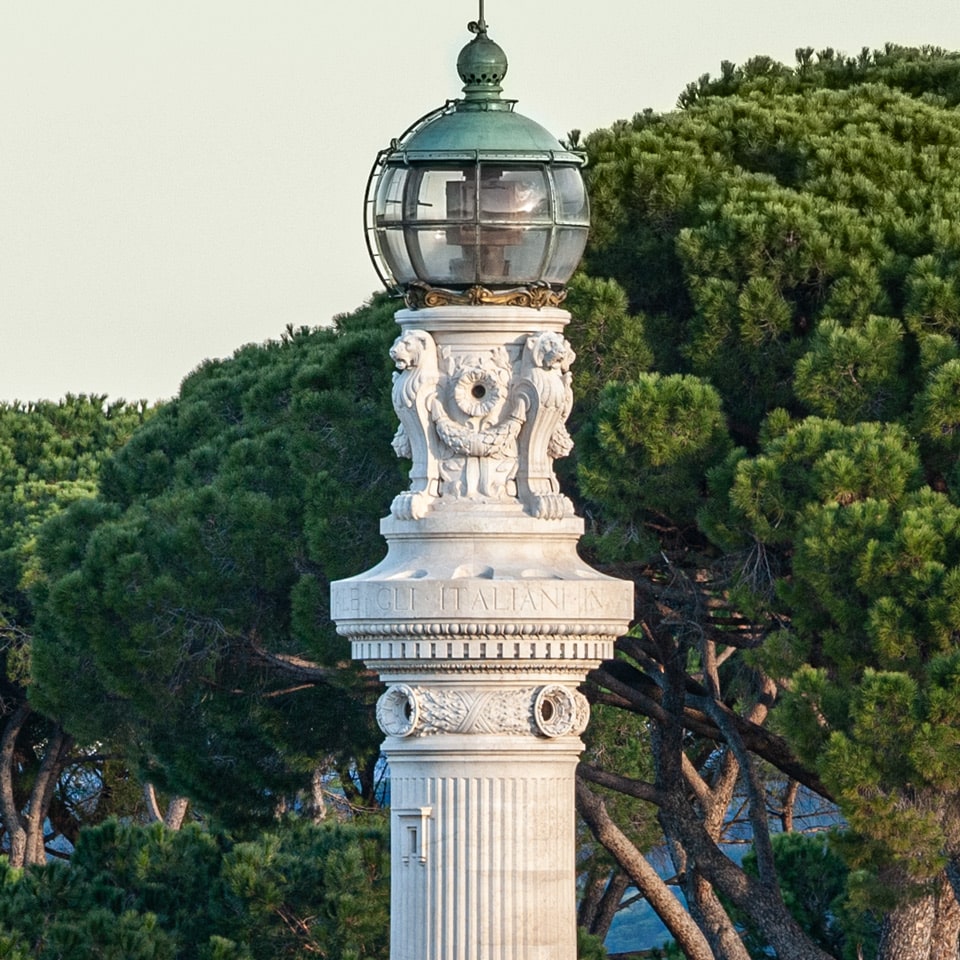
Across the road, the Faro del Gianicolo looks like a coastal lighthouse set improbably on a Roman hill. Manfredo Manfredi designed it as a gift from the Italian community in Argentina for the fiftieth anniversary of Italian unification. Look around the base for the commemorative inscriptions and carved lion heads.
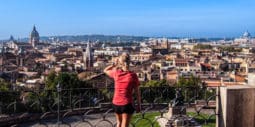
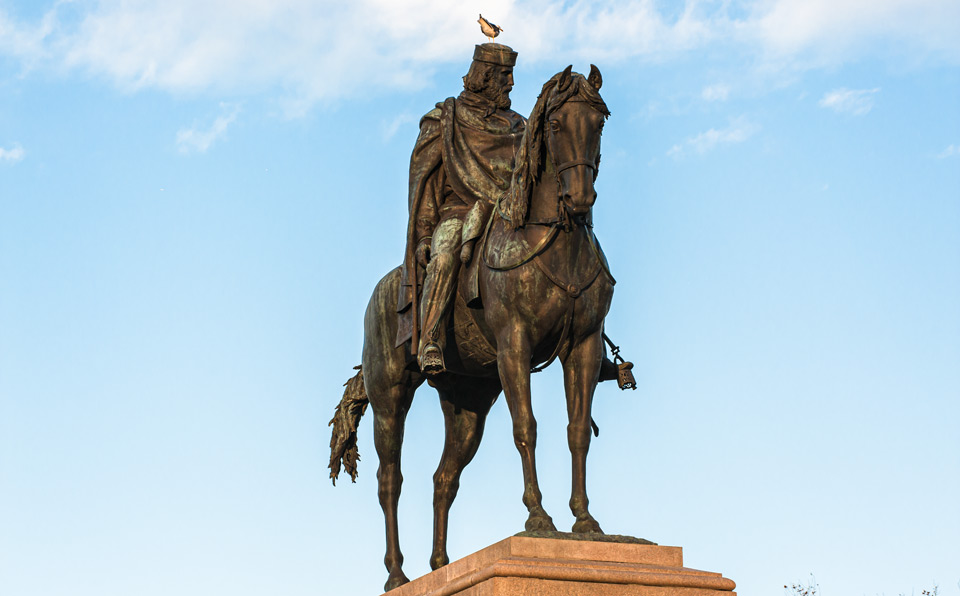
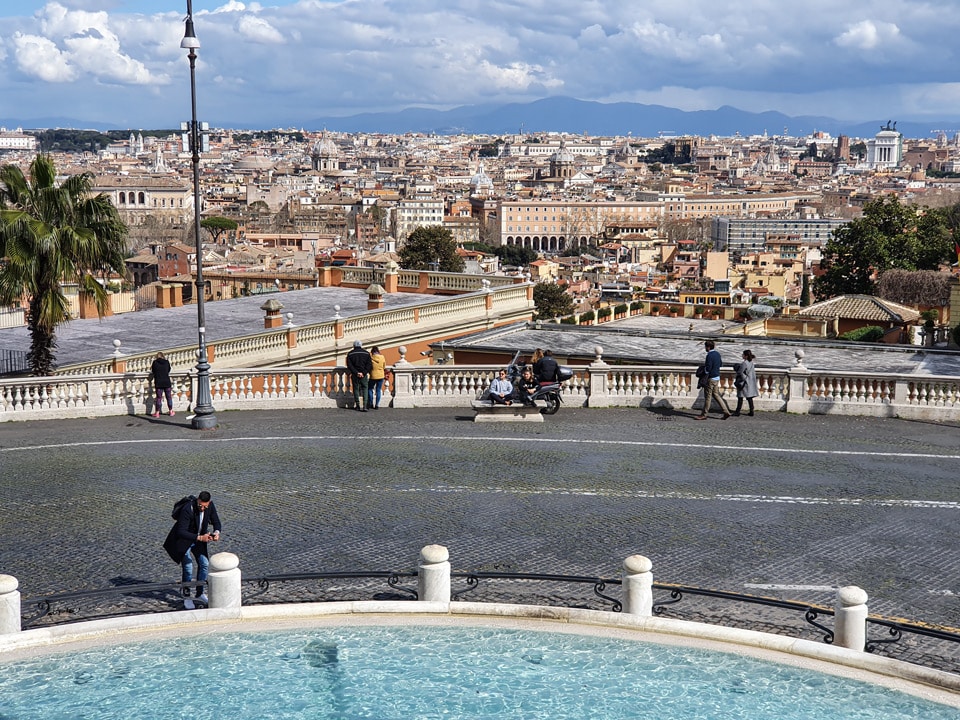
Piazzale Garibaldi is approximately five minutes away. Giuseppe Garibaldi’s equestrian monument dominates the square, while the main belvedere opens east towards Rome’s historic centre.
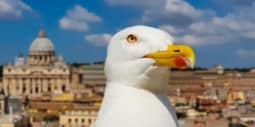
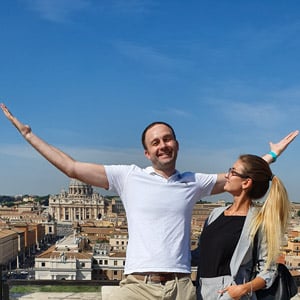
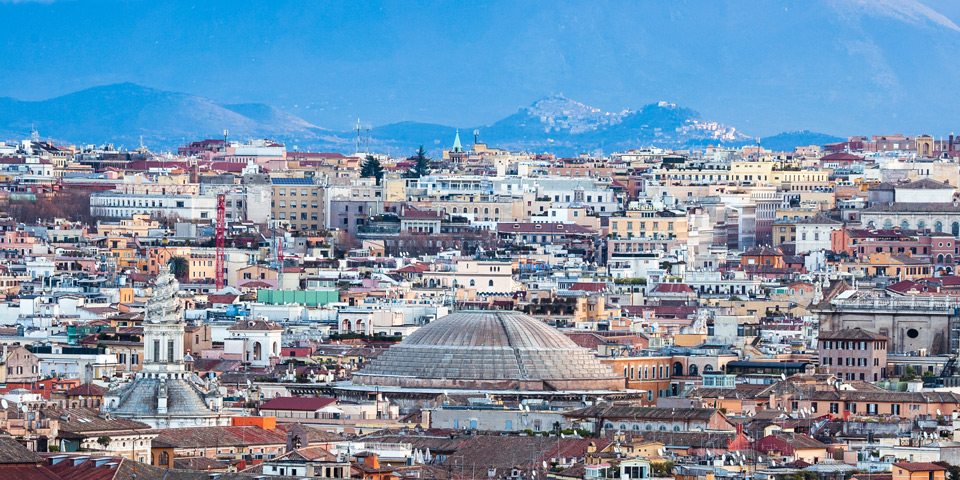
From the city-facing parapet, look for the white mass of the Vittoriano, the low dome of the Pantheon, and the twin towers above the Spanish Steps. On a clear day, the hills beyond Rome close the horizon. St Peter’s dome is not part of this east-facing panorama: turn to the opposite side of the piazzale for the Vatican view shown in the opening photograph.
This orientation also matters for photography. The sun rises in front of the principal panorama. Near sunset it drops behind the Janiculum, but the low western light can illuminate the domes and rooftops below. Arriving about an hour before sunset therefore gives you warm light over Rome rather than a sunset on the skyline itself.
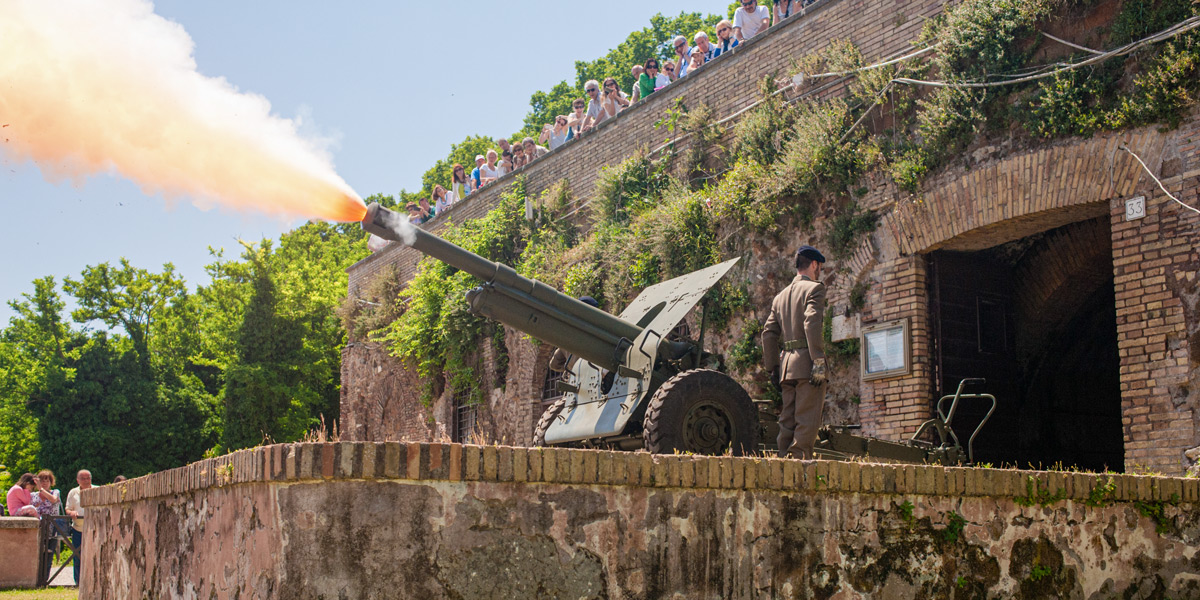
The daily cannon is fired from a platform below the piazzale at exactly noon. Pope Pius IX introduced the signal in 1847 so that Rome’s churches could synchronise their midday bells. Arrive 10 to 15 minutes early and follow the signs or gathering crowd down the short path. The preparation and firing last only a few minutes; the history of the signal and the best place to stand are covered in our guide to the Janiculum cannon.
The southern promenade makes more sense once you know what happened here. In 1849, republicans ended papal temporal government and proclaimed the short-lived Roman Republic. Volunteers defended the Janiculum against French troops sent to restore Pope Pius IX. The Republic fell in July, but the battle became a defining episode in the movement for Italian unification. After Rome joined the Kingdom of Italy, the former battlefield was remade as a public memorial landscape.
The marble portraits in the Janiculum collection of patriots’ busts therefore record more than Garibaldi’s commanders. Tommaso Salvini became an internationally celebrated Shakespearean actor after fighting here at twenty. Colomba Antonietti, the sole woman among the historic busts, died during the French bombardment. Andrés Aguyar was an Afro-Uruguayan who had been born into slavery, gained his freedom, and followed Garibaldi from South America to Rome.
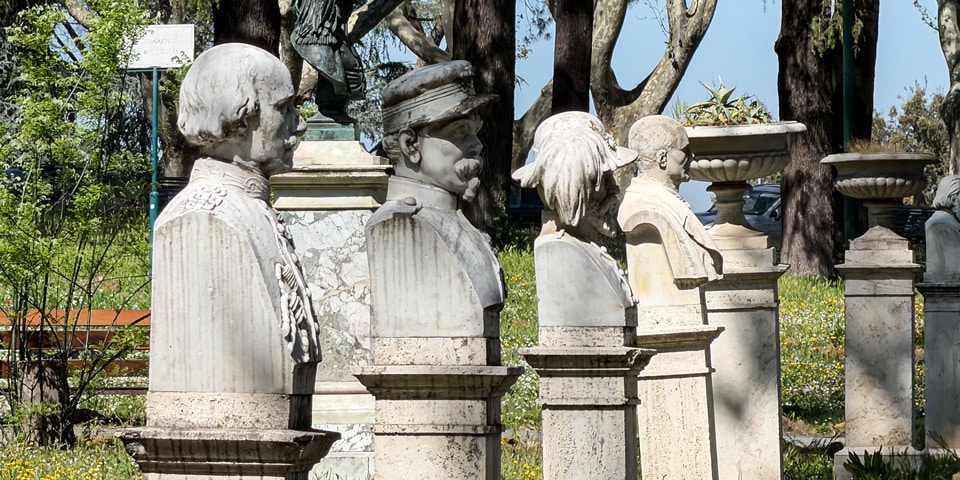
Municipal and tourist pages long described the collection as 84 portraits. That number no longer tells the complete story: the bust of Aguyar, created by Turkish sculptor Işık Özçelik, was added in May 2024. Look first for Salvini and Antonietti, then find Aguyar. These portraits are more revealing than trying to inspect every pedestal.
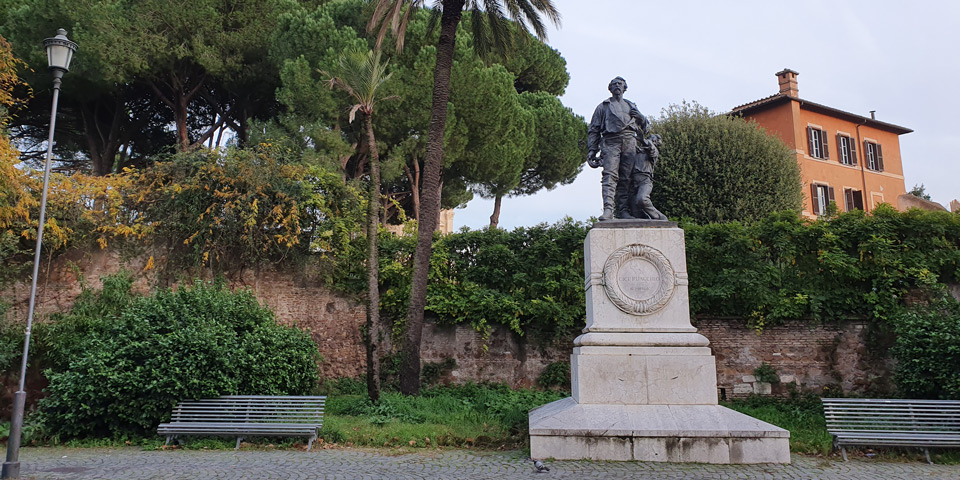
Farther along, the Ciceruacchio monument portrays the Roman popular leader Angelo Brunetti with his young son. Austrian troops executed both of them after the Republic fell. The sculpture can appear sentimental from a distance; knowing that the smaller figure represents a thirteen-year-old killed beside his father changes how it reads.
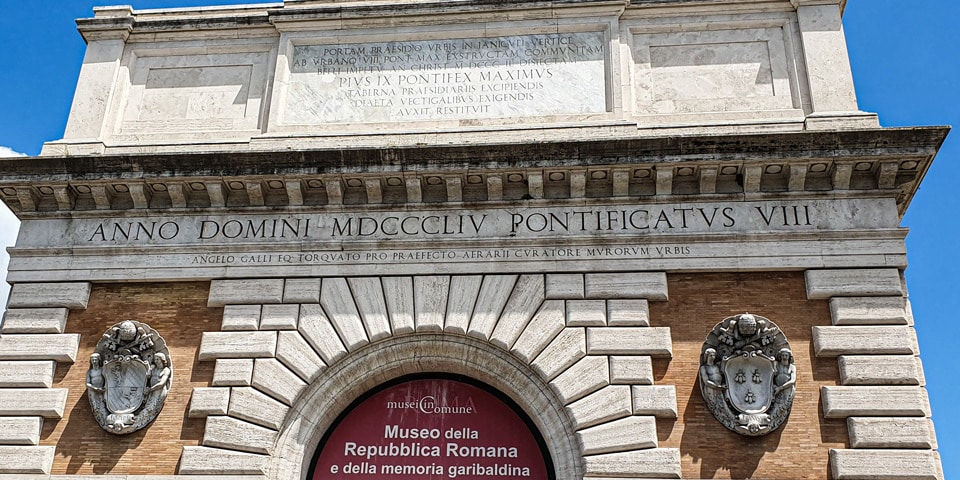
The ridge leads directly to Porta San Pancrazio. French artillery destroyed the seventeenth-century gate during the siege of 1849; the building standing here today is the papal reconstruction commissioned by Pius IX and built from 1854 to 1857. It postdates the Republic, so the fighting described here took place at its predecessor.
The upper façade repays a close look. The three bees on the viewer’s right are the Barberini emblem of Urban VIII, who built the earlier gate. The weathered arms on the left belong to Pius IX, who restored papal government after the Republic fell. The Latin inscription says that the former gate was shattered “by the violence of war” but avoids identifying the French army responsible. Outside, the stone records papal restoration; inside, the Museum of the Roman Republic and Garibaldi’s Memory commemorates the defeated republic and its defenders.
I use Bar Gianicolo, beside the gate, as the natural pit stop on this route. It works for an espresso and cornetto, a tramezzino or panino, or simply a cold drink before the descent.
Porta San Pancrazio is also the decision point for a longer detour into Villa Doria Pamphilj. The park is too large to treat as a quick extra. Its avenues and scattered landmarks work better as a separate half-day than as a rushed addition to the Janiculum walk.
Turn east from Porta San Pancrazio for the Fontana dell’Acqua Paola.
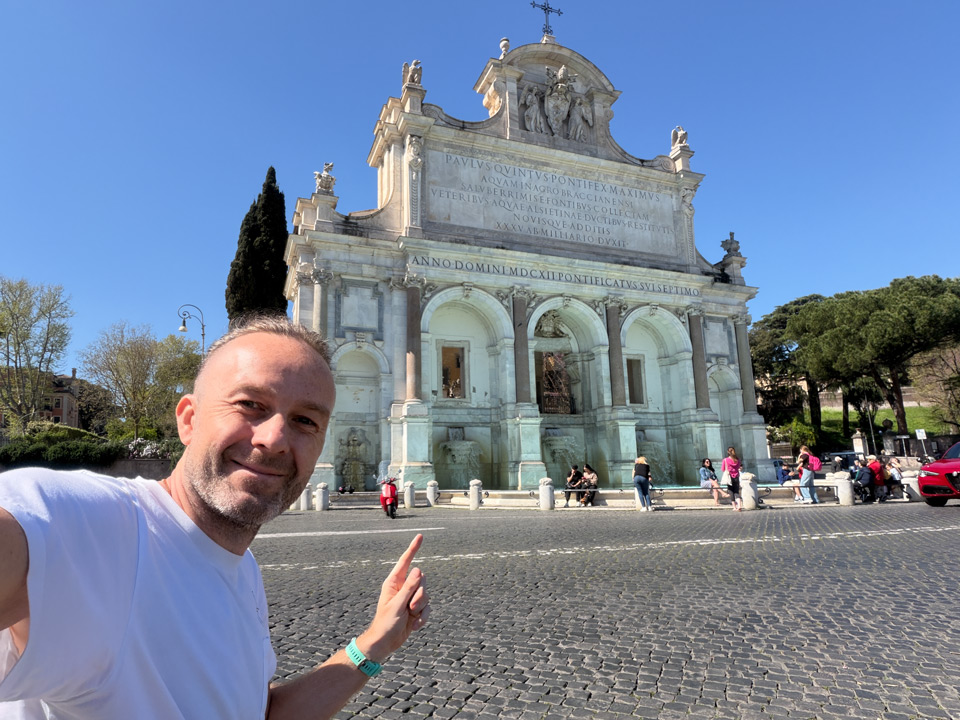
Its five-arched façade incorporates granite columns taken from earlier buildings. Pope Paul V erected this palace-scale display to celebrate the restored water supply brought to the Janiculum in the early seventeenth century. The open space in front also gives a clear view over Trastevere and central Rome.
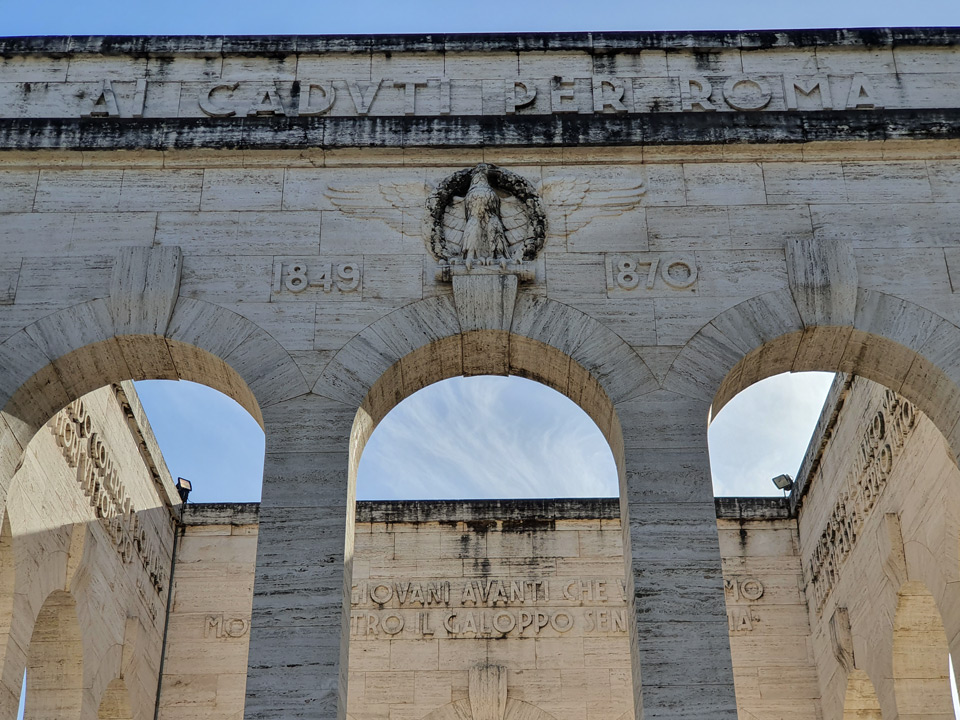
Continue south to the Garibaldi Ossuary Mausoleum. The words Ai Caduti per Roma mean “To those who fell for Rome.” The memorial pairs 1849 with 1870. The earlier date marks the Roman Republic; the latter recalls the end of papal rule and Rome’s incorporation into united Italy.
Continue to the Church of San Pietro in Montorio. The interior is dim, so give your eyes a moment to adjust before circling the side chapels. Bernini combined architecture and sculpture with a concealed light source to turn the shallow Raimondi Chapel into a compact Baroque stage.
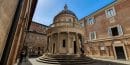
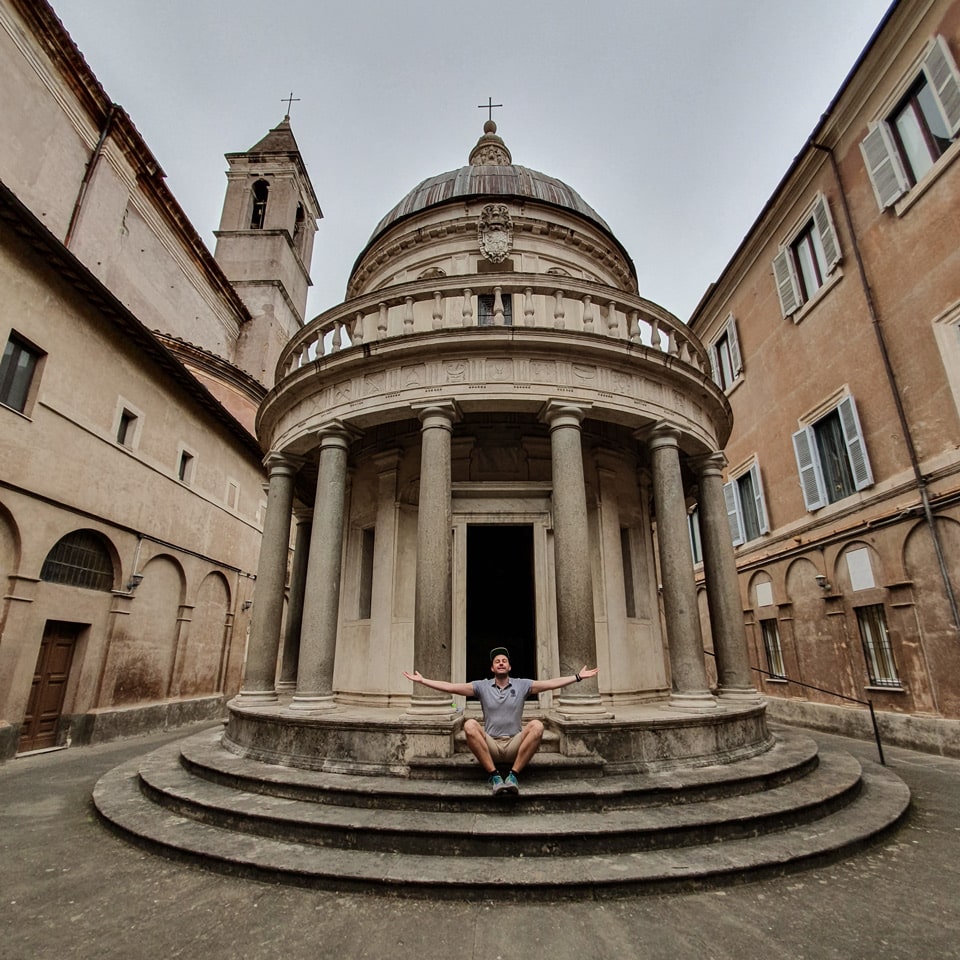
Bramante’s Tempietto occupies the courtyard of the Royal Academy of Spain beside San Pietro in Montorio. Use the academy entrance to reach it. Its circular design had a lasting influence on Renaissance architecture, so confirm that access is possible before making the descent.
If you still have time and energy, Villa Sciarra offers a shaded extension south of the main route. It feels more like a neighbourhood garden than a formal sightseeing stop.
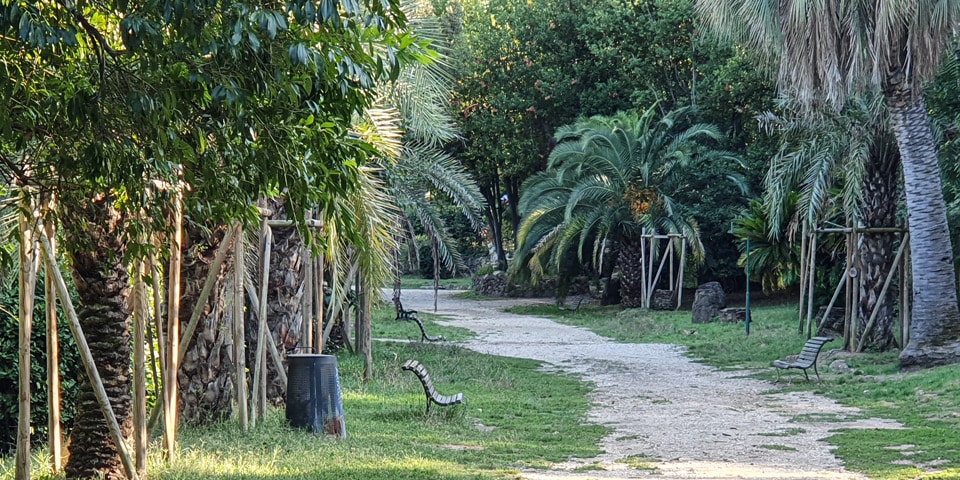
Otherwise, descend directly into Trastevere. Ending there is practical: the final stretch is downhill, and the neighbourhood offers plenty of choices for lunch or dinner as well as onward transport.
For the noon cannon, take a taxi to Piazzale Garibaldi at about 11:40. Watch the firing and return to the belvedere for the view and Garibaldi monument. Anita’s monument and the lighthouse form a short northern detour of roughly five minutes each way; return through the piazzale before continuing south towards Acqua Paola.
For an evening walk, reach Piazzale Garibaldi about one hour before sunset. The sun will be behind you, lighting the city rather than setting over its skyline. Continue along the ridge while there is still enough light to read the monuments, stop at Acqua Paola, then descend to Trastevere for dinner.
For a first complete walk, keep the Vatican-to-Trastevere direction. The ascent comes first, the monuments then unfold in a meaningful historical sequence, and the route finishes downhill near restaurants and public transport.
RomeItaly.guide © 2026. Created with love by Roman experts and guides.