
991228 travellers read
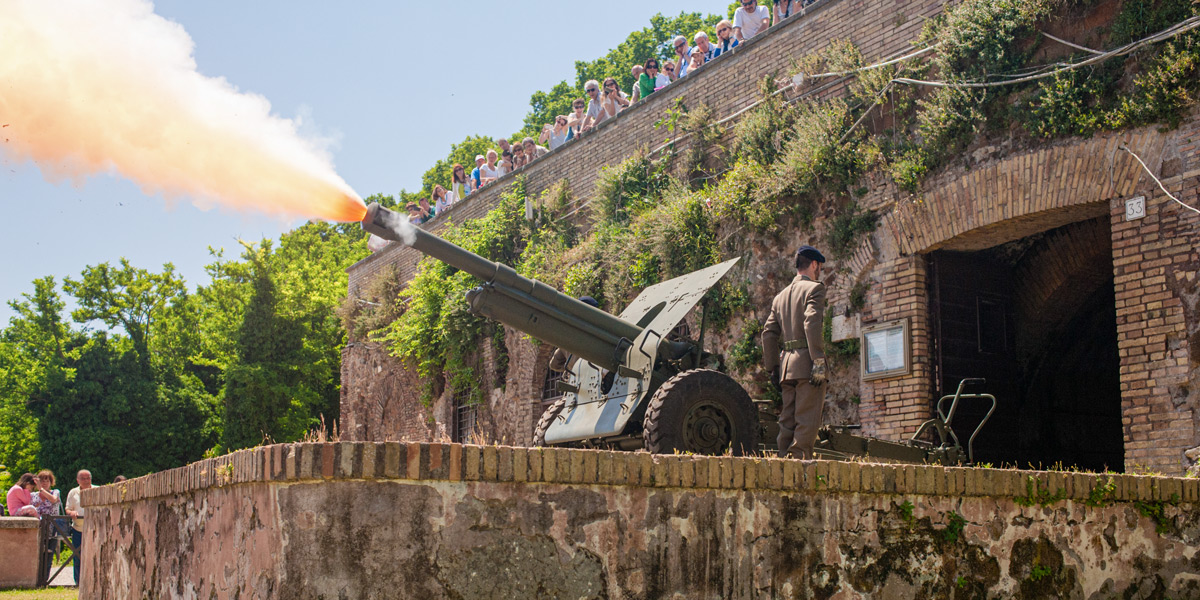
At noon, a single blank artillery round echoes from the Janiculum across central Rome. On quieter days, the report can carry as far as the Esquiline. Visitors flinch, birds lift from the trees, and the city resumes within seconds.
The shot comes from Il Cannone del Gianicolo, positioned below Piazzale Garibaldi. The Italian Army performs the signal every day under an agreement with Roma Capitale. Watching costs nothing. Punctuality matters because the round is fired at 12:00, and by 12:01 the event is over.
I once photographed it from too close to the firing platform and neglected to cover my ears. They rang for hours. The upper parapet gives a better view and a much more comfortable distance from the blast.
Pope Pius IX introduced the signal on 1 December 1847. Rome’s church bells did not all keep the same time, which made the midday Angelus sound at different moments across the papal capital. One cannon shot gave every parish a common reference.
The first rounds were fired from Castel Sant’Angelo. When the official time signal arrived, an officer ordered the shot and churches across Rome rang together.
Before telegraph and telephone communication took over, the firing order arrived by sight from the church of Sant’Ignazio. A basket containing a black ball was raised on a long pole above the church and dropped at noon. The officer watched through binoculars and gave the command as the ball fell.
It was an effective piece of civic technology. A basket, a line of sight, and an artillery crew synchronised a city of church towers.
The cannon remained at Castel Sant’Angelo until 1903. It spent a short period on the slopes of Monte Mario before moving permanently to the Janiculum on 24 January 1904. The elevated position allowed the sound to travel over the roofs of the historic centre.
The ritual stopped in 1939 as Rome prepared for wartime conditions. A siren replaced the artillery signal, and the cannon remained silent after the Second World War. It returned on 21 April 1959, during celebrations for the 2,712th anniversary of Rome’s traditional foundation date.
The choice of 21 April carried an obvious message. A custom created under a pope and continued after Italian unification was being restored on Rome’s own civic birthday.
The present weapon is a 105/22 howitzer, according to Roma Capitale. It entered service at the Janiculum in 1991 and fires a specially prepared 105 mm blank round containing black powder. No projectile leaves the barrel, although the flash and smoke are real, as is the pressure wave.
Online descriptions sometimes identify the weapon as an OTO Melara Model 56. That is a different 105 mm howitzer. The official municipal description of the Janiculum gun specifies the 105/22 designation.
Earlier pieces carried their own historical associations. The first cannon installed on the Janiculum had been used by the Royal Italian Army during the attack that opened the breach at Porta Pia on 20 September 1870. That operation ended papal rule over Rome and brought the city into the Kingdom of Italy.
In 1932, the Porta Pia gun was replaced by a 149/13 howitzer captured from Austria-Hungary during the First World War. The succession of weapons linked the noon signal with the military history presented elsewhere along the Janiculum promenade.
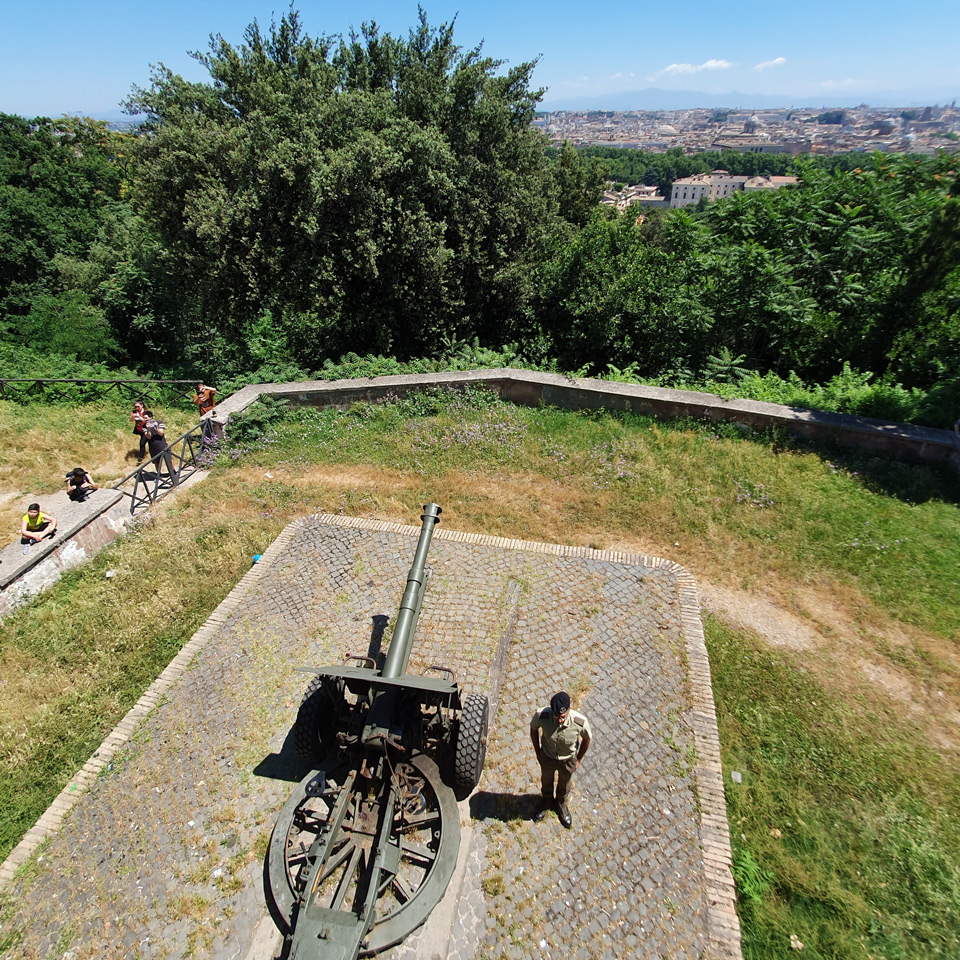
The current crew comes from the Italian Army’s Artillery Command. The soldiers bring the howitzer out from the brick casemate marked with the number 33, position it, load the blank, and wait for the firing order. Roma Capitale renewed its agreement with the Army in 2025, confirming the signal as a daily service performed throughout the year.
The most useful viewing position is directly above the gun. From the parapet, you can see the crew, the muzzle flash, and the smoke without standing beside the weapon. The panorama remains visible throughout the short preparation.
Arrive around 11:45 if you want an unobstructed place at the railing; the front row can fill earlier at weekends and during the busiest travel months. There is little reason to approach the lower firing area, and any temporary barrier or instruction from the soldiers must be respected.
The shot itself takes a fraction of a second. Watch the crew before it happens. The gun chief and loader work with the other crew members through a compact sequence that turns an old time signal into a functioning military ceremony.
After firing, the soldiers unload and return the howitzer to its casemate. This quieter conclusion is worth another few minutes. It shows the practical work behind a ritual that can otherwise look like a single theatrical bang.
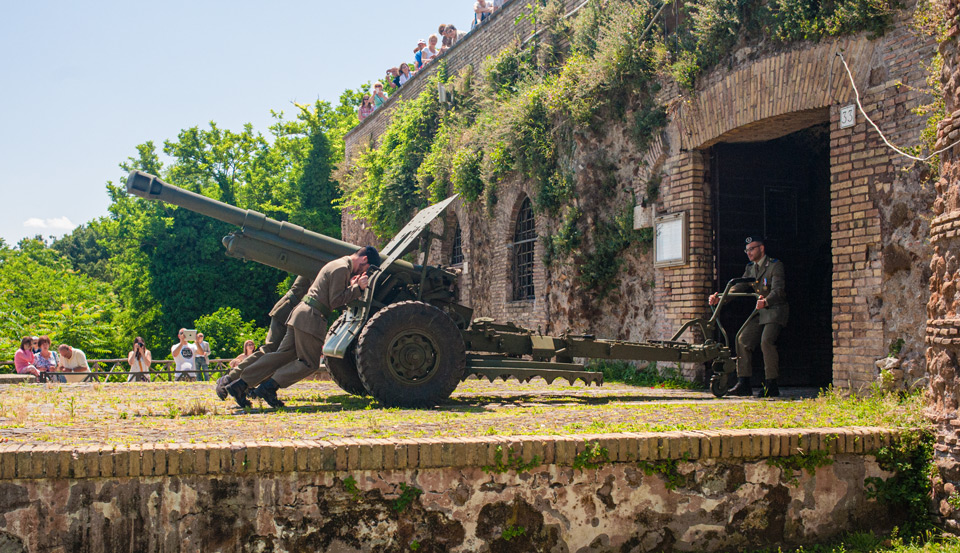
The sound is intense enough to frighten young children even from the upper level. Anyone sensitive to loud noise should use hearing protection and keep dogs well away from the firing area.
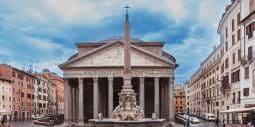
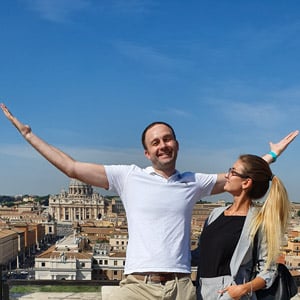
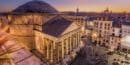
The cannon terrace faces the historic centre. From the parapet, look for the white mass of the Vittoriano, the low dome of the Pantheon, and the twin towers of Trinità dei Monti. On a clear day, the hills beyond Rome close the horizon.
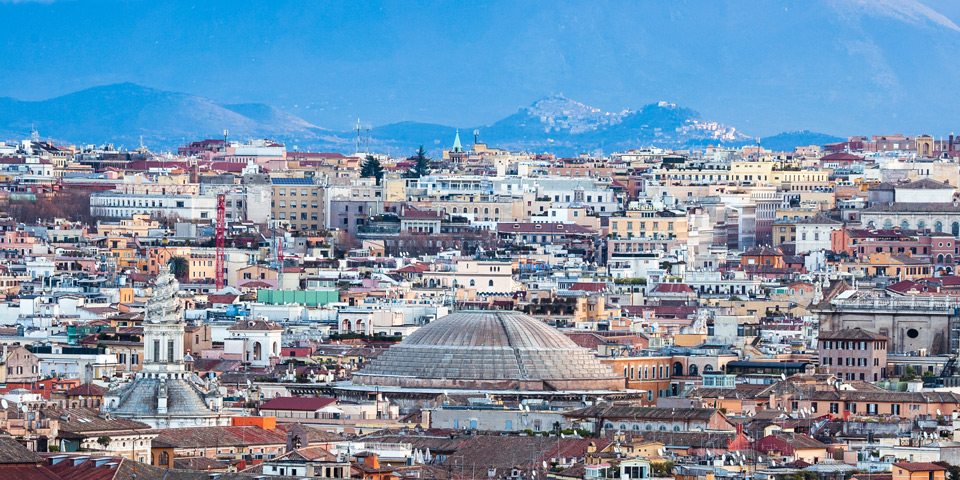
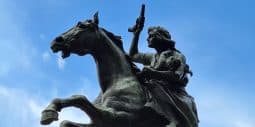
The cannon fits naturally into a longer walk rather than a separate journey across Rome, with Giuseppe Garibaldi’s monument immediately above it. From there, the promenade leads past memorials connected with the Roman Republic and the Risorgimento.
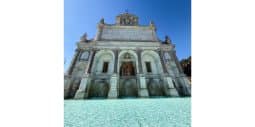
Walk south for about ten minutes to reach the Fontana dell’Acqua Paola. Its palace-scale façade established an important precedent for later Roman fountain displays. Porta San Pancrazio and the Museum of the Roman Republic are close by if you want the historical context behind the monuments on the hill.
I have watched the shot more than once, and its appeal comes from the contrast between the careful preparation and the instant release. The whole performance lasts only a few minutes. It still makes an old civic signal feel physical: Rome reaches noon, the command is given, and the sound moves out across the roofs.
RomeItaly.guide © 2026. Created with love by Roman experts and guides.