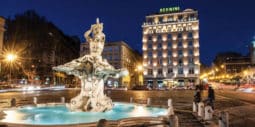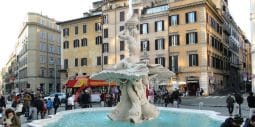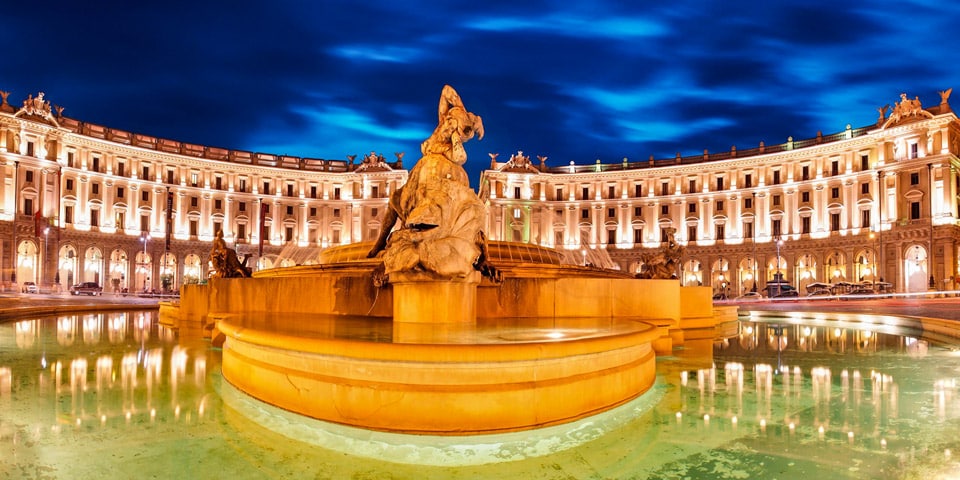

The curved buildings face the Fountain of the Naiads and recall the shape of the exedra of the Baths of Diocletian. Walk over from Termini and use the marked crossings to see the fountain. On the far side, the modest entrance to Santa Maria degli Angeli leads into the former baths. Allow time for the church and the meridian line if they are open.
Republic Square (Piazza della Repubblica) in Rome is a famous tourist attraction with an exciting history. At the same time, its modern compositional solution is considered as a great example of architectural forms of a new time. For many years, this part of the city has remained a favourite holiday spot for both the indigenous people and guests of the Italian capital. Without a visit to the Piazza della Repubblica, impressions of Rome would be incomplete.
Contents
History
During the existence of the Roman Empire, a beautiful garden was located on the territory of the present Piazza della Repubblica, adjacent to the huge thermal complex, the construction of which began during the reign of Emperor Diocletian, back in 298
With its erection, over 40 thousand Christians and slaves perished from exhausting labour and hunger. Public baths, which were very popular with the Romans, occupied about 13 hectares and accommodated about 3 thousand people.
The so-called baths of Diocletian consisted of several structures, including those not related to water procedures:
- Baths with cold and hot baths
- Gyms
- Theatres for performances
- Libraries
- Greenhouses with gazebos and fountains
The complex itself, made in the form of an exedra—a deep semicircular niche with a half dome—lasted several centuries and became ruins in the 500s. The destroyed baths remained intact for almost a thousand years.
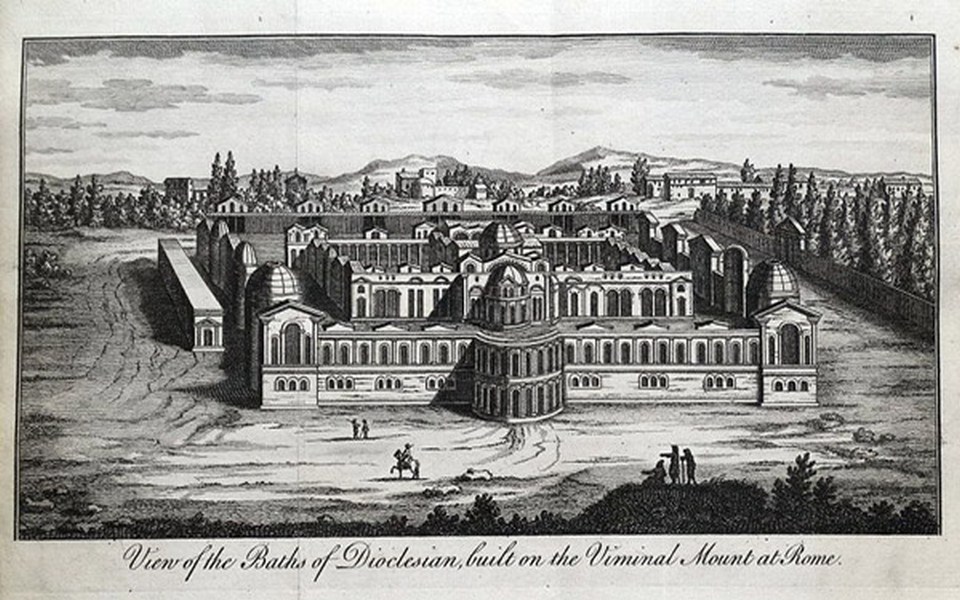
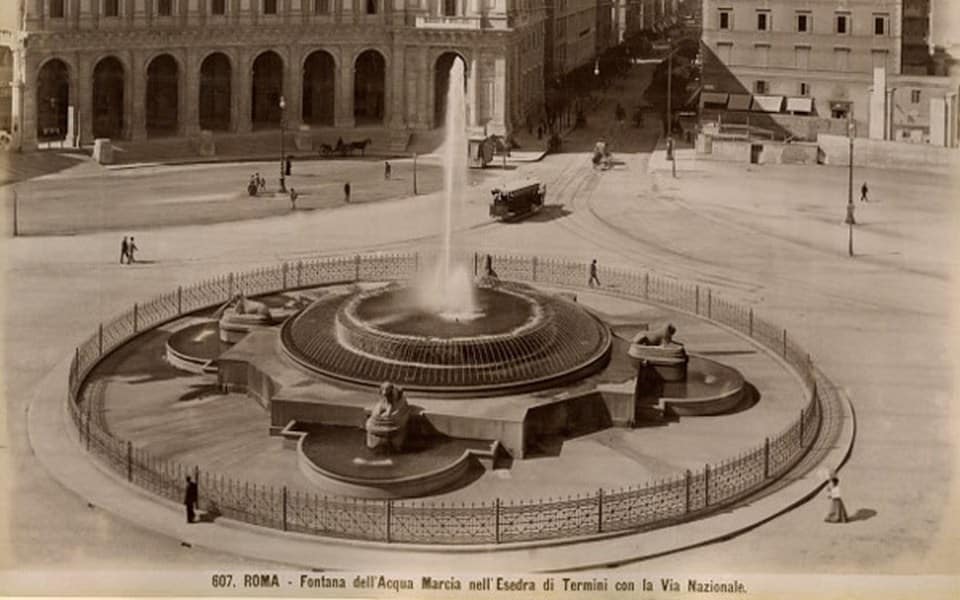
In the Renaissance, it was decided to breathe new life into the ancient Roman ruins. An area was formed called Piazza Esedra, and on the site of the once baths, a basilica was erected according to the design of the great Michelangelo Buonarroti. Years passed, and new transformations took place: thanks to the efforts of Pope Pius IX in 1870, a fountain with bronze lions was installed, which, with the advent of time, significantly changed its appearance.
A few years later, in 1898, the construction of semicircular structures in the antique style with colonnades and lancet arches was completed. The project, which gave the architectural complex monumentality and scale, was led by the Italian master Gaetano Koch.
By 1960, with the opening of the Summer Olympics, the square was renamed and got its current name, although locals still habitually call it Esedra.
How to Get
Finding the Piazza della Repubblica in Rome is not difficult. A quick and convenient way is to get on the metro, on line A, going out at the station of the same name Piazza Repubblica. The square itself is located close to the Termini train station (Roma Termini), within walking distance of less than five minutes. From it originates the main street of the city, a favourite place for walking – Via Nazionale.
I recommend you to read about: hotels near Termini station
Fontana delle Naiadi
Fountain of the Naiads (Fontana delle Naiadi), executed in the spirit of symbolism, has become a bright decoration of Rome. It was built in 1901 and occupied the central part of the architectural space of the square. The authorship of the sculptural composition belongs to the Italian master Mario Rutelli.
The base of the monument dates back to the 1870s. Pope Pius IX originally had the fountain built to commemorate the creation of the new aqueduct named Acqua Pia-Marcia after the ancient Aqua Marcia was constructed in 144 BC. However, several years later, the new Italian government renovated the whole area, and the fountain was increased in size and moved about 80 metres to the location where it stands today.
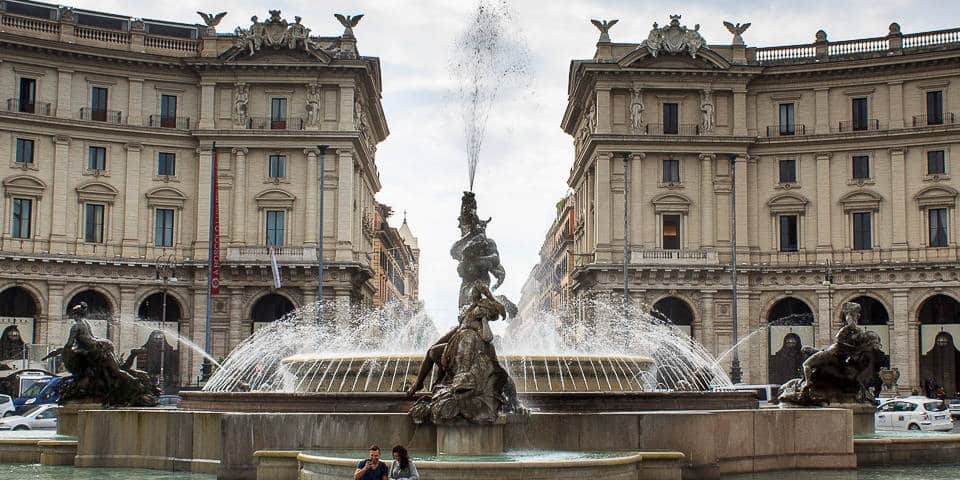
Many citizens of Rome were unsatisfied with the decoration of the fountain, and the city council of Rome decided to commission the real statues. Eventually, in 1901, Mario Rutelli, a Sicilian artist, was commissioned to design four statues to decorate the corners of the fountain. New sculptures created are four nymphs: the Naiad of the Oceans, the Naiad of the Rivers, the Naiad of the Lakes, and the Naiad of Underground Waters, where each one featured an animal from their environments.
Santa Maria degli Angeli e dei Martiri
An unusual church is located on Republic Square, glorifying the Holy Virgin Mary, Angels, and Martyrs.
The full name of the temple is the Basilica di Santa Maria degli Angeli e dei Martiri. In the middle of the XVI century, with the blessing of Pope Papius IV, the decision to erect a church was approved. The story of its creation is interesting: the Sicilian clergyman Antonio del Duca saw an unusually bright light over the ruins of the thermal complex, which prompted him to think of building a temple on this site. Negotiations with the higher clergy on the need for the construction of a basilica have been ongoing for more than a decade.
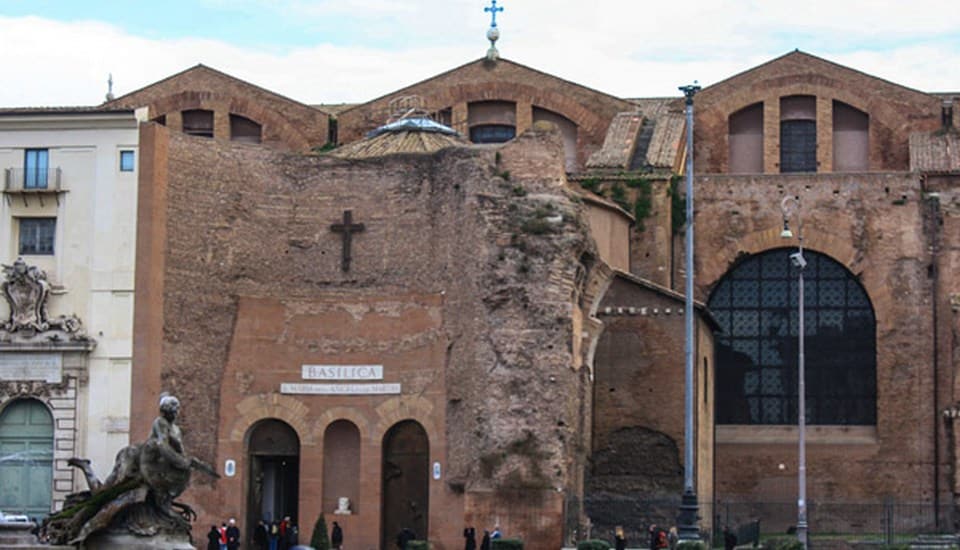
As a result, in 1561, the great Michelangelo developed a project for the construction of a church, the façade of which was the reconstructed walls of ancient thermae. Although the main work was done quite quickly (after five years), the interior decoration of the basilica lasted more than a century. The decoration of the temple was finally completed in the middle of the 18th century. The interior is decorated in the style of Italian Baroque, based on the designs of Michelangelo. This part of the work was carried out under the guidance of the renowned architect Luigi Vanvitelli.
The Basilica in the Piazza della Repubblica is an amazing place, a beautiful temple of interest not only to the Christian world but also to art lovers. Here are sculptures and canvases collected by famous artists of past centuries, such as Domenichino, Pompeo Girolamo Battoni, Carlo Maratta, and many others.