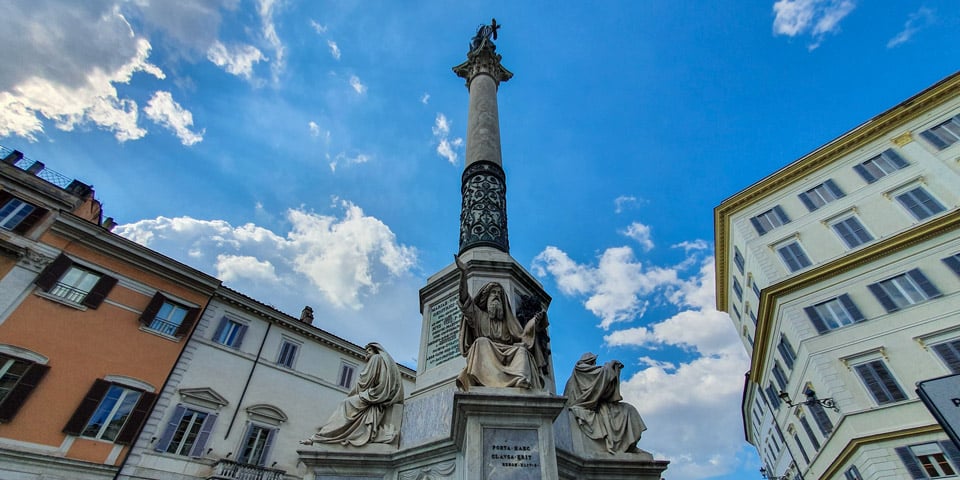

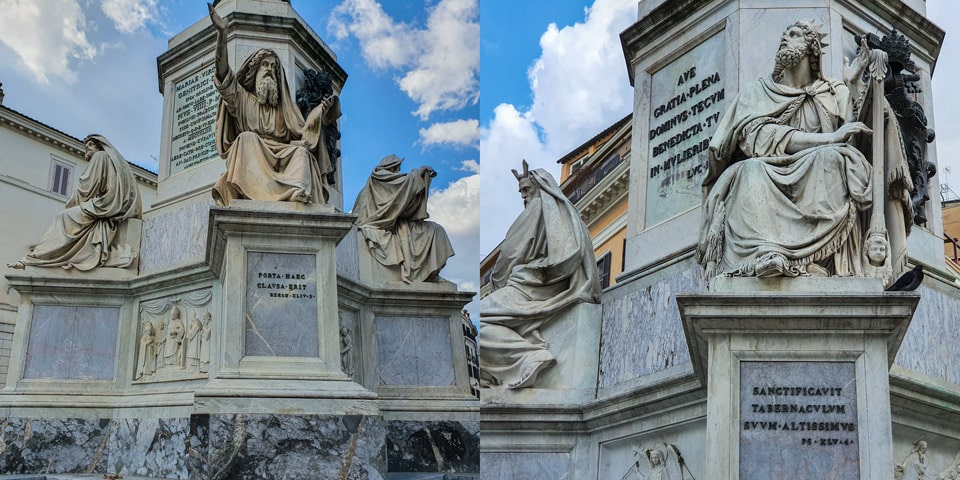
The column rises in Piazza Mignanelli, beside Piazza di Spagna. Look up first for the bronze figure of Mary and then at the four Old Testament figures below. On 8 December, the Feast of the Immaculate Conception, flowers are placed at the monument. Check that year’s announcements for the ceremony and any street restrictions.
The Column of the Immaculate Conception (Colonna dell’Immacolata Concezione), nestled within Rome’s bustling Piazza Mignanelli, is a testament to religious reverence and artistic craftsmanship.
Built-in the 19th century to commemorate the Catholic dogma of the Immaculate Conception, this majestic monument exudes elegance and significance. Let’s delve into this cherished symbol’s captivating history and cultural importance adorning the Eternal City’s landscape.
Contents
History of the Column of the Immaculate Conception
The Column of the Immaculate Conception, or Colonna dell’Immacolata Concezione, is significant in Rome’s rich history and religious tradition. Erected in the mid-19th century, the monument was commissioned by Pope Pius IX to commemorate the promulgation of the dogma of the Immaculate Conception, which declared the Virgin Mary’s conception free from original sin in 1854. This declaration solidified her status as a central figure in Catholic theology.
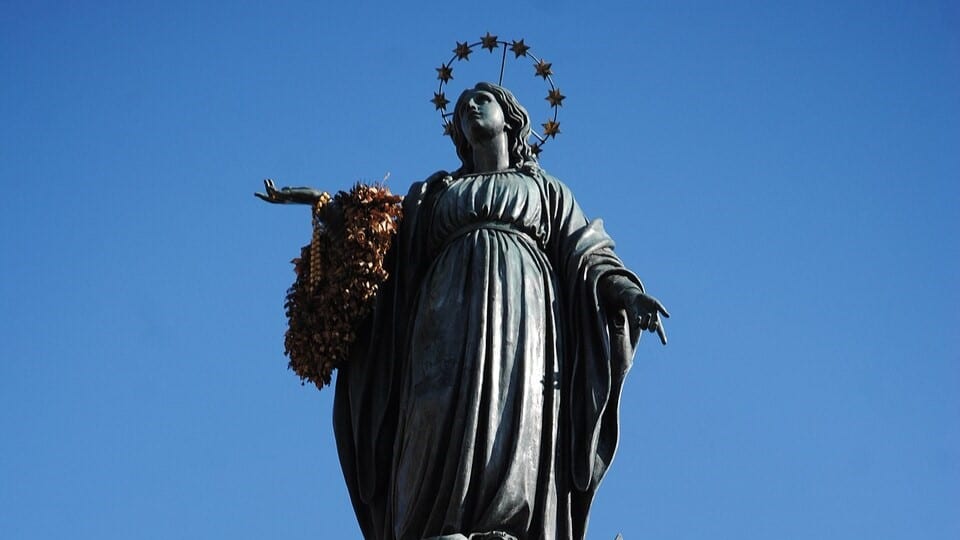
Designed by Luigi Poletti, the column is a stunning example of neoclassical architecture, standing approximately 12 metres (39 feet) tall. At its pinnacle sits a bronze statue of the Virgin Mary, created by Giuseppe Obici. The statue, adorned with a crown of stars and standing atop a globe, symbolizes the triumph of the Immaculate Conception over sin and evil.
The column’s location is particularly significant. It is situated in Piazza Mignanelli near the Spanish Steps, an area long associated with the Virgin Mary, as it was the site of an ancient convent dedicated to her. The column’s placement in this prominent square ensures its visibility and accessibility to locals and visitors, further enhancing its role as a focal point of religious devotion and pilgrimage.
The Column Nowadays
Over the years, the Column of the Immaculate Conception has remained a revered symbol of faith and devotion for Catholics worldwide. Each year, on 8 December, the Feast of the Immaculate Conception, the monument becomes the centerpiece of celebrations in Rome as pilgrims gather to pay homage to the Virgin Mary and seek her intercession. Today, the column stands as a timeless testament to the enduring power of faith and the enduring legacy of the Virgin Mary in Catholic tradition.
Read also about famous architectural columns in Rome.
What to Look Out for
- Admire the detailed relief sculptures adorning the base of the column. They depict scenes from the Virgin Mary’s life and biblical narratives, including iconic figures such as David and Moses.
- Notice the four-winged cherubim flanking the base of the column. They symbolize divine protection and guidance, and statues of other biblical figures, such as King Solomon and Isaiah surround them.
- Marvel at the intricately carved Corinthian capital atop the column, adorned with acanthus leaves and ornate motifs, reminiscent of the classical artistry of ancient Rome.
- Study the bronze statue of the Virgin Mary at the summit of the column, sculpted by Giuseppe Obici. The statue stands approximately 11 feet tall and is surrounded by other notable statues of saints and angels.
- Observe the crown of stars encircling the Virgin Mary’s head, representing her purity and celestial status. Symbolic elements like the lily, a traditional emblem of the Virgin’s purity, should also be considered.
Interesting Facts about the Column of the Immaculate Conception
- The Column of the Immaculate Conception is a remarkable example of neoclassical design in Rome. It blends elements of ancient Roman architecture with Baroque and Renaissance influences.
- The column, erected in 1857, was commissioned by Pope Pius IX to commemorate the dogma of the Immaculate Conception, a pivotal moment in Catholic theology that declared the Virgin Mary’s conception free from original sin.
- The column’s base features intricate relief sculptures depicting scenes from the Virgin Mary’s life and biblical narratives. These include representations of iconic figures such as David, Moses, King Solomon, and Isaiah.
- Atop the column sits a magnificent bronze statue of the Virgin Mary, sculpted by Giuseppe Obici. The statue is approximately 11 feet tall and portrays the Virgin crowned with stars and triumphantly atop a globe, symbolizing her victory over sin.
- The column is rich in symbolic meaning. Elements like the crown of stars represent the Virgin Mary’s celestial status, and the globe beneath her feet symbolizes her universal reign. The lily, a traditional emblem of purity, further emphasizes her immaculate conception.
- Four-winged cherubim, symbolizing divine protection and heavenly guidance, flank the base of the column. Statues of angels and saints surround the Virgin Mary, adding to the monument’s spiritual ambiance.
- Situated in Piazza Mignanelli near the Spanish Steps, the column attracts visitors and pilgrims worldwide, especially on 8 December, the Feast of the Immaculate Conception, when celebrations are held in honour of the Virgin Mary.
Things to Know Before Visit
What is the significance of the Column of the Immaculate Conception?
The column commemorates the dogma of the Immaculate Conception, declared by Pope Pius IX in 1854, affirming the Virgin Mary’s conception free from original sin.
Who designed and sculpted the Column of the Immaculate Conception?
The column was designed by architect Luigi Poletti, while the bronze statue of the Virgin Mary atop the column was sculpted by Giuseppe Obici.
What are the symbols depicted on the column?
The column features intricate relief sculptures depicting scenes from the life of the Virgin Mary and biblical narratives, along with symbolic elements such as the crown of stars and the globe beneath the Virgin Mary’s feet.
When is the best time to visit the Column of the Immaculate Conception?
The column is particularly popular to visit on 8 December, the Feast of the Immaculate Conception, when pilgrims gather to pay homage to the Virgin Mary. However, it can be visited and admired year-round as part of exploring the historic centre of Rome.