992122 travellers read
The Basilica of St John Lateran is the cathedral of Rome and the seat of its bishop, the Pope. It is one of Rome’s four major papal basilicas. The inscription on its façade calls it the “mother and head of all the churches of the City and the World”. Its long history begins with Constantine, while much of the building visitors see today reflects later rebuilding.
Entry to the basilica is free. The official visitor page currently lists daily opening from 07:00 to 18:30. Liturgies, security arrangements and special events can affect access, so check again before your visit. Dress respectfully as you would for any active church.
The cloister, Treasury Museum, baptistery and nearby Holy Stairs have their own access arrangements; do not assume they are included in a basilica visit. A third-party tour may combine some of these places, but check its exact itinerary and price before booking.
After Constantine granted Christians freedom of worship in the early fourth century, a basilica was built at the Lateran. The basilica’s official history describes it as the first Christian basilica designed to gather Rome’s community around its bishop. The site also held the papal residence for many centuries, before the papacy settled at the Vatican.
Although its common name refers to St John the Baptist and St John the Evangelist, the basilica’s original dedication was to Christ the Saviour. It was damaged and rebuilt repeatedly. That is why its present interior combines elements from different periods rather than preserving a single fourth-century design.
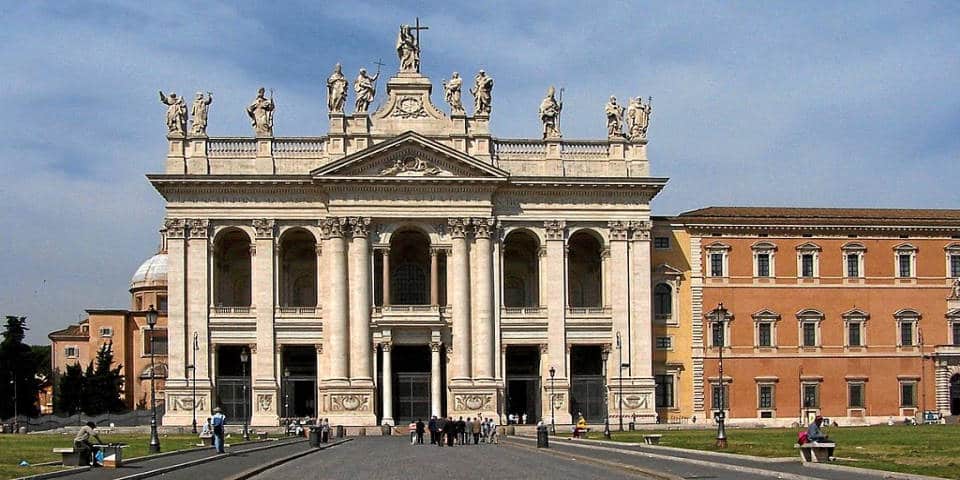
Look along the broad nave towards the apse, and take time to see the large statues of the apostles. The apse mosaic has medieval and later phases; it should not be treated as an untouched work from Constantine’s reign. The bronze doors at the main entrance were brought from the Roman Senate House. The adjoining cloister and museum preserve further parts of the basilica’s history, subject to separate visiting conditions.
The Lateran complex also includes the octagonal baptistery and stands near the Holy Stairs. The latter are a separate sanctuary, with their own visiting rules. Allow time if you intend to see several sites in the area.
The basilica stands in Piazza di San Giovanni in Laterano, south-east of the historic centre. San Giovanni on Metro A and C is a useful station for many visitors. Check the current route in the Rome Metro guide and the operator’s service notices, particularly when travelling late in the evening.
RomeItaly.guide © 2026. Created with love by Roman experts and guides.