
992122 travellers read
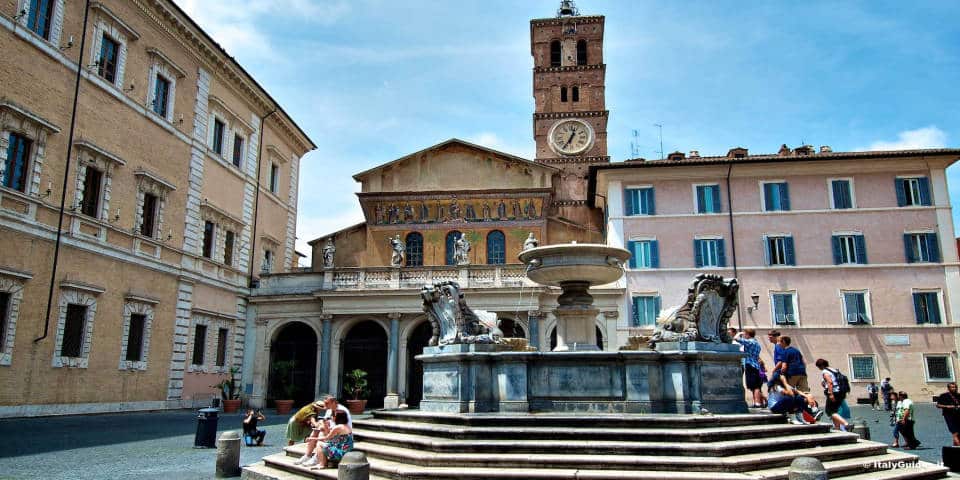
The Basilica of Santa Maria in Trastevere in Rome was founded in the third century and commissioned by Pope Callistus I at a time when Christianity was not widely accepted. It is often described as one of Rome’s earliest churches dedicated to the Virgin Mary, and was a place of worship for early Christians. It stands on a piazza in Trastevere district, and its long history reflects the growth of Christianity in Rome.
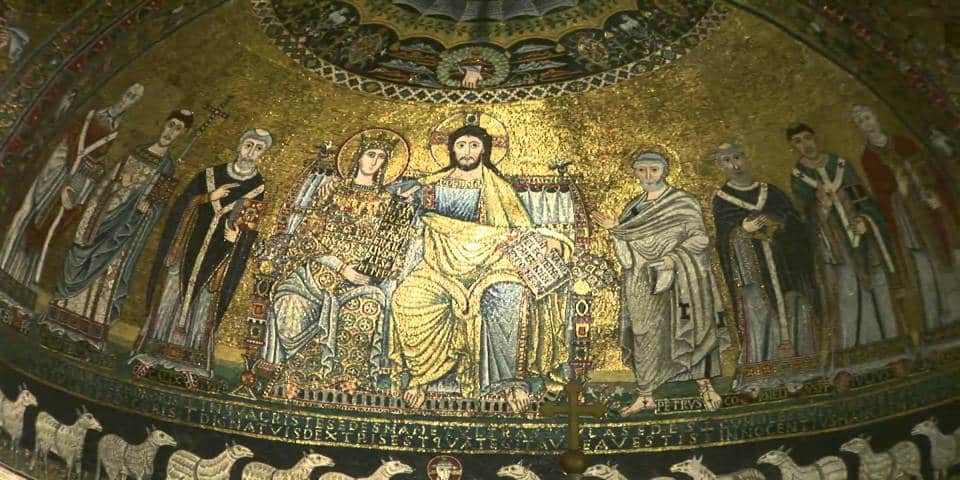
It contains remarkable 12th-century mosaics that are considered some of the finest examples of Byzantine art in Rome.
Santa Maria in Trastevere was founded by Pope Callistus I (217-22) but was built around 350 A.D. under Pope Julius I (337-52). During that period, the church was known as Titulus Callisti, a name linked to its founder. However, it faced significant destruction during the sack of Rome in 410. The church was later rebuilt and rededicated to the Virgin Mary under Pope Celestine (422–32).
Another reconstruction was undertaken by Pope Hadrian I (772-95). Later, Pope Gregory IV (827-44) added a crypt to house the relics of early popes, including Callistus, Julius I, and Cornelius, who were exhumed from the catacombs. These additions underline the basilica’s enduring connection to early Christianity and its martyrs. Renovations continued under Pope Leo IV (847-55) and Benedict III (855-58), a sign of continued papal patronage.
The church was completely reconstructed in the 12th century by Pope Innocent II (1130-43) using materials from the ancient Baths of Caracalla
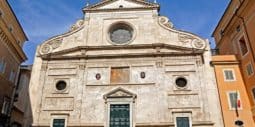
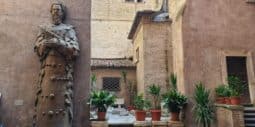
The current structure features a Romanesque bell tower and a 12th-13th-century mosaic on the façade depicting the Madonna della Clemenza and ten women, traditionally interpreted as figures of wisdom and virtue. At the entrance, visitors encounter the sculpture of San Antonio, famous for granting wishes. It has become a beloved tradition for both tourists and locals to make a wish during their visit to the basilica.
A compelling legend surrounds the site, claiming that when Christ was born, a stream of pure oil flowed from the Earth here, signifying the coming of divine grace. This legend is immortalized by the column near the altar, said to mark the spot associated with this story. Such myths deepen the spiritual allure of Santa Maria in Trastevere, intertwining religious belief with local lore.
Stepping inside Santa Maria in Trastevere is like walking into a masterpiece of art and history.
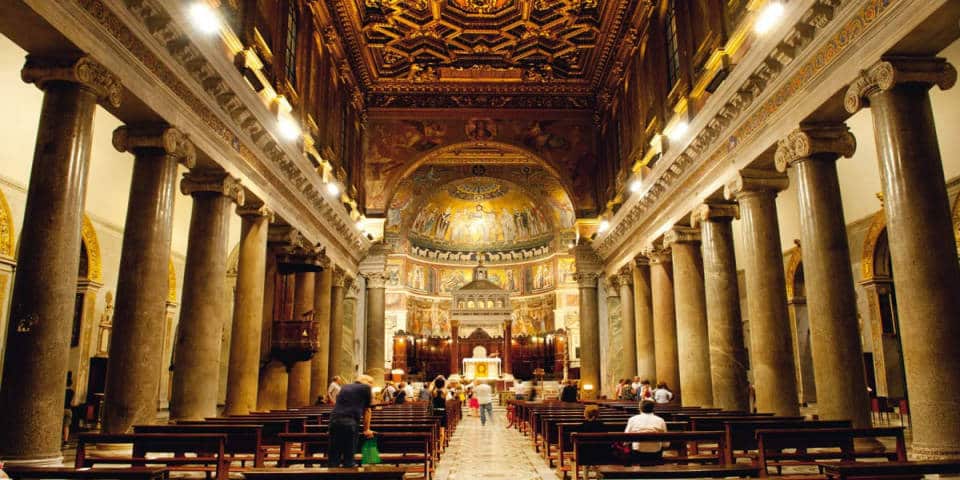
The basilica’s interiors are adorned with remarkable mosaics, altars, tombs, and sculptures that showcase the artistic achievements of various periods. Here’s what you shouldn’t miss:
The apse features detailed 12th-century mosaics by Pietro Cavallini, an artist associated with the transition between Byzantine and early Renaissance styles. The mosaic cycle, “Scenes from the Life of the Virgin,” includes the Annunciation and the Nativity; its gold backgrounds and expressive figures are distinctive.
This early medieval image of the Virgin Mary near the altar is considered one of Rome’s oldest representations of her and remains an important work of Marian devotion. The Madonna is portrayed as a regal figure, in a style associated with Marian iconography.
The richly decorated high altar, covered by a 12th-century baldachin, is a focal point of the church. The altar is believed to contain relics of early Christian martyrs, and pilgrims have long venerated it. The intricate marble and mosaic details on the baldachin highlight the craftsmanship of medieval artisans.
The basilica contains several chapels, each with unique artistic and historical features. Notable among them is the Altemps Chapel, which has frescoes and marble decorations. The Corsini Chapel, commissioned by Pope Clement XII, reflects Baroque grandeur with its lavish stucco work and statues.
Throughout the basilica, you will find tombs of prominent figures from Roman and papal history. Pay attention to the intricately carved sarcophagi and epitaphs that tell stories of those interred here. The tomb of Pope Innocent II, who commissioned the basilica’s 12th-century reconstruction, is a notable highlight.
The crypt, added by Pope Gregory IV, houses the remains of several early popes, including Callistus I. It is a profoundly spiritual place that reflects the continuity of faith from the catacombs to the grand basilicas of Rome.
The sculpture of Saint Anthony near the entrance is a favourite among visitors. Known for granting wishes, it has become an object of devotion for many. Additionally, statues of other saints can be found throughout the basilica, contributing to its spiritual atmosphere.
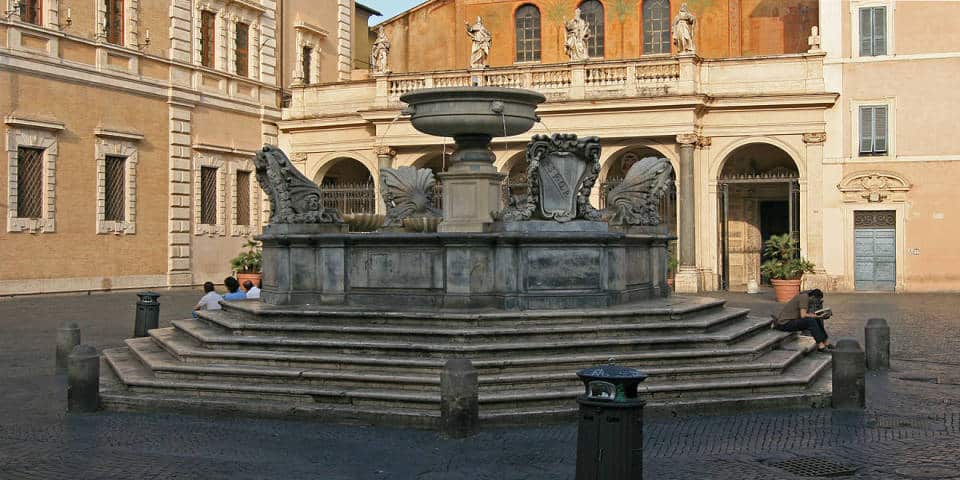
The octagonal fountain in the centre of the piazza was restored in the 17th century by Carlo Fontana. It is the Roman original and is a famous gathering place for locals and tourists. The portico is a 19th-century addition with fragments from the earlier temples, dating back from the 4th to 9th centuries.
There are 22 granite columns taken from the ruins of ancient Roman buildings inside the church
The triumphal arch of Santa Maria di Trastevere depicts the Four Evangelists, the prophets Isaiah and Jeremiah, caged birds as an embodiment of sins, seven candlesticks, and a Christogram.
The mosaics on the apse vault and triumphal arch are from the 12th century. The apse vault presents the coronation of the Virgin with saints and Pope Innocent II holding a model of the basilica. Moreover, the six mosaic panels lower on the apse were made by Pietro Cavallini. On the left side of the altar is the Altemps Chapel (1588) with Baroque decoration.
Santa Maria in Trastevere has a replica of Saint Appolonia and a portion of the Holy Sponge
Also, Pope Callistus I and Lorenzo Cardinal Campeggio were buried in the basilica.
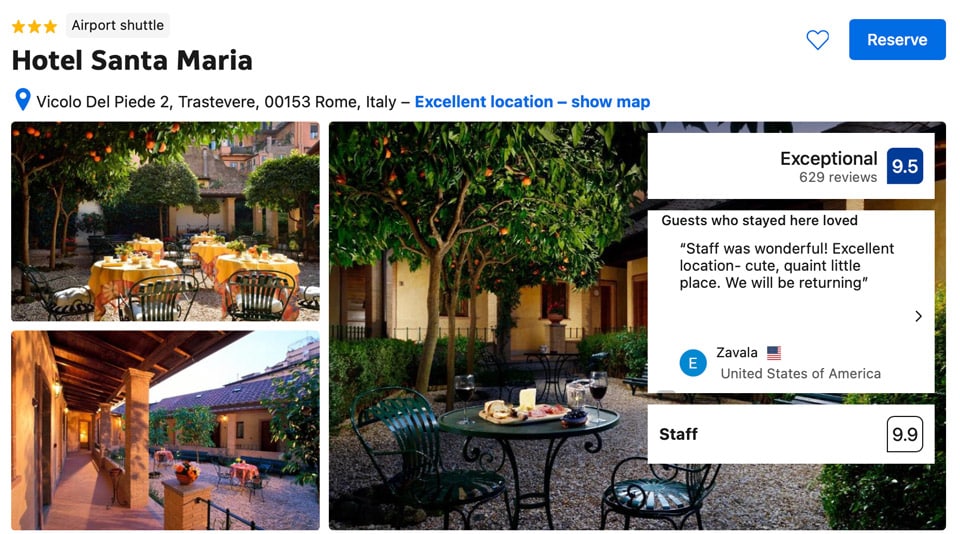
Hotel Santa Maria located near the basilica is a 3-star hotel with beautiful rooms. It has a great location because many restaurants have inexpensive dishes and high-quality ingredients. Moreover, most Roman famous sites can be reached within a footwalk.
The Basilica of Santa Maria in Trastevere is one of the most remarkable churches of Rome, which gathers many tourists daily. Moreover, it has a great location in central beautiful Trastevere, where you can visit one of the local or international restaurants and enjoy the atmosphere of the old city.
RomeItaly.guide © 2026. Created with love by Roman experts and guides.