
RomeItaly.guide
  • Taxi fares calculator
  • About us
  • Plan your trip
    • Weather
      • February
      • April
    • Neighbourhoods
      • Quartiere Coppedè
      • Trastevere
    • Day Trips
      • To Ostia Antica
      • Beaches near Rome
  • Getting around
    • Fiumicino Airport
    • Termini Railway Station
    • Public Transport
    • To Ostia Antica
    • To Milan
  • Sights
    • Ancient Sites
      • Castel Sant’Angelo
      • Colosseum
      • Mamertine Prison
      • Mouth of Truth
      • Pantheon
      • Roman Forum
    • Museums
      • Ara Pacis Augustae
      • Borghese Gallery
      • Caravaggio’s Paintings
      • Great Synagogue
      • Palazzo Farnese
    • Churches
      • Capuchin Crypt
      • Holy Stairs
      • Sant’Agnese in Agone
      • San Giovanni in Laterano
      • Santa Maria Maggiore
      • Saint Paul Outside the Walls
      • St Peter in Chains
    • Fountains & Squares
      • Navona Square
      • Spanish Steps
      • Trevi Fountain
      • Altar of The Fatherland
      • Fontana della Barcaccia
      • Fountain of the 4 Rivers
      • Fountain of the Pantheon
      • Piazza del Popolo
      • Piazza Venezia
      • Turtle Fountain
    • Hills
      • Aventine
      • Capitoline
      • Janiculum
      • Palatine
      • Pincian
    • Parks
      • Appian Way
      • Orange Garden
      • Pincio Terrace
      • Vatican Gardens
      • Villa Borghese
      • Villa Torlonia
    • Emperors
      • Good Emperors
      • Marcus Aurelius
      • Gaius Julius Caesar
      • Nero
      • Octavian Augustus
      • Caligula
      • Hadrian
      • Vespasian
      • Trajan
  • Vatican City
    • St Peter’s Basilica
    • Sistine Chapel
    • Vatican Museums
    • Raphael’s Rooms
    • Michelangelo’s Pieta
    • St Peters Dome
    • St Peter’s Square
    • Swiss Guard
  • Where to stay
    • How to Choose a Hotel in Rome
    • Hotels with Best Views
    • Hotels near Termini
    • Hotels near the Colloseum
    • Best Hostels
    • Hotels near Navona Square
    • 3 Star Hotels
    • 4 Star Hotels
    • 5 Star Hotels
    • Apartments For Rent
  • Food & shopping
    • Where to Eat
      • Best Pizza Places
      • Best Pasta Places
      • Local Italian Food
      • Best Gelato Places
      • Best Rooftop Bars
    • Shopping
      • Castel Romano Outlet
      • Farmers Markets
      • Souvenirs from Rome
  • Tips & FAQ
    • Free Things to Do
    • TOP Attractions
    • Tickets to Vatican museums
    • Rome Three Day Itinerary
    • Renting a Car in Rome
    • Apps for Tourists
    • Instagram
  1. Home ›
  2. Ancient Roman Sites and Ruins

Catacombs of St Callixtus in Rome

Written by: Kate Zusmann

Catacombs of St Callixtus in Rome
Tickets
  • €10 Adult

Buy tickets online:

  • www.catacombesancallisto.it
Tip Advance booking of visit times is highly recommended. Tours are available in English, Spanish, German, Italian, Polish and French.
Opening hours
Sunday: 9:00 AM - 12:00 PM, 2:00 PM - 5:00 PM
Monday: 9:00 AM - 12:00 PM, 2:00 PM - 5:00 PM
Tuesday: 9:00 AM - 12:00 PM, 2:00 PM - 5:00 PM
Thursday: 9:00 AM - 12:00 PM, 2:00 PM - 5:00 PM
Friday: 9:00 AM - 12:00 PM, 2:00 PM - 5:00 PM
Saturday: 9:00 AM - 12:00 PM, 2:00 PM - 5:00 PM
Recommended tour
Address Via Appia Antica, 110/126, Roma
Website www.catacombesancallisto.it
Accessibility: Wheelchairs are not allowed inside the catacombs, and visitors with mobility issues may find the uneven terrain challenging. Photography Restrictions: Photography and videography are strictly prohibited within the catacombs to preserve the integrity of the ancient artifacts and artwork. Dress Accordingly: Be prepared for cooler temperatures and high humidity by dressing appropriately for your underground exploration.
The walk to the catacombs is approximately 45 minutes long. You have two main routes to choose from: one starting at the Circo Massimo metro station, following Viale delle Terme di Caracalla for about 40 minutes until you reach the catacombs, or beginning at San Giovanni and tracing the ancient walls to Porta San Sebastiano and the start of the Appian Way, then making a left turn.

The Catacombs of St Callixtus on the Appian Way are visited on guided tours. Wear shoes suited to the stairs and take a light layer for the cool passages. Check the official hours before setting out, especially around holidays.

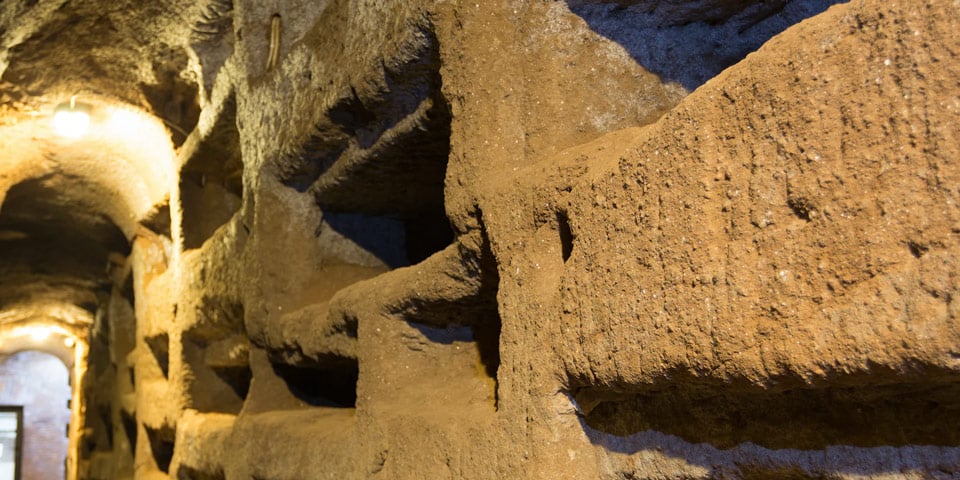
The Catacombs of St Callixtus (Italian: Le Catacombe di San Callisto a Roma) are one of Rome’s most significant and expansive catacomb complexes, serving as the final resting place for early Christians, popes, and martyrs. Located along the Appian Way, these underground burial chambers contain intricate frescoes, inscriptions, and ancient artifacts that provide insights into early Christian burial practices and religious beliefs. Visiting the Catacombs offers a profound journey into the history of Christianity in ancient Rome, revealing this sacred site’s spiritual and cultural heritage.

Contents4 sections · ~4 min read
  1. Opening hours and tickets
  2. Interesting Facts about the Catacombs of St Callixtus
  3. What to See Inside The Catacombs of St Callixtus
  4. History
    1. Modern History

Opening hours and tickets

The usual hours are 09:00 to noon and 14:00 to 17:00 except Wednesdays. The official timetable has holiday closures and the final time for admission. The official ticket page lists the €10 full fare, concessions and age limits.

How did the catacombs start?
The catacombs originated in ancient Rome as underground burial grounds primarily used by Christians to bury their dead during times of persecution. These underground chambers evolved into extensive networks, serving not only as places of burial but also as covert meeting spots for Christian communities to worship freely.
How deep are the catacombs of St Callixtus?
The Catacombs of St Callixtus consist of multiple levels, reaching approximately 65 feet (20 metres) below the surface.
How to buy tickets to the catacombs of Saint Callixtus?
The usual hours are 09:00 to noon and 14:00 to 17:00 except Wednesdays. The official timetable has holiday closures and the final time for admission. The official ticket page lists the €10 full fare, concessions and age limits.

Interesting Facts about the Catacombs of St Callixtus

  1. The Catacombs of St Callixtus are named after Pope Callixtus I, a deacon who later became these catacombs’ administrator. He was later canonized as a saint.
  2. These catacombs contain some of the earliest known Christian art, including intricate frescoes, inscriptions, and symbols that reflect the evolving Christian iconography of the time.
  3. The Catacombs of St Callixtus served as a burial site for numerous martyrs and early saints, making it a revered pilgrimage destination for Christians during the early centuries.
  4. Covering an area of over 90 acres, the Catacombs of St Callixtus comprise a vast network of tunnels and chambers, making it one of the largest and most crucial catacomb complexes in Rome.
  5. During periods of persecution, early Christians used these catacombs as secret gathering places for worship and burial, highlighting their significance as a sanctuary and spiritual refuge.

What to See Inside The Catacombs of St Callixtus

  • Crypt of the Popes: Interment site for several early popes.
  • Crypt of the Holy Sacraments: Features ancient frescoes depicting biblical scenes and Christian symbols.
  • Greek Chapel: Notable for its unique architectural elements and religious significance.
  • Labyrinthine Corridors: Explore tunnels and chambers revealing burial practices and early Christian artifacts.
  • Archaeological Remnants: Encounter inscriptions, sarcophagi, and intricate carvings throughout the catacombs.

History

The Catacombs of Saint Callixtus, located along the historic Appian Way in Rome, are among the most renowned and significant catacomb complexes in the Christian world. Named after Pope Callixtus I, who was martyred in the early 3rd century and later became the administrator of these catacombs, this vast underground cemetery spans several levels and corridors, serving as the final resting place for numerous early Christians, popes, and martyrs.

The origins of the Catacombs of St Callixtus can be traced back to the 2nd century AD, during a time when Christianity was persecuted under Roman rule. These underground burial chambers provided a safe and sacred space for Christians to bury their dead and gather for worship in secret. Over time, the catacombs expanded and evolved, becoming a central hub for the Christian community in Rome and a symbol of resilience and faith amidst adversity.
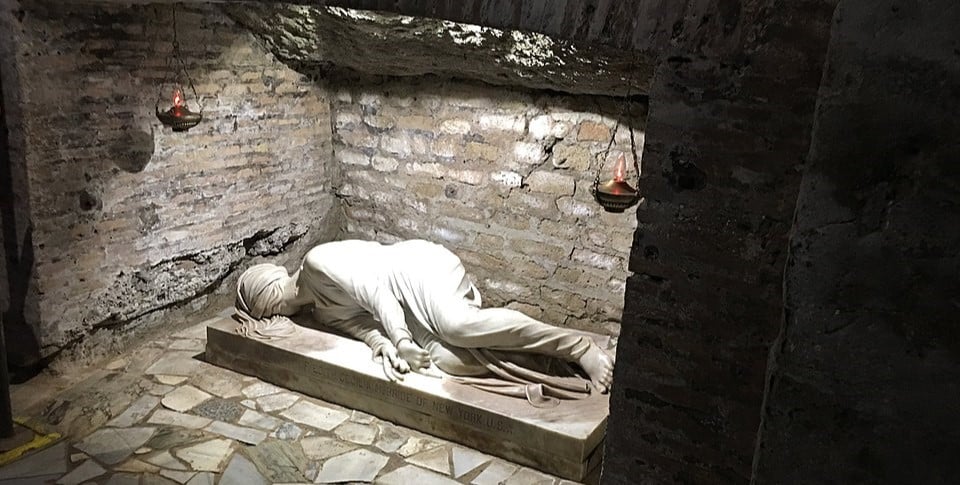
The Catacombs of St Callixtus

The Catacombs of Saint Callixtus grew in prominence during the papacy of Pope Callixtus I (217–222 AD), who converted part of the catacombs into a designated burial site for popes and elevated its status as a pilgrimage site. Under his administration, the catacombs were meticulously organised and decorated with intricate frescoes, inscriptions, and symbols that reflected the burgeoning Christian iconography of the time.

Read also about the Pantheon in Rome.

Modern History

Today, the Catacombs of St Callixtus offer a fascinating glimpse into the early days of Christianity in Rome, preserving a rich tapestry of art, history, and spirituality beneath the surface of the Eternal City. As one of the most visited catacomb complexes, it continues to inspire and educate visitors about the enduring legacy of early Christians and the profound impact of their faith on the cultural and religious landscape of Rome.

Read also about Saint Peter’s Basilica in the Vatican City.
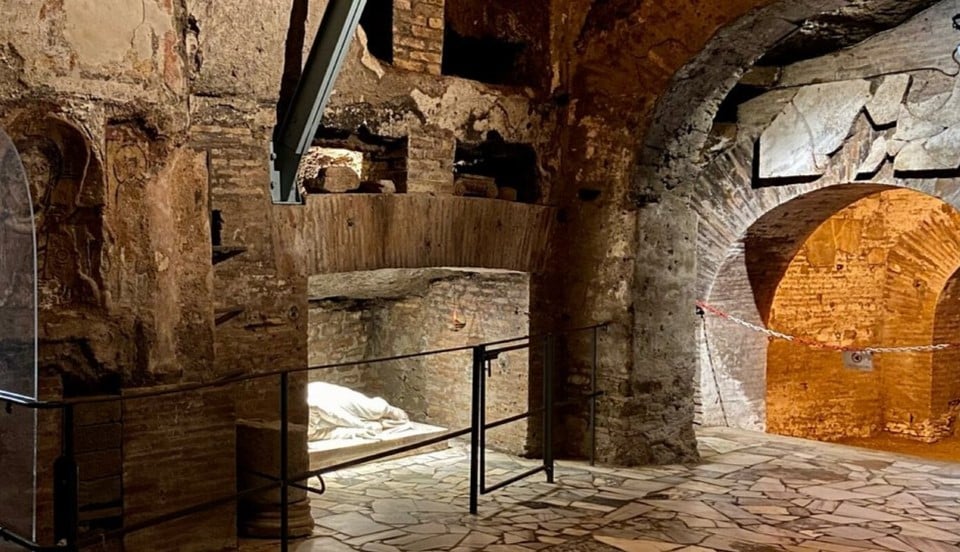
The Catacombs of St Callixtus

Kate Zusmann
Rome travel writer & expert Kate Zusmann
years in Rome
12
guides published
190
article updated
Nov 2026
I’ve lived in the Eternal City for the past 12 years. They say every corner of Rome holds a story, and I’m here to share some of the most fascinating historical facts and local legends.
All guides by Kate →

More Rome guides

Vatican Museums Visitor Guide

The Vatican Museums

Rome Italy Tourist Attractions

Top 30 Attractions in Rome

Rome hotels with a view

Rome hotels with a view and the rooms to book

How to Book Vatican Museums & Sistine Chapel Tickets

How to Book Vatican Museums & Sistine Chapel Tickets

St. Peter's Basilica dome seen through the trees from the far side of Piazzale Garibaldi, Rome

Janiculum Hill (Gianicolo): Viewpoints and Walking Route

Tiber Island in Rome

Tiber Island in Rome

Arch of Janus in Rome

Arch of Janus in Rome

The six talking statues of Rome

The six talking statues of Rome

Ponte Sisto across the Tiber in Rome

Ponte Sisto

Show more

About us

About us ROME.US Authors Kate Zusmann and Artur Jakucewicz
We're Kate and Artur. Rome has been our home for more than ten years, and we write about the streets, churches and museums we know first-hand.

Explore Rome

  • Villa Ada park in Rome

    Villa Ada park in Rome

  • Roma Termini railway station in Rome

    Roma Termini Railway Station

  • The Fountain of Neptune

    The Fountain of Neptune

  • Piazza della Repubblica in Rome

    Piazza della Repubblica in Rome

  • Portrait of Emperor Diocletian

    Emperor Diocletian

RomeItaly.guide

This website uses cookies. For more info read the cookies policy This site uses cookies

RomeItaly.guide © 2026. Created with love by Roman experts and guides.

  • American English
  • Español
  • Deutsch
  • Polski
  • Français