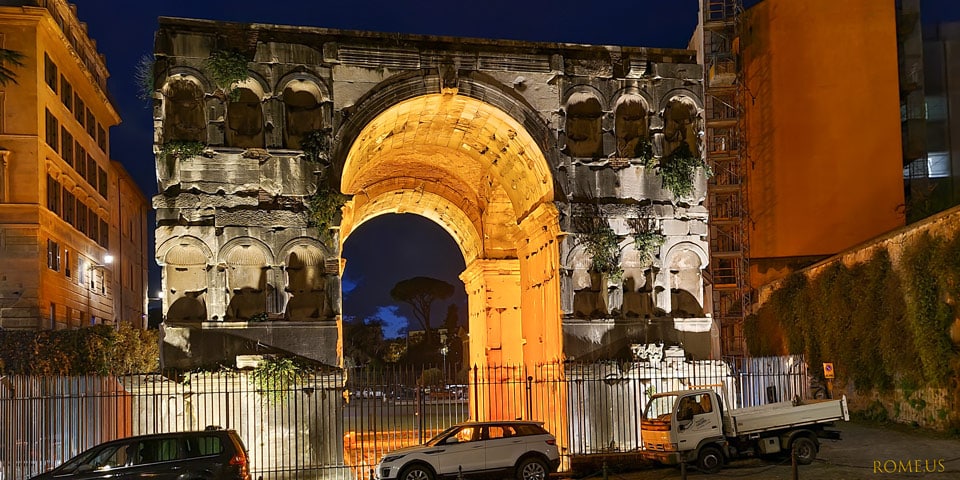

The Arch of Janus stands beside the Forum Boarium and is visible from the street. Its familiar name reflects a later association with passageways. A dedication to the god Janus is unproven. Combine it with the nearby temples in Piazza della Bocca della Verità and Santa Maria in Cosmedin.
Located in the heart of the ancient city of Rome, the Arch of Janus holds a distinctive place in the architectural and historical landscape of the city. As the only surviving quadrifrons or four-faced, triumphal arch in Rome, it carries with it centuries of history and mystery. Thought to have been constructed in the 4th century AD, it represents a significant period in Roman history, even as its true purpose remains a subject of debate among historians.
From its misunderstood dedication to its transformative journey through time, the Arch of Janus offers a captivating glimpse into Rome’s past. Whether you’re a history buff or a curious traveller, exploring this resilient monument promises an enriching experience.
Contents
Things to Know about Arch of Janus
Who is Janus?
Janus is a Roman god symbolizing beginnings, transitions, and duality, often depicted with two faces looking in opposite directions.
Who built the Arch of Janus?
The exact builder of the Arch of Janus is unknown. However, it is speculated that it may have been erected during the reign of Constantine I or Constantius II.
How old is the Arch of Janus?
The Arch of Janus is approximately 1,700 years old, dating back to the early 4th century AD.
Are there any Arches in the world similar to the Arch of Janus in Rome?
The Arch of Malborghetto, just outside Rome, also includes the remnants of a former Roman quadrifrons (four-sided) arch, similar to the Arch of Janus.
What was unusual about Janus?
Janus was unique among Roman deities for his two-faced depiction, symbolizing his dominion over beginnings, endings, and transitions.
What is a fun fact about Janus?
The first month of the year, January, is named after Janus, symbolizing the god’s role in transitions and beginnings.
Is the god Janus Greek or Roman?
Janus is a Roman deity. Despite the Romans incorporating many Greek gods into their pantheon, there is no Greek equivalent to Janus.
Interesting Facts
Here are five intriguing facts about the Arch of Janus. Keep them in mind to share with friends while exploring the wonders of Rome:
- Uniqueness in Design: The Arch of Janus stands as the only surviving quadrifrons or four-faced, triumphal arch in Rome. This unique piece of architecture marked a crucial crossroads in the ancient city.
- Misunderstood Dedication: Contrary to popular belief, the Arch wasn’t actually dedicated to Janus, the Roman god of beginnings and transitions. Instead, its name derives from ‘ianua’, the Latin term for ‘door’.
- A Marker or a Market?: The Arch’s purpose still puzzles historians. While some consider it a boundary marker, others speculate that it offered shelter to traders in the Forum Boarium cattle market.
- Transformative History: The Frangipane family converted the Arch into a fortress in the Middle Ages. This adaptation allowed it to survive intact until the 19th century when its upper stage was mistakenly removed.
- An Unrestored Monument: Despite a bomb explosion in 1993 that made it inaccessible to the public, the Arch of Janus remains the last unrestored monument in the Forum Boarium, bearing a testament to its resilient history.
History of the Arch of Janus’s Construction
The Arch of Janus, nestled in Rome’s Forum Boarium, stands as an intriguing enigma in architectural history. Its four-sided, quadrifrons design is unique among Rome’s surviving ancient structures, and its origins and original purpose remain shrouded in mystery.
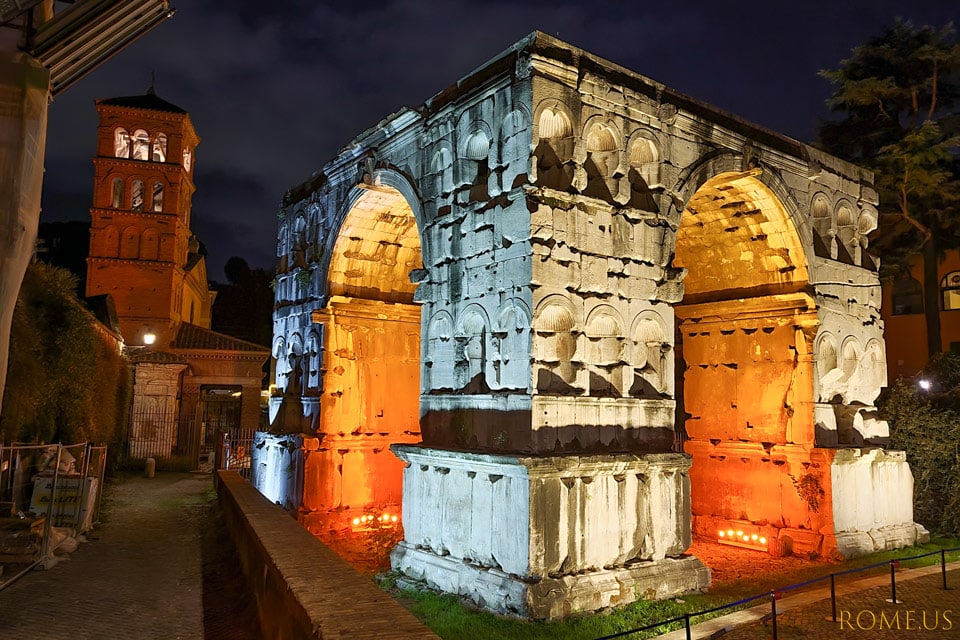
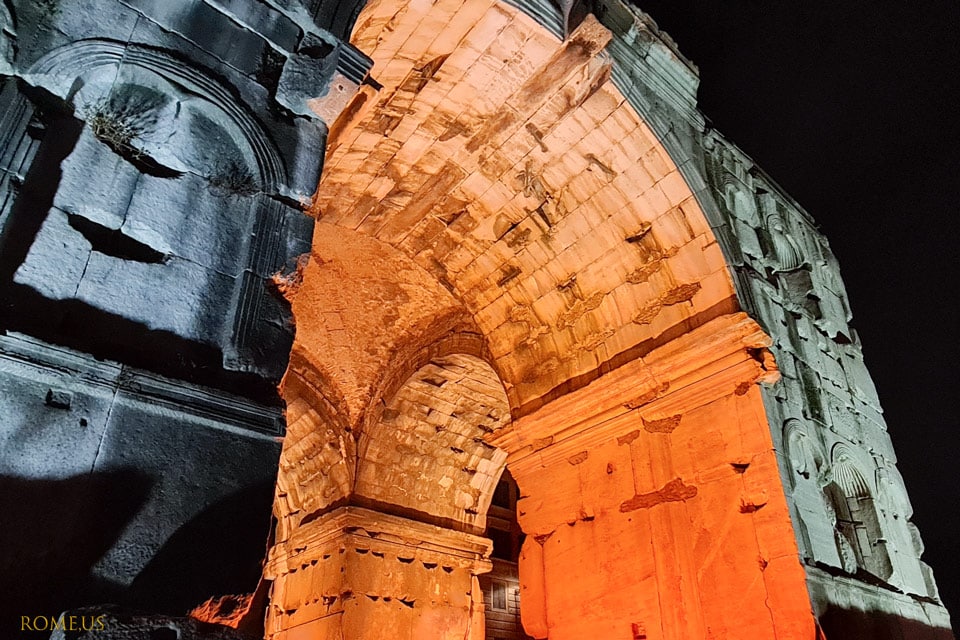
Its construction, estimated to have occurred in the early 4th century AD, incorporated a technique known as ‘spolia’. This practice involved reusing building materials from earlier structures, a common trait in Roman architecture. In the case of the Arch of Janus, the materials include bricks, pottery shards, and white marble slabs, likely sourced from pre-existing buildings, lending the monument a rich tapestry of history.
Despite its name, the monument is not thought to have been a traditional triumphal arch nor dedicated to the two-faced god, Janus. Its purpose has been a subject of debate among scholars. Some suggest it functioned as a boundary marker, while others propose it provided shelter for traders at the bustling Forum Boarium cattle market. There are even suggestions that it might have been dedicated to Constantine I or Constantius II.
19th-century engravings show how the Arch of Janus changed over time. In the Middle Ages, it became the base for a fortified tower. This tower was first recorded in 1145. It belonged to the Frangipane family, a powerful Roman clan. The tower is depicted in historic engravings until the early 1800s.
From 1827 to 1830, the tower and an attic were removed. They were mistakenly thought to be later additions. This change gives the Arch its current appearance. A staircase in the northwest pier suggests the original structure was larger.
The 19th-century changes aimed to make the arch look triumphal. However, this may not reflect its original design. Despite changes and mysteries, the Arch of Janus fascinates scholars and visitors. Its unique form and intriguing history testify to Rome’s layered past.
Read also about the Triumphal Arch of Constantine.
Attractions Near the Arch of Janus
While the Arch of Janus is a fascinating monument, numerous other attractions are nearby that add to the rich historical and cultural experience of Rome. Here are a few key sites that are worth a visit:
- Basilica of San Giorgio in Velabro – Established in the 7th century, this ancient basilica is a testament to Roman history. Home to the 13th-century Arch of Dolabella, it offers a spiritual retreat amid Rome’s bustling city life.
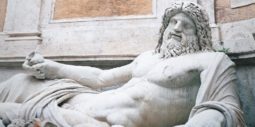
- Mouth of Truth – Known as “Bocca della Verità,” this ancient marble mask is shrouded in a captivating legend. It’s believed to bite the hand of anyone telling a lie.
- Temple of Hercules Victor – This ancient edifice is a wonderfully preserved Roman building. Circular in shape, it offers a unique glimpse into Rome’s past.
- Tempio di Portuno – An excellent example of Roman Republic architecture, this temple dedicated to the god Portunus is a testament to the city’s historical religious practices.
- Circus Maximus – Once the largest stadium in ancient Rome, this site has been a social and entertainment hub for centuries, hosting exciting chariot races in antiquity.
- Marcello Theatre – An ancient open-air theatre that showcases Rome’s architectural prowess, it provides a stunning view of the city’s historical layers.
On the weekends, the nearby Campagna Amica Farmer Market comes alive with Italian delicacies. It’s a perfect place to pick up a unique and tasty souvenir from Rome.
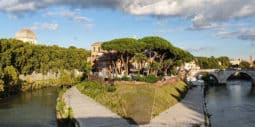
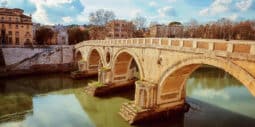
If you cross the Ponte Fabricio, you’ll find yourself on the charming Tiberina Island. From there, it’s a short stroll to Trastevere, an authentic and picturesque area of Rome, perfect for further exploration.
Where to find the Arch of Janus
Walk to Via del Velabro near the Forum Boarium. The arch can be seen from the public street. Any access beyond the surrounding barriers is subject to the current arrangements.