
RomeItaly.guide
  • Taxi fares calculator
  • About us
  • Plan your trip
    • Weather
      • February
      • April
    • Neighbourhoods
      • Quartiere Coppedè
      • Trastevere
    • Day Trips
      • To Ostia Antica
      • Beaches near Rome
  • Getting around
    • Fiumicino Airport
    • Termini Railway Station
    • Public Transport
    • To Ostia Antica
    • To Milan
  • Sights
    • Ancient Sites
      • Castel Sant’Angelo
      • Colosseum
      • Mamertine Prison
      • Mouth of Truth
      • Pantheon
      • Roman Forum
    • Museums
      • Ara Pacis Augustae
      • Borghese Gallery
      • Caravaggio’s Paintings
      • Great Synagogue
      • Palazzo Farnese
    • Churches
      • Capuchin Crypt
      • Holy Stairs
      • Sant’Agnese in Agone
      • San Giovanni in Laterano
      • Santa Maria Maggiore
      • Saint Paul Outside the Walls
      • St Peter in Chains
    • Fountains & Squares
      • Navona Square
      • Spanish Steps
      • Trevi Fountain
      • Altar of The Fatherland
      • Fontana della Barcaccia
      • Fountain of the 4 Rivers
      • Fountain of the Pantheon
      • Piazza del Popolo
      • Piazza Venezia
      • Turtle Fountain
    • Hills
      • Aventine
      • Capitoline
      • Janiculum
      • Palatine
      • Pincian
    • Parks
      • Appian Way
      • Orange Garden
      • Pincio Terrace
      • Vatican Gardens
      • Villa Borghese
      • Villa Torlonia
    • Emperors
      • Good Emperors
      • Marcus Aurelius
      • Gaius Julius Caesar
      • Nero
      • Octavian Augustus
      • Caligula
      • Hadrian
      • Vespasian
      • Trajan
  • Vatican City
    • St Peter’s Basilica
    • Sistine Chapel
    • Vatican Museums
    • Raphael’s Rooms
    • Michelangelo’s Pieta
    • St Peters Dome
    • St Peter’s Square
    • Swiss Guard
  • Where to stay
    • How to Choose a Hotel in Rome
    • Hotels with Best Views
    • Hotels near Termini
    • Hotels near the Colloseum
    • Best Hostels
    • Hotels near Navona Square
    • 3 Star Hotels
    • 4 Star Hotels
    • 5 Star Hotels
    • Apartments For Rent
  • Food & shopping
    • Where to Eat
      • Best Pizza Places
      • Best Pasta Places
      • Local Italian Food
      • Best Gelato Places
      • Best Rooftop Bars
    • Shopping
      • Castel Romano Outlet
      • Farmers Markets
      • Souvenirs from Rome
  • Tips & FAQ
    • Free Things to Do
    • TOP Attractions
    • Tickets to Vatican museums
    • Rome Three Day Itinerary
    • Renting a Car in Rome
    • Apps for Tourists
    • Instagram
  1. Home ›
  2. Ancient Roman Sites and Ruins

Park of the Aqueducts in Rome

Written by: Kate Zusmann

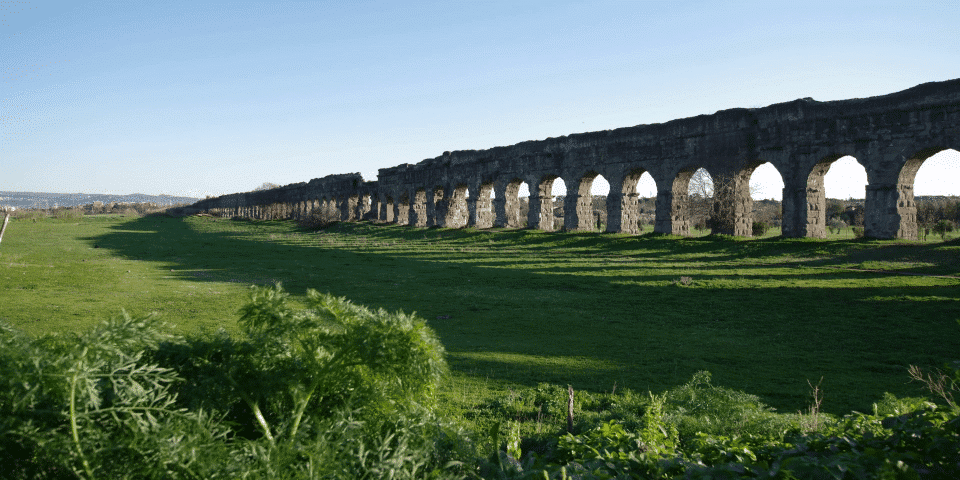
Ancient aqueduct arches in the Park of the Aqueducts in Rome
Tip Free access to the park. For Via Lemonia, use metro line A to Giulio Agricola or Subaugusta.
Recommended tour
Address Via Lemonia, Roma
Website Official park directions

The Park of the Aqueducts, or Parco degli Acquedotti, is part of the Appian Way Regional Park in south-east Rome. The tall arches of the Aqua Claudia cross open grassland, while the lower Acqua Felice runs along a different line. Paths wind through the park between the two.

Contents7 sections · ~2 min read
  1. Frequently asked questions
  2. How to get to the park
  3. How Roman aqueducts worked
  4. Aqua Claudia and Anio Novus
  5. Acqua Felice and the Aqua Marcia
  6. Villa delle Vignacce
  7. Other aqueducts worth comparing

Frequently asked questions

Is Parco degli Acquedotti free?
Yes. The regional park lists the open aqueduct area as free to enter. Individual monuments elsewhere in the regional park may have separate rules.
Which metro stop is best for the Park of the Aqueducts?
Take line A to Giulio Agricola or Subaugusta for the entrances around Via Lemonia. Lucio Sestio is another option if you plan to enter from Via Viviani.
Can you walk on the aqueducts?
Follow the paths alongside the ruins. The aqueduct arches are historic structures and are not a walking route.

How to get to the park

The regional park’s directions list entrances off Via Lemonia, Viale Appio Claudio, and Via Viviani. The park is part of the same protected landscape as the Appian Way, but the main aqueduct entrances are in the Tuscolano area. If you plan to visit both sites on the same day, check the route between them before setting out.
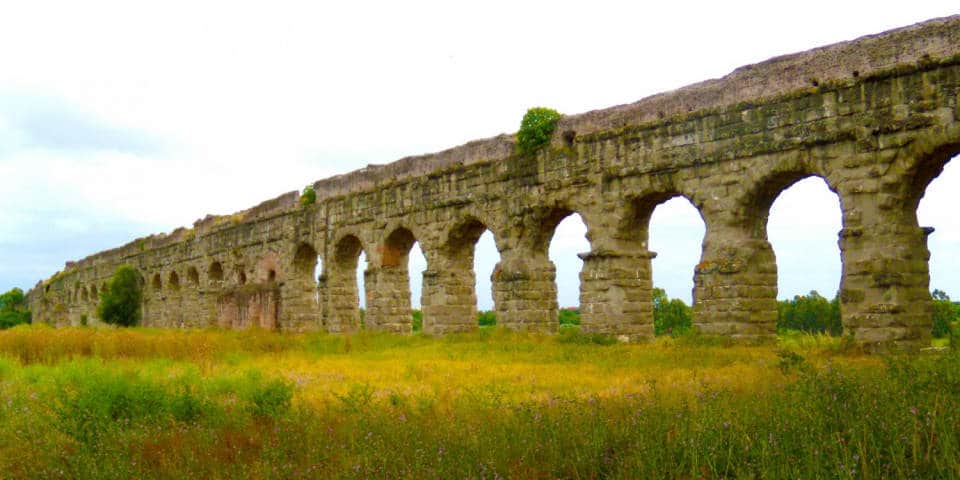
Roman aqueducts in Italy

How Roman aqueducts worked

Roman aqueducts carried water along a gentle gradient. Much of each channel ran underground. Arches kept the channel at the right height where it crossed low ground. Several systems reached Rome on shared structures, so a row of arches could carry more than one channel.

Aqua Claudia and Anio Novus

The tall ancient arches visible across the park are associated with the Aqua Claudia. The Anio Novus ran in a higher channel along part of the same route. Both aqueducts were begun under Caligula and inaugurated under Claudius in AD 52.
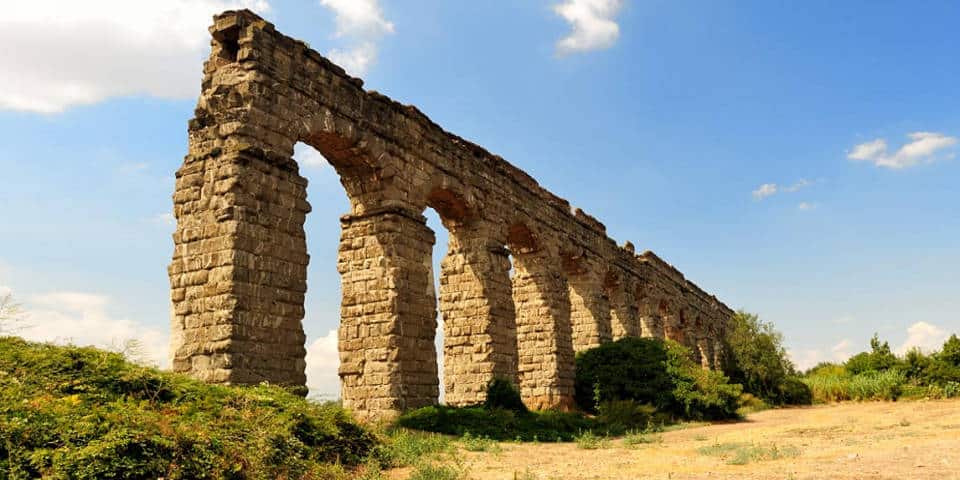
Aqua Claudia

Acqua Felice and the Aqua Marcia

The Acqua Felice was built under Pope Sixtus V in the late 16th century. Parts of the Renaissance aqueduct reused sections of earlier routes, including that of the Aqua Marcia. That is why the lower line of arches belongs to a different period from the prominent remains of the Aqua Claudia.

Villa delle Vignacce

Look for the remains of the Villa delle Vignacce near the Via Lemonia side of the park. The surviving masonry includes part of a Roman bath complex.
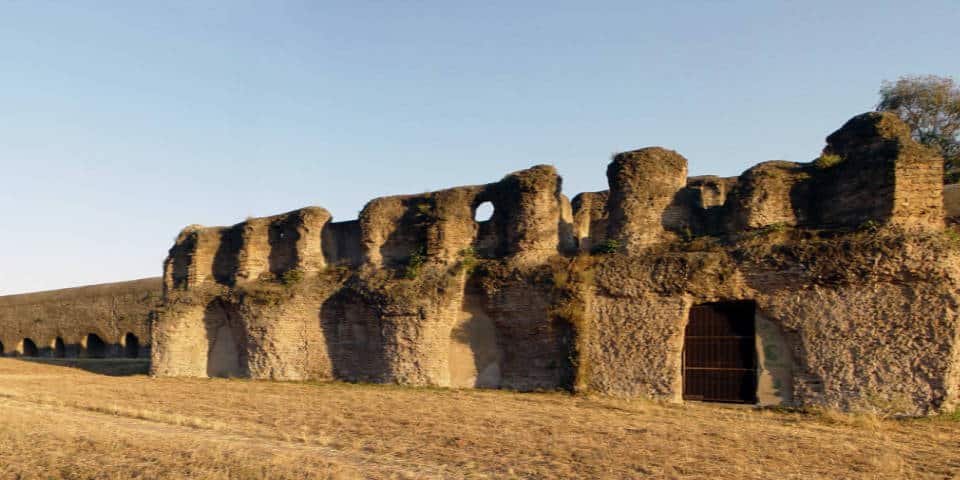
Villa of the vineyards

Other aqueducts worth comparing

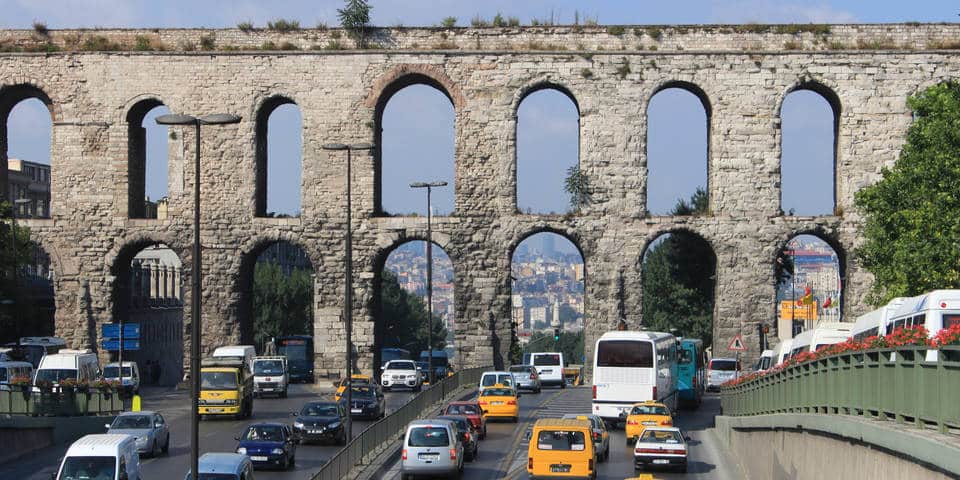
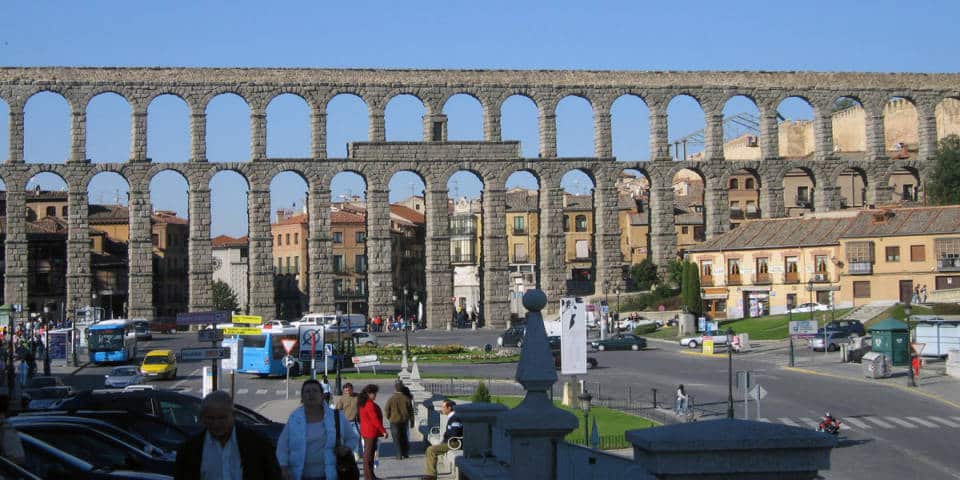
Open stretches of aqueduct survive around the Mediterranean. The examples at Caesarea and Segovia and the Valens Aqueduct in Istanbul give a sense of how differently builders adapted the same principle to local terrain.
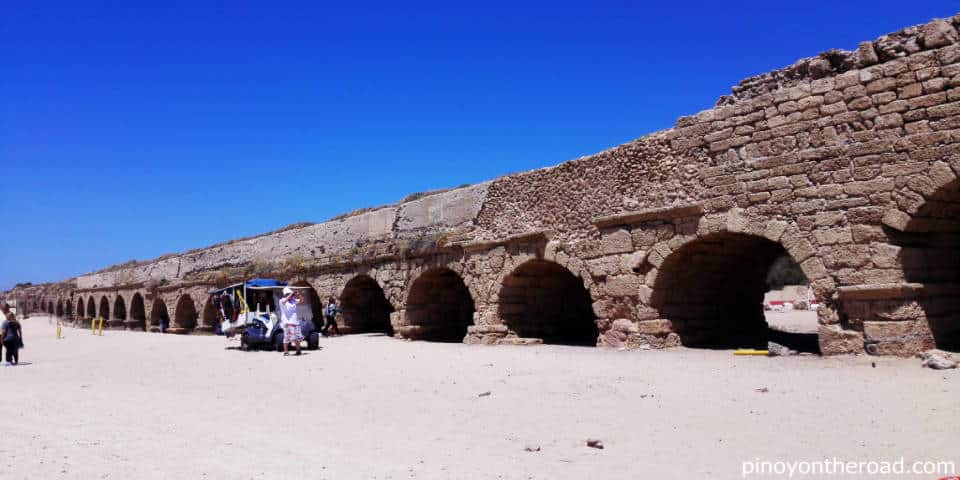
Caesarea aqueduct Israel
Valens Aqueduct in Istanbul
Segovia aqueduct in Spain
Roman aqueducts were also an enduring subject for artists. Piranesi’s print below depicts a different Roman aqueduct, the branch associated with Nero.
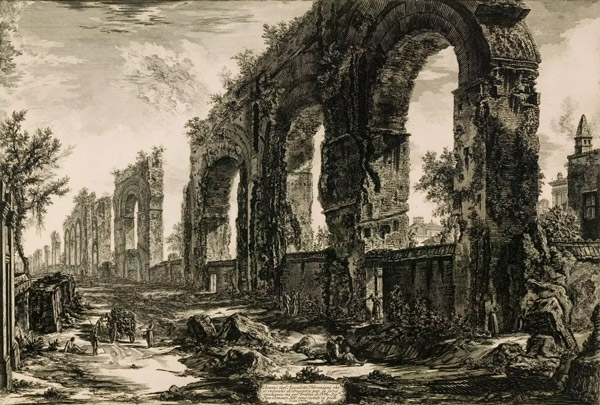
Aqueduct of Nero GIOVANNI BATTISTA PIRANESI 1775

Kate Zusmann
Rome travel writer & expert Kate Zusmann
years in Rome
12
guides published
190
article updated
Nov 2026
I’ve lived in the Eternal City for the past 12 years. They say every corner of Rome holds a story, and I’m here to share some of the most fascinating historical facts and local legends.
All guides by Kate →

More Rome guides

Vatican Museums Visitor Guide

The Vatican Museums

Rome Italy Tourist Attractions

Top 30 Attractions in Rome

Rome hotels with a view

Rome hotels with a view and the rooms to book

How to Book Vatican Museums & Sistine Chapel Tickets

How to Book Vatican Museums & Sistine Chapel Tickets

St. Peter's Basilica dome seen through the trees from the far side of Piazzale Garibaldi, Rome

Janiculum Hill (Gianicolo): Viewpoints and Walking Route

Arch of Janus in Rome

Arch of Janus in Rome

Tiber Island in Rome

Tiber Island in Rome

Catacombs of St Callixtus in Rome

Catacombs of St Callixtus in Rome

The six talking statues of Rome

The six talking statues of Rome

Show more

About us

About us ROME.US Authors Kate Zusmann and Artur Jakucewicz
We're Kate and Artur. Rome has been our home for more than ten years, and we write about the streets, churches and museums we know first-hand.

Explore Rome

  • Sphinx sculpture at the Fountain of Human Passions in Villa Sciarra, Rome

    Villa Sciarra

  • from Venice to Rome

    How to Get from Venice to Rome

  • Kirche Trinità dei Monti in Rom

    The Church of Trinità dei Monti

  • Wo befindet sich das Ticketbüro des Kolosseums?

    Where Is the Colosseum Ticket Office?

  • Hire car in Italy

    Hiring a Car in Rome

RomeItaly.guide

This website uses cookies. For more info read the cookies policy This site uses cookies

RomeItaly.guide © 2026. Created with love by Roman experts and guides.

  • American English
  • Español
  • Deutsch
  • Polski
  • Русский
  • Français