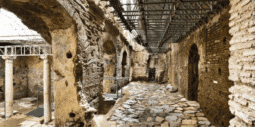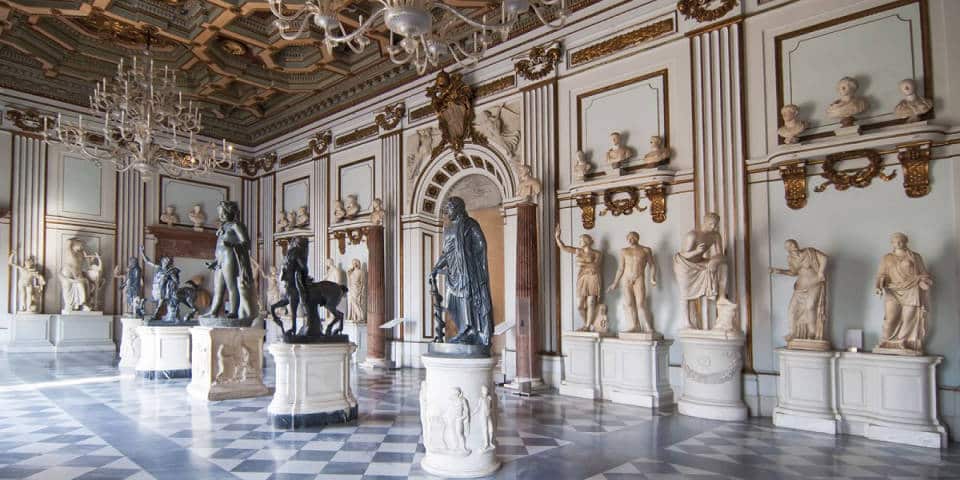

The Capitoline Museums occupy two palaces facing each other on Piazza del Campidoglio. Their collection grew from a gift of ancient bronzes to the people of Rome by Pope Sixtus IV in 1471. The passage beneath the square links the palaces and opens towards the Roman Forum.
Contents
Frequently asked questions
When are the Capitoline Museums open?
The regular schedule is 09:30 to 19:30 daily, with last admission one hour before closing. Holiday hours and closures differ. Check the museum’s official visitor information.
How much are tickets for the Capitoline Museums?
The museum lists ordinary non-resident admission at €15 when no exhibition supplement applies. Temporary exhibitions and combined tickets can change the charge. Check the price for your date before booking.
How long should I allow?
Allow two to three hours for the two palaces. If you have less time, start in Palazzo dei Conservatori for the She-Wolf, Marcus Aurelius, and the fragments of Constantine.
Palazzo dei Conservatori
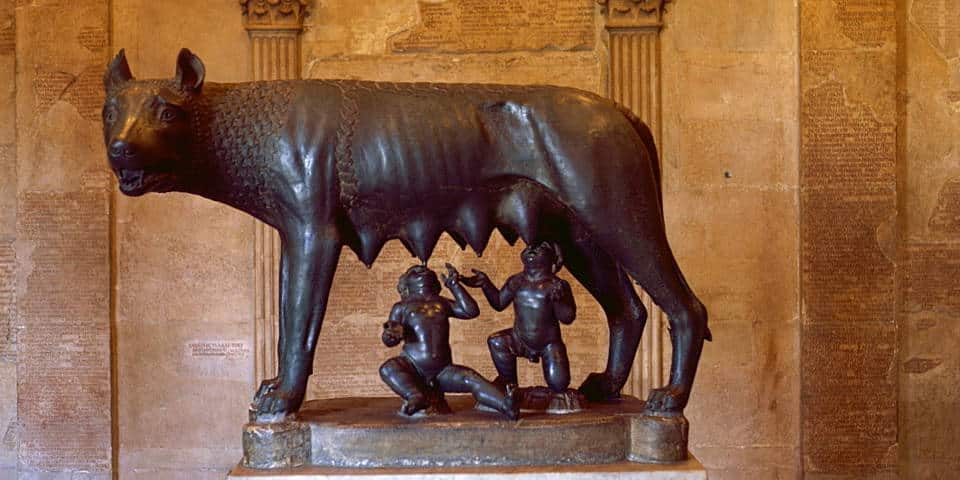
The entrance is in Palazzo dei Conservatori. The Capitoline She-Wolf is one of the bronzes donated in 1471. The date of the wolf itself is debated. The figures of Romulus and Remus were added later, after the bronze had been moved to the Capitoline.
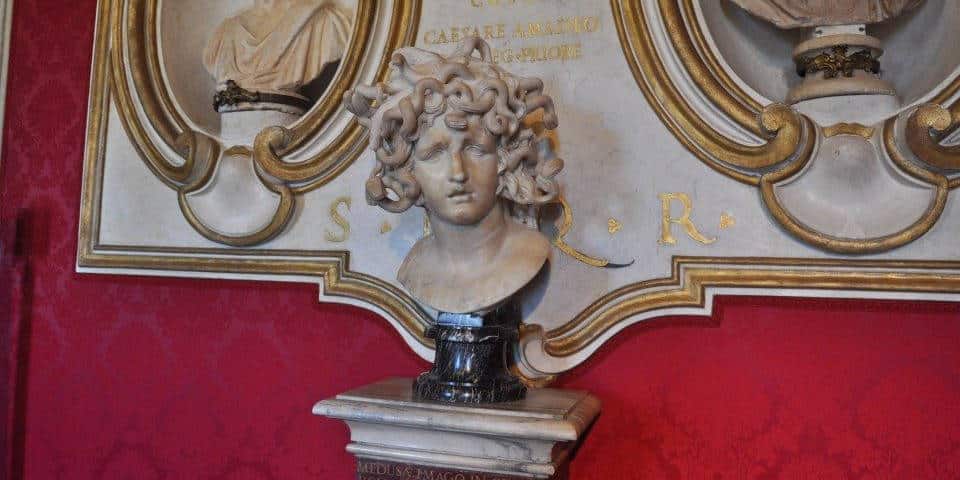
The ancient equestrian statue of Marcus Aurelius is indoors here. The rider on the square is a copy. Other highlights include Bernini’s marble bust of Medusa and the Spinario, a bronze boy pulling a thorn from his foot.
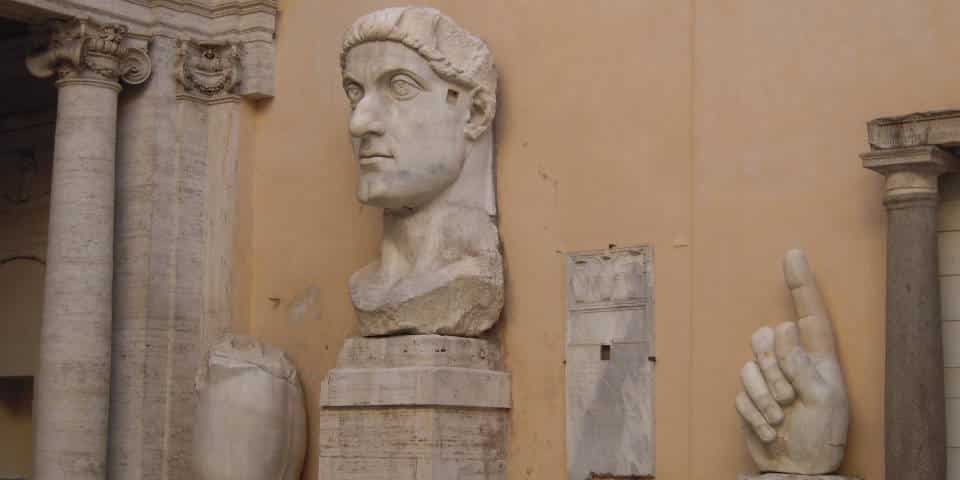
In the courtyard, look for the massive marble head, hand, and foot of Constantine. The fragments came from the colossal statue that stood in the Basilica of Maxentius in the Roman Forum. Upstairs, the Pinacoteca has paintings by artists including Caravaggio, Titian, and Guercino.
Palazzo Nuovo
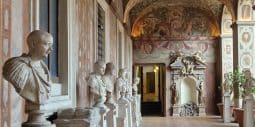
Cross through the underground galleries to Palazzo Nuovo for the Capitoline Venus, the Dying Gaul, and the rooms of ancient portraits. The Dying Gaul is a Roman marble version of a Greek work. In the Hall of the Philosophers, look at how sculptors distinguished literary and philosophical figures through age, expression, and dress.