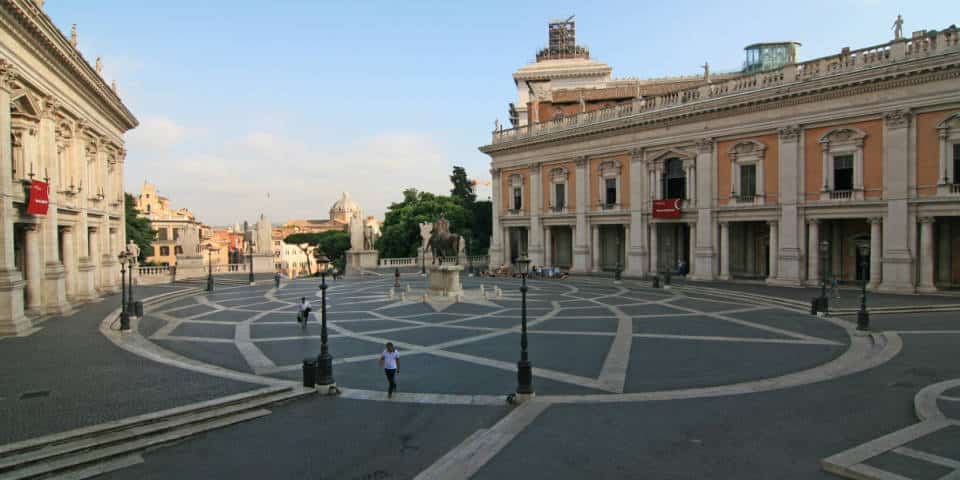

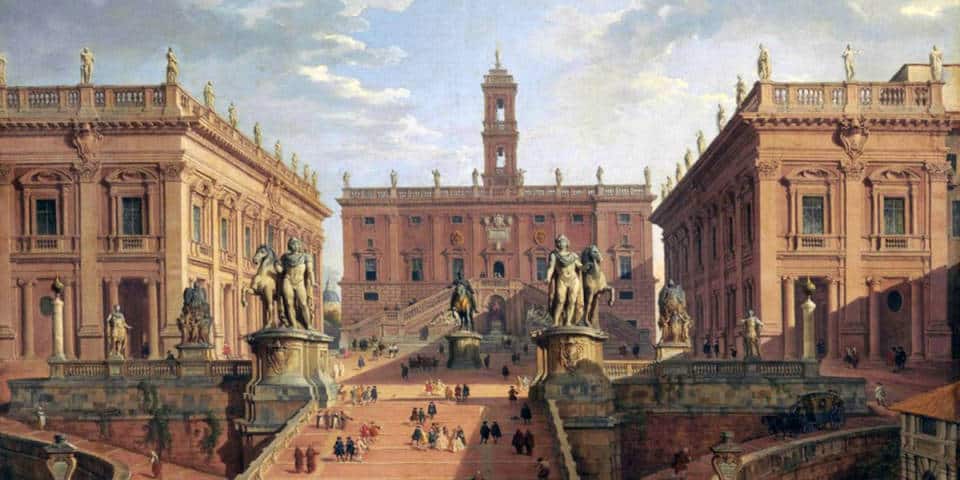
Piazza del Campidoglio is Michelangelo’s square on the Capitoline Hill. Three palaces frame it. Palazzo Senatorio is the seat of Rome’s municipal government, and the two facing buildings house the Capitoline Museums.
Contents
Michelangelo’s design
Pope Paul III commissioned Michelangelo to redesign the hilltop in the 16th century. The approach from the city side replaced the older orientation towards the Roman Forum. The trapezoidal square and matching façades give the older Palazzo Senatorio a more symmetrical setting. Construction continued after Michelangelo’s death. The star pattern in the pavement was installed in 1940, using his design as its basis.
The three palaces
Palazzo Senatorio stands at the head of the square. Palazzo dei Conservatori is to the right as you arrive from the ramp, opposite Palazzo Nuovo. The two museums are connected by a gallery beneath the pavement. Their ticket entrance is at Palazzo dei Conservatori.
The Cordonata
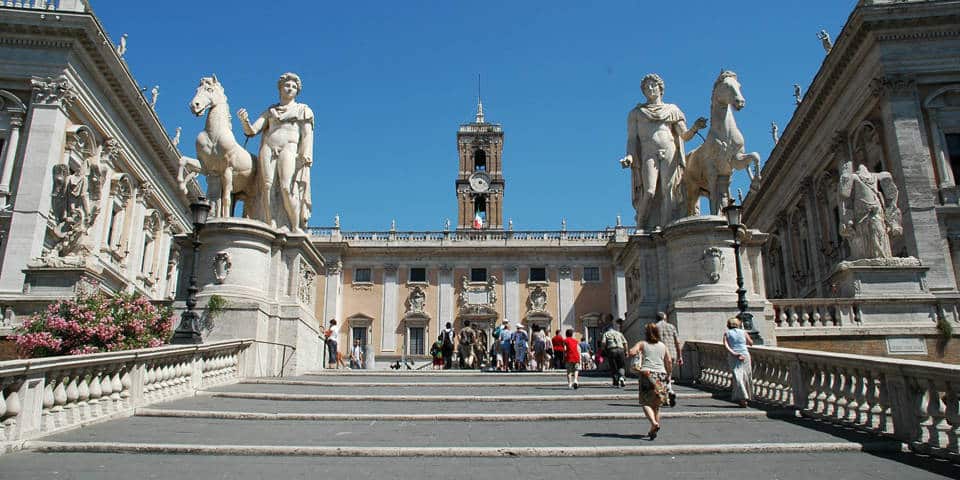
The broad, gently rising Cordonata leads up from Piazza d’Aracoeli. Two basalt lions flank the foot of the ramp, and the statues of Castor and Pollux stand at the top. The steeper stairs next to it lead separately to Santa Maria in Ara Coeli.
Marcus Aurelius and the fountain
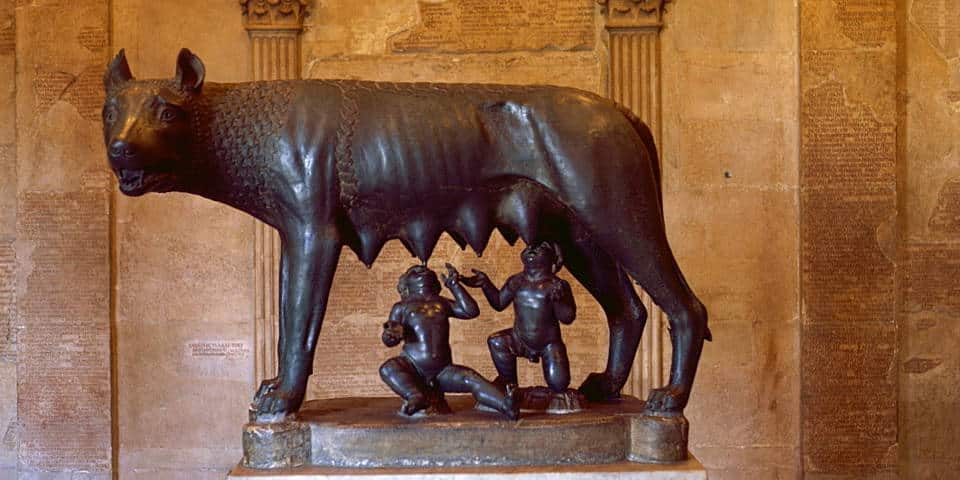
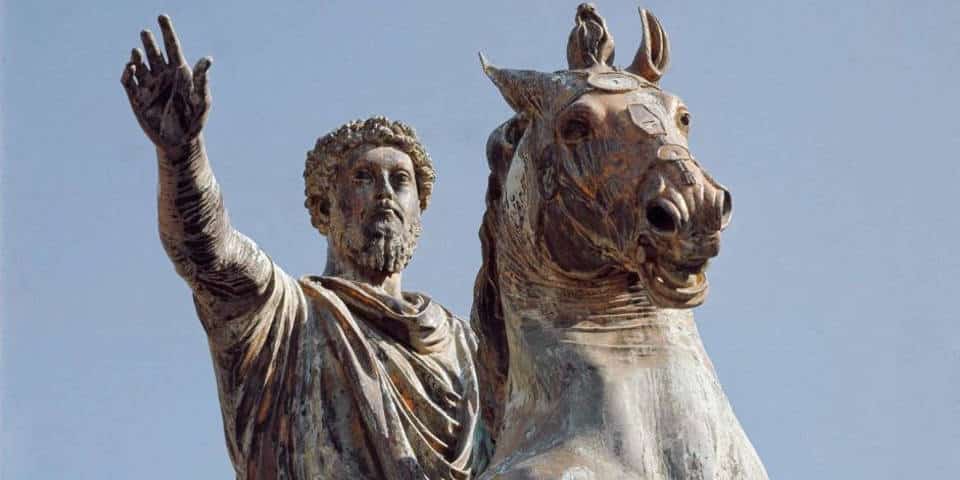
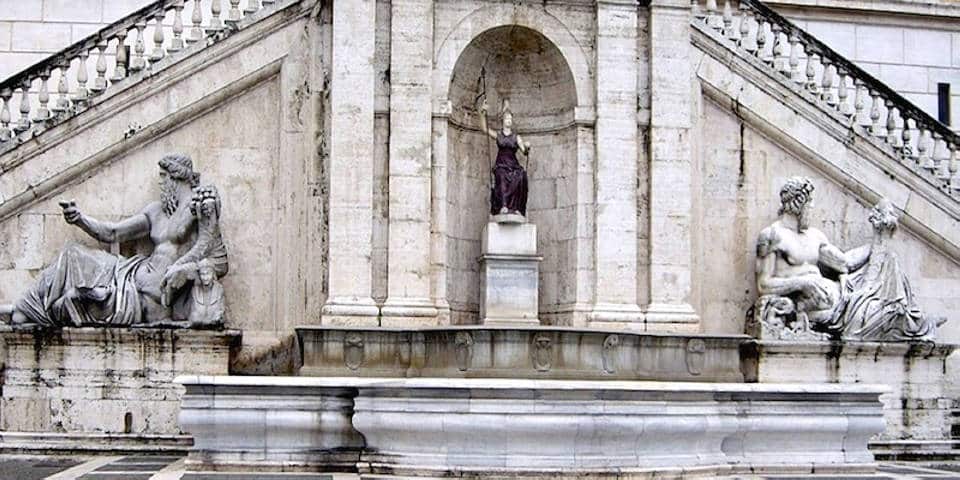
The figure of Marcus Aurelius in the centre of the square is a copy. The original bronze stands inside the Capitoline Museums. At the foot of Palazzo Senatorio, the fountain of the goddess Roma is flanked by personifications of the Nile and the Tiber. The Tiber figure originally represented another river and was reworked to include the she-wolf.
For a view of the Forum, walk around Palazzo Senatorio to the lanes on the far side of the hill. The city’s Michelangelo itinerary explains how the square was laid out.