
RomeItaly.guideRomeItaly.guide
Get the app
  • Taxi fares calculator
  • About us
Rome Italy GuideGet it on Google Play ›
  • Plan your trip
    • Weather
      • January
      • February
      • March
      • April
      • May
      • June
      • July
      • August
      • September
      • October
      • November
      • December
    • Neighbourhoods
      • Quartiere Coppedè
      • Trastevere
    • Day Trips
      • To Ostia Antica
      • Beaches near Rome
      • To Tivoli
  • Getting around
    • Fiumicino Airport
    • Termini Railway Station
    • Public Transport
    • To Ostia Antica
    • To Milan
    • Ciampino Airport
    • To Florence
    • To Naples
  • Sights
    • Ancient Sites
      • Castel Sant’Angelo
      • Colosseum
      • Mamertine Prison
      • Mouth of Truth
      • Pantheon
      • Roman Forum
      • Arch of Constantine
      • Catacombs
      • Theatre of Marcellus
    • Museums
      • Ara Pacis Augustae
      • Borghese Gallery
      • Caravaggio’s Paintings
      • Great Synagogue
      • Palazzo Farnese
      • Capitoline Museums
      • Spada Gallery
    • Churches
      • Capuchin Crypt
      • Holy Stairs
      • Sant’Agnese in Agone
      • San Giovanni in Laterano
      • Santa Maria Maggiore
      • Saint Paul Outside the Walls
      • St Peter in Chains
      • St. Ignatius of Loyola
    • Fountains & Squares
      • Navona Square
      • Spanish Steps
      • Trevi Fountain
      • Altar of The Fatherland
      • Fontana della Barcaccia
      • Fountain of the 4 Rivers
      • Fountain of the Pantheon
      • Piazza del Popolo
      • Piazza Venezia
      • Turtle Fountain
      • Triton Fountain
    • Hills
      • Aventine
      • Capitoline
      • Janiculum
      • Palatine
      • Pincian
    • Parks
      • Appian Way
      • Orange Garden
      • Pincio Terrace
      • Vatican Gardens
      • Villa Borghese
      • Villa Torlonia
      • Park of the Aqueducts
      • Villa Ada
      • Villa Celimontana
      • Zoo
    • Emperors
      • Good Emperors
      • Marcus Aurelius
      • Gaius Julius Caesar
      • Nero
      • Octavian Augustus
      • Caligula
      • Hadrian
      • Vespasian
      • Trajan
      • Commodus
  • Vatican City
    • St Peter’s Basilica
    • Sistine Chapel
    • Vatican Museums
    • Raphael’s Rooms
    • Michelangelo’s Pieta
    • St Peters Dome
    • St Peter’s Square
    • Swiss Guard
    • Pilgrims of Hope Jubilee
  • Where to stay
    • How to Choose a Hotel in Rome
    • Hotels with Best Views
    • Hotels near Termini
    • Hotels near the Colloseum
    • Best Hostels
    • Hotels near Navona Square
    • 3 Star Hotels
    • 4 Star Hotels
    • 5 Star Hotels
    • Apartments For Rent
  • Food & shopping
    • Where to Eat
      • Best Pizza Places
      • Best Pasta Places
      • Local Italian Food
      • Best Gelato Places
      • Best Rooftop Bars
    • Shopping
      • Castel Romano Outlet
      • Farmers Markets
      • Souvenirs from Rome
  • Tips & FAQ
    • Free Things to Do
    • TOP Attractions
    • Tickets to Vatican museums
    • Rome Three Day Itinerary
    • Renting a Car in Rome
    • Apps for Tourists
    • Instagram
    • Rainy Days in Rome
    • Buying a Sim Card in Italy
    • Unusual Things to do
    • Information About Rome – FAQ
  1. Home ›
  2. Fountains and Squares

Fountain of the Naiads in Rome

Written by: Kate Zusmann

Fountain of the Naiads in Rome
Recommended tour
Closest bus stops
Nazionale/Torino3 min 128 m: 40 60 64 170 H
Repubblica2 min 109 m: 38 66 82 85 223 590 910
Closest subway stations
Repubblica1 min 35 m: A
Address P.za della Repubblica, 12, Roma

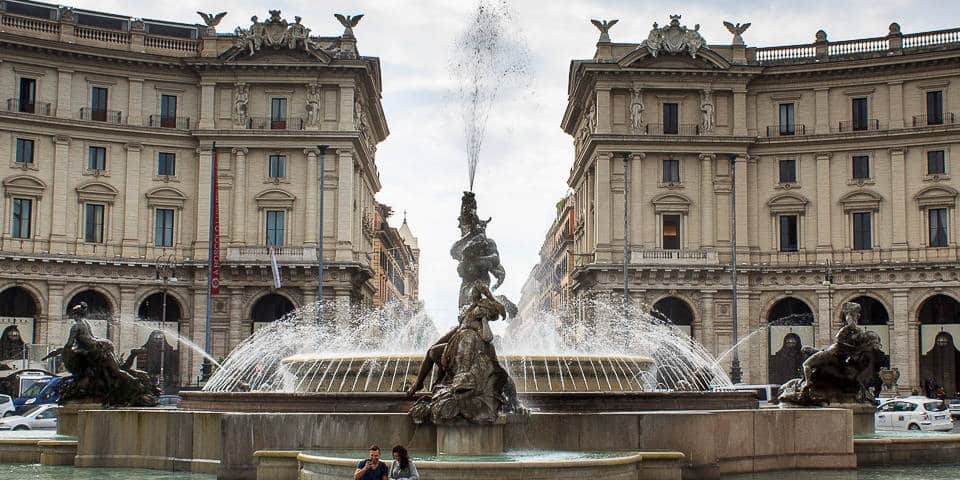
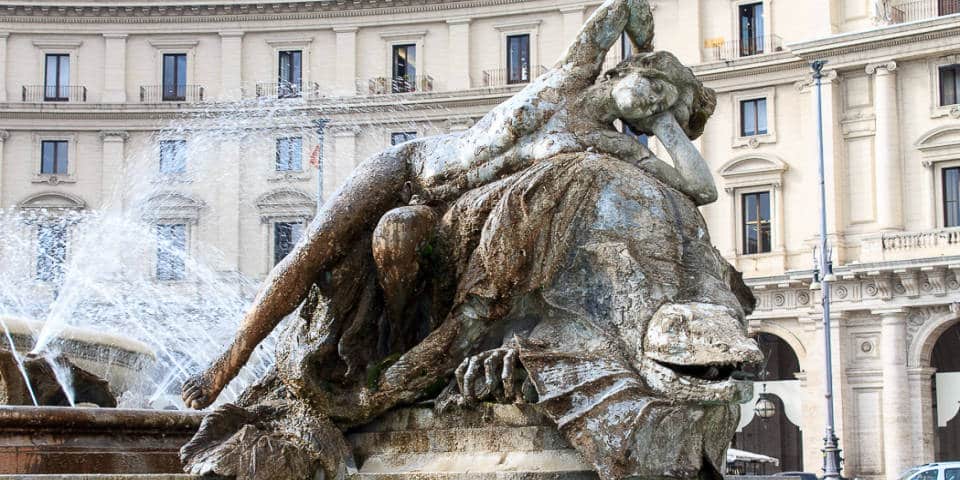
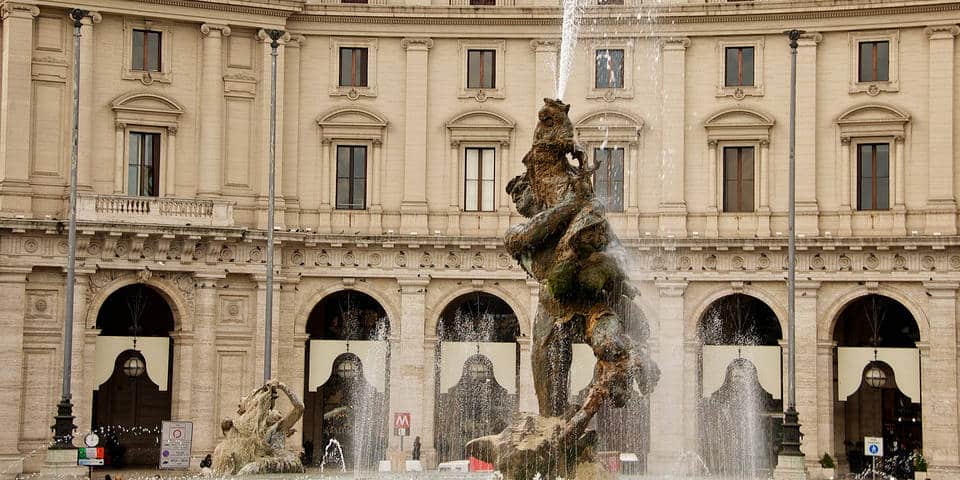
The four bronze nymphs at the edge of the basin each sit with an animal linked to a different body of water. The figure above them is Glaucus, shown wrestling with a fish. The fountain sits in traffic in Piazza della Repubblica, so use the pavements around the square to see the figures from different angles.

The Fountain of the Naiads (La Fontana delle Naiadi) is one of the most significant monuments in Rome. It was designed and constructed in many stages by Alessandro Guerrieri and completed by Mario Rutelli. Located in the centre of the Piazza della Repubblica, the fountain contains four water Nymphs (Najadi) on the lower four basins. These young naked sculptures were a shock for the Romans.

Contents4 sections · ~4 min read
  1. What You Need to Know about Naiads
  2. History
  3. The reaction of the Romans
  4. The Naiads

What You Need to Know about Naiads

What are Naiads in Greek mythology?
Naiad (from Greek naiein, “to flow”), in Greek mythology, is one of the nymphs of flowing water – springs, rivers, lakes, and fountains. The Naiads, appropriately related to freshwater, were represented as beautiful, lighthearted, and beneficent.
Are Naiads only female?
Yes. Naiads are always females, and they’re known for being quite jealous. According to Greek mythology, naiads are immortal.
Are Naiads real?
No, Naiads are part of Greek mythology. Naiads were often the object of archaic local cults, worshipped as essential to humans. Boys and girls at coming-of-age ceremonies dedicated their childish locks to the local naiad of the spring. Their waters’ ritual cleansings were credited with magical medical properties in places like pre-Mycenaean Lerna in the Argolis (Classical Greece).

History

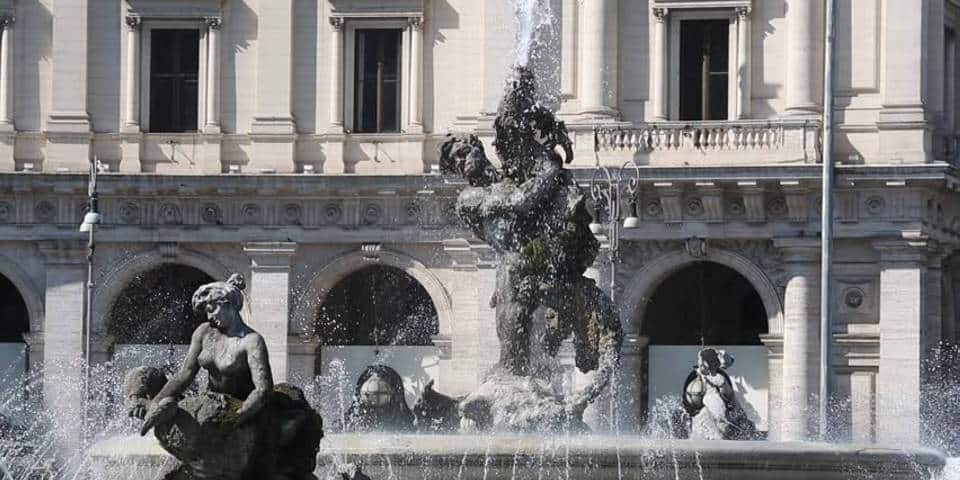
The Fountain of the Naiads was created in 1888 but was initially completed in 1901, with an addition in 1911 by Alessandro Guerrieri and completed by Mario Rutelli. However, the base of the monument dates back to the 1870s. Pope Pius IX originally had the fountain built to commemorate the creation of the new aqueduct named Acqua Pia-Marcia after the ancient Aqua Marcia was constructed in 144 BC. However, several years later, the new Italian government renovated the whole area, and the fountain was increased in size and moved about 80 metres to the location where it stands today.
the Fountain of the Naiads in Rome

The fountain had notime and a simple structure with a series of basins at various levels. Consequently, when German emperor Willia II visited Rome, statues at the Alessandro Guerrieri created four plaster lions to decorate the corners of the fountain.

You might also like an article about Ancient Park of the Aqueducts

The reaction of the Romans

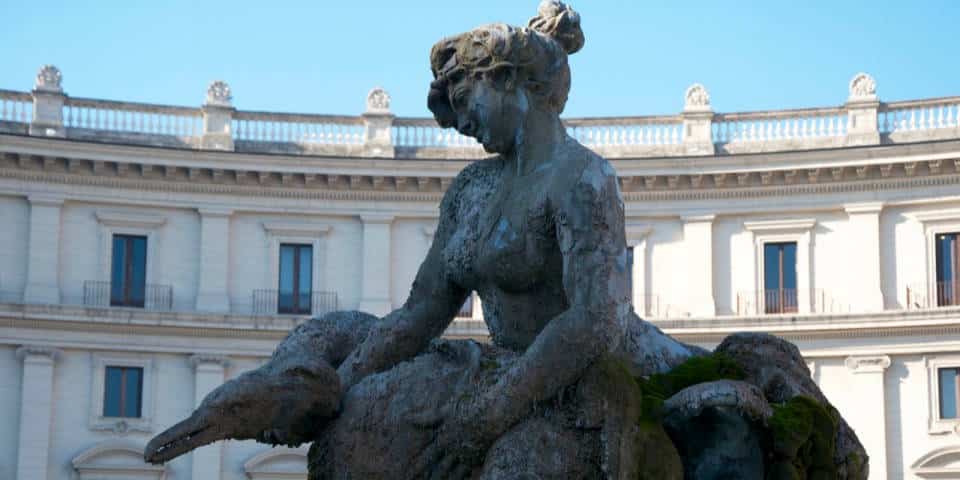
Many citizens of Rome were unsatisfied with the decoration of the fountain, and the city council of Rome decided to commission real statues. Eventually, in 1901, Mario Rutelli, a Sicilian artist, was commissioned to design four statues to decorate the corners of the fountain. New sculptures created are four nymphs: the Naiad of the Oceans, the Naiad of the Rivers, the Naiad of the Lakes, and the Naiad of Underground Waters, where each one features an animal from their environment.
the Fountain of the Naiads in Rome

  1. A water snake represents the Naiad of the Rivers.
  2. A sea horse represents the Naiad of the Oceans.
  3. A swan represents the Naiad of the Lakes.
  4. A reptile represents the Naiad of the Underground Waters.

Undoubtedly, locals were shocked by the work of Rutelli since the model of the Naiads was based on two twin prostitutes in Rome. Moreover, the sculpted figures were nude, and it caused controversy in conservative circles in the Eternal City. Finally, however, the city council decided that the figures should stay.
the Fountain of the Naiads in Rome

For a long time the fountain was considered very obscene sight

Eventually, Rutelli prepared sculptures for the centerpiece of the fountain that featured three human figures, a dolphin and an octopus, tangled together in a wrestle. However, these sculptures received many sarcastic comments, being named “the fish try of Termini.” Consequently, Rutelli was asked to create a new figure. As a result, he designed the male figure embracing a dolphin. Also, the “fish try” model was moved to the gardens in piazza Vittorio Emmanuele II, where it was used as decoration for a small pond. Finally, with the addition of another bronze figure in the centre, the fountain’s design was completed.

The Naiads

The Naiads come from Greek mythology. They were nymphs of bodies of fresh water and were considered one of the three main classes of water nymphs. Moreover, the Naiads presided over rivers, brooks, streams, fountains, lakes, springs, and marshes. Their origin varies according to the location and literary source. Some said that Naiads were daughters of Zeus, while others connected them to the vast family of the Titan Oceanus.
the Fountain of the Naiads in Rome

Like any other nymphs, the Naiads were the female sex symbols of the ancient world

Moreover, classical literature is full of stories of the Naiad’s love affairs with gods, men, and stories of their children.

The Fountain of the Naiads is one of the Roman gems. It is not only one of the largest and most famous monuments of the Eternal City, which attracts thousands of tourists daily, but also a masterpiece with a rich history.

Kate Zusmann
Rome travel writer & expert Kate Zusmann
years in Rome
12
guides published
198
article updated
Nov 2026
I write about Rome’s museums, neighbourhoods and places to stay. My aim is to help you decide what’s worth your time and where to base yourself while you explore.
All guides by Kate →

More Rome guides

Vatican Museums Visitor Guide

The Vatican Museums

Rome Italy Tourist Attractions

Top 30 Attractions in Rome

Rome hotels with a view

Rome hotels with a view and the rooms to book

How to Book Vatican Museums & Sistine Chapel Tickets

How to Book Vatican Museums & Sistine Chapel Tickets

St. Peter's Basilica dome seen through the trees from the far side of Piazzale Garibaldi, Rome

Janiculum Hill (Gianicolo): Viewpoints and Walking Route

Column of the Immaculate Conception

Column of the Immaculate Conception

Piazza Barberini in Rome

Piazza Barberini in Rome

Fountain of the Goddess Roma

Fountain of the Goddess Roma

Bernini’s Triton Fountain

Bernini’s Triton Fountain

Show more

About us

About us ROME.US Authors Kate Zusmann and Artur Jakucewicz
We're Kate and Artur. Rome has been our home for more than ten years, and we write about the streets, churches and museums we know first-hand.

Explore Rome

  • when vatican was built

    When was the Vatican Built?

  • Metro in Rom

    Rome Metro: Lines, Tickets and Opening Hours

  • Where is The Sistine Chapel in Rome?

    Where to Buy Sistine Chapel Tickets?

  • house of the Owls in Rome

    House of the Owls

  • Museum of the Ara Pacis Augustae

RomeItaly.guide

This site uses cookies

RomeItaly.guide © 2026. Created with love by Roman experts and guides.

  • American English
  • Español
  • Deutsch
  • Polski
  • Русский
  • Français