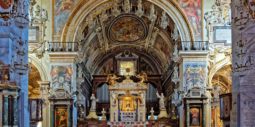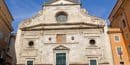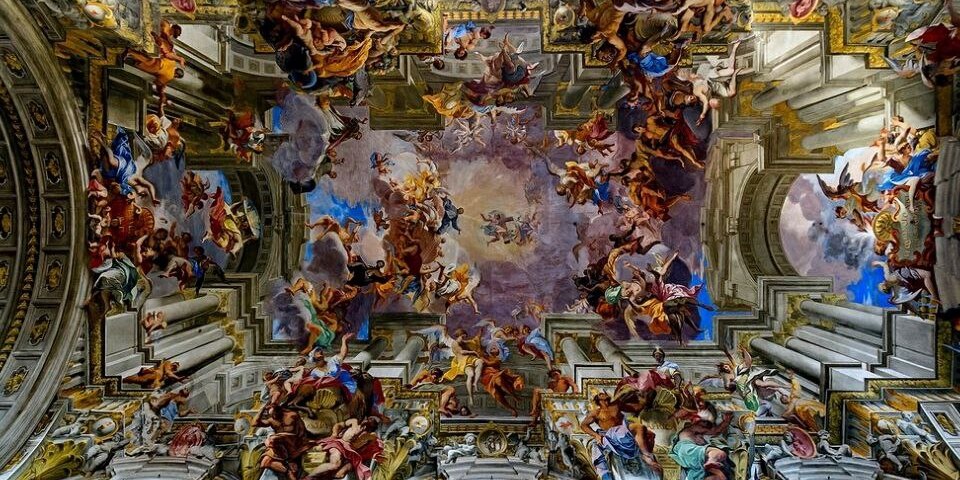

The Church of St Ignatius of Loyola (Sant’Ignazio di Loyola) stands in Piazza Sant’Ignazio, a short walk from the Pantheon. Look up from the nave to see two separate works by Andrea Pozzo: the fresco of St Ignatius in glory and the painted dome, which appears three-dimensional from a marked spot on the floor.
Contents
Visiting the Church of St Ignatius
When can you visit Sant’Ignazio?
The church lists opening hours of 09:00 to 23:30 daily. Independent visits are free. Check the church’s official schedule for Mass times or changes before you go.
Who painted the ceiling at Sant’Ignazio?
Andrea Pozzo painted both the nave fresco and the illusion of a dome. They occupy different parts of the church.
Where is St Ignatius of Loyola buried?
His tomb is in the nearby Church of the Gesù, the mother church of the Jesuits.
History
The church was built for the nearby Roman College, an important Jesuit teaching institution. Construction began in 1626 with backing from Cardinal Ludovico Ludovisi. The Jesuit mathematician Orazio Grassi designed the church using plans by Carlo Maderno and others. Its façade recalls the nearby Gesù.
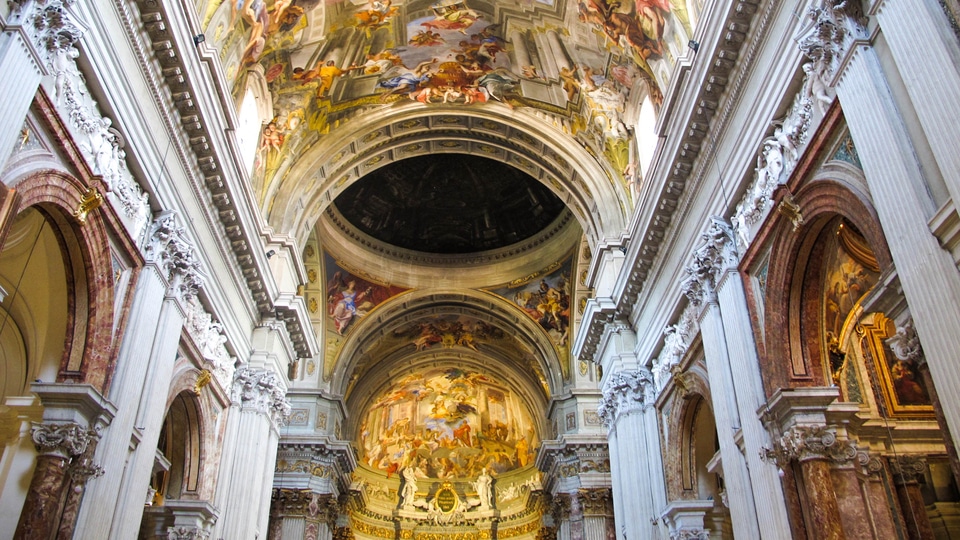
Pozzo’s nave fresco and false dome
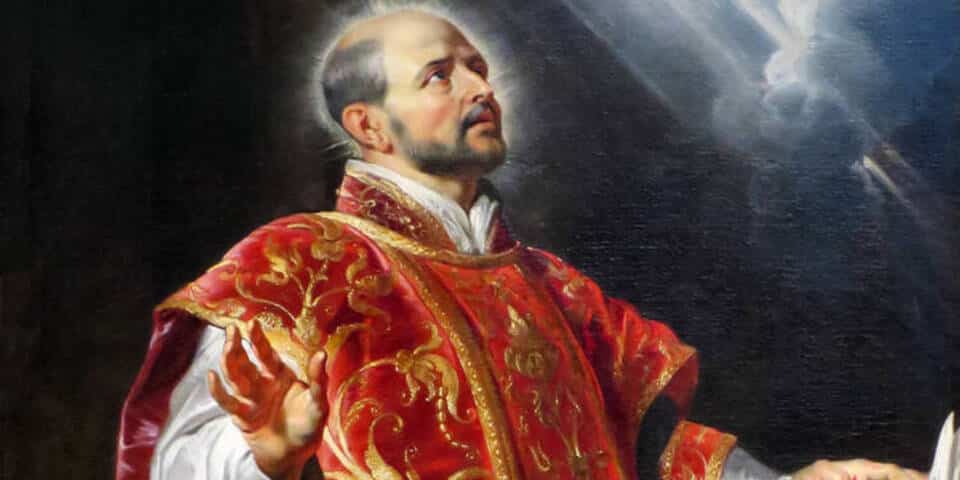
In the nave, painted columns and arches appear to continue the real architecture. Above them, St Ignatius rises into heaven. Figures representing Europe, Asia, Africa, and America reflect the reach the Jesuits claimed for their missionary work.
Farther towards the altar, the false dome creates a different illusion. From the marked place in the nave it looks as though a dome rises above the crossing. Move to the side and you can see how the perspective changes. The mirror in the nave gives another way to look closely at the ceiling.

What else to see inside
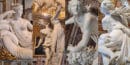
- In the chapel of St Aloysius Gonzaga, look for the marble relief by Pierre Le Gros.
- St John Berchmans is also buried in the church, near the high altar.
- Take a moment in Piazza Sant’Ignazio on the way out. The curved buildings facing the church give the square a theatrical setting.
The Pantheon is a short walk away. For a longer walk through Baroque Rome, see our guide to Borromini’s work.
Who was St Ignatius of Loyola?
Ignatius was born in the Basque Country in 1491. While recovering from a wound in 1521, he turned to religious life. The meditations and prayers he developed became known as the Spiritual Exercises. The Society of Jesus received papal approval in 1540. Ignatius died in Rome on 31 July 1556, and was canonised in 1622.