
RomeItaly.guide
  • Taxi fares calculator
  • About us
  • Plan your trip
    • Weather
      • February
      • April
    • Neighbourhoods
      • Quartiere Coppedè
      • Trastevere
    • Day Trips
      • To Ostia Antica
      • Beaches near Rome
  • Getting around
    • Fiumicino Airport
    • Termini Railway Station
    • Public Transport
    • To Ostia Antica
    • To Milan
  • Sights
    • Ancient Sites
      • Castel Sant’Angelo
      • Colosseum
      • Mamertine Prison
      • Mouth of Truth
      • Pantheon
      • Roman Forum
    • Museums
      • Ara Pacis Augustae
      • Borghese Gallery
      • Caravaggio’s Paintings
      • Great Synagogue
      • Palazzo Farnese
    • Churches
      • Capuchin Crypt
      • Holy Stairs
      • Sant’Agnese in Agone
      • San Giovanni in Laterano
      • Santa Maria Maggiore
      • Saint Paul Outside the Walls
      • St Peter in Chains
    • Fountains & Squares
      • Navona Square
      • Spanish Steps
      • Trevi Fountain
      • Altar of The Fatherland
      • Fontana della Barcaccia
      • Fountain of the 4 Rivers
      • Fountain of the Pantheon
      • Piazza del Popolo
      • Piazza Venezia
      • Turtle Fountain
    • Hills
      • Aventine
      • Capitoline
      • Janiculum
      • Palatine
      • Pincian
    • Parks
      • Appian Way
      • Orange Garden
      • Pincio Terrace
      • Vatican Gardens
      • Villa Borghese
      • Villa Torlonia
    • Emperors
      • Good Emperors
      • Marcus Aurelius
      • Gaius Julius Caesar
      • Nero
      • Octavian Augustus
      • Caligula
      • Hadrian
      • Vespasian
      • Trajan
  • Vatican City
    • St Peter’s Basilica
    • Sistine Chapel
    • Vatican Museums
    • Raphael’s Rooms
    • Michelangelo’s Pieta
    • St Peters Dome
    • St Peter’s Square
    • Swiss Guard
  • Where to stay
    • How to Choose a Hotel in Rome
    • Hotels with Best Views
    • Hotels near Termini
    • Hotels near the Colloseum
    • Best Hostels
    • Hotels near Navona Square
    • 3 Star Hotels
    • 4 Star Hotels
    • 5 Star Hotels
    • Apartments For Rent
  • Food & shopping
    • Where to Eat
      • Best Pizza Places
      • Best Pasta Places
      • Local Italian Food
      • Best Gelato Places
      • Best Rooftop Bars
    • Shopping
      • Castel Romano Outlet
      • Farmers Markets
      • Souvenirs from Rome
  • Tips & FAQ
    • Free Things to Do
    • TOP Attractions
    • Tickets to Vatican museums
    • Rome Three Day Itinerary
    • Renting a Car in Rome
    • Apps for Tourists
    • Instagram
  1. Home ›
  2. Fountains and Squares

The water clock of the Pincio

Written by: Artur Jakucewicz

The water clock of the Pincio
Closest bus stops
Del Fiocco/Valle Giulia5 min 233 m: 61 89 160 490 495 590
P.Za Popolo7 min 338 m: 119
P.Le Flaminio8 min 416 m: 61 89 120F 150F 160 490 495 590
Closest subway stations
Flaminio7 min 368 m: A
Address Viale dell'Obelisco, a39, Roma

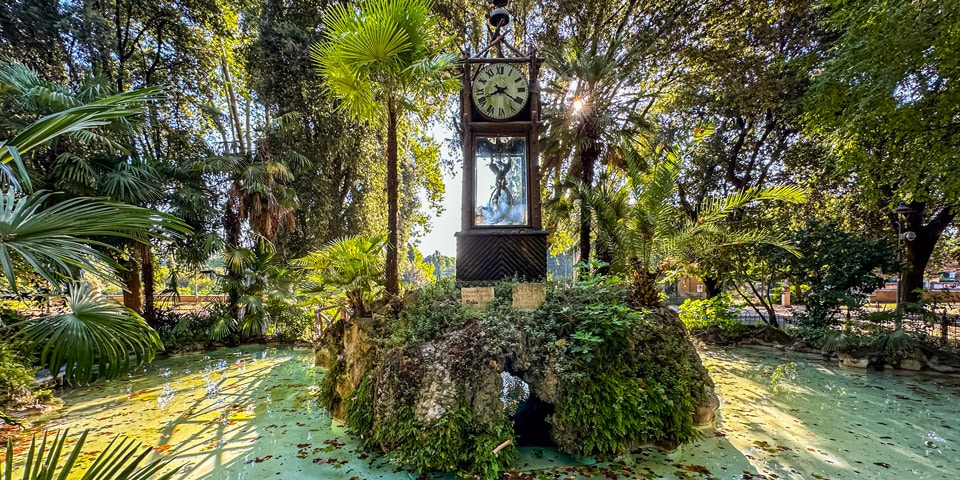
The water clock stands on a small island in a pond on the Pincio, near the Villa Borghese gardens. You can see the wooden case from the path. Its original mechanism used the alternating weight of water to drive the movement. The clock may be stopped for maintenance, so treat it as a garden landmark.

Rome’s Water Clock is nestled in the park of Villa Borghese and is just a stone’s throw from Pincio’s panoramic terrace. An exquisite fusion of engineering and aesthetics, it remains a timeless marvel and testament to human ingenuity.

Contents3 sections · ~3 min read
  1. Water Clock Creator
    1. Construction and Installation
    2. Description and Design
    3. How Does a Hydrochronometer Work?
  2. Legacy and Preservation
  3. How to Find the Water Clock at Villa Borghese

Water Clock Creator

The water clock was conceived in 1867 by Giovanni Battista Embriaco, a Dominican friar with Ligurian roots. A passionate lover of clocks and engineering, Embriaco built his first clock at the age of 17. His passion culminated in creating the Water Clock, a model he sent to the Universal Exhibition of Paris in 1867. Unfortunately, the clock remained unopened in its packaging due to the fear of breaking it and technical difficulties.

Construction and Installation

The actual construction of the water clock at Pincio Hill was undertaken by the Granaglia brothers from Turin. It was installed in 1873, opening the magical world of timekeeping to Romans and tourists alike.

Description and Design

Standing on an islet in the centre of a small lake in Villa Borghese, the clock rests on a cast-iron base above stones. It’s about four metres tall, and each side features glass panes with glass dials positioned above, showing Roman numerals and brass hands.
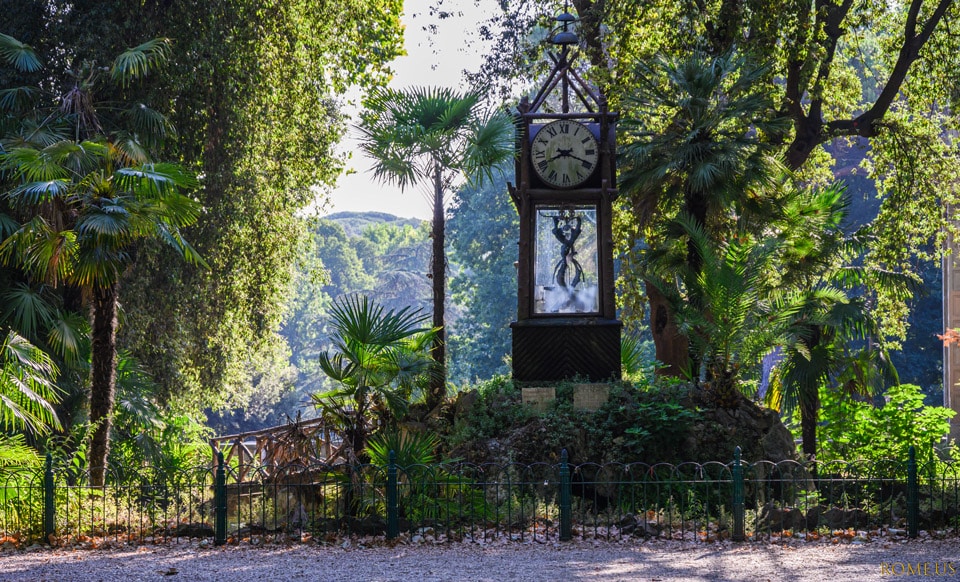
Hydrochronometer Water Clock Villa Borghese Rome

The clock’s structure beautifully mimics tree trunks, seamlessly blending into the natural surroundings. A wooden bridge leads to the clock, enveloped by lush vegetation and the serene silence of the beautiful park. Gioacchino Ersoch, an architect of Rome, chose this picturesque setting and decided to position the clock atop a mass of artificial rocks.

How Does a Hydrochronometer Work?

The water clock, or Hydrochronometer, functions with water as its principal engine.
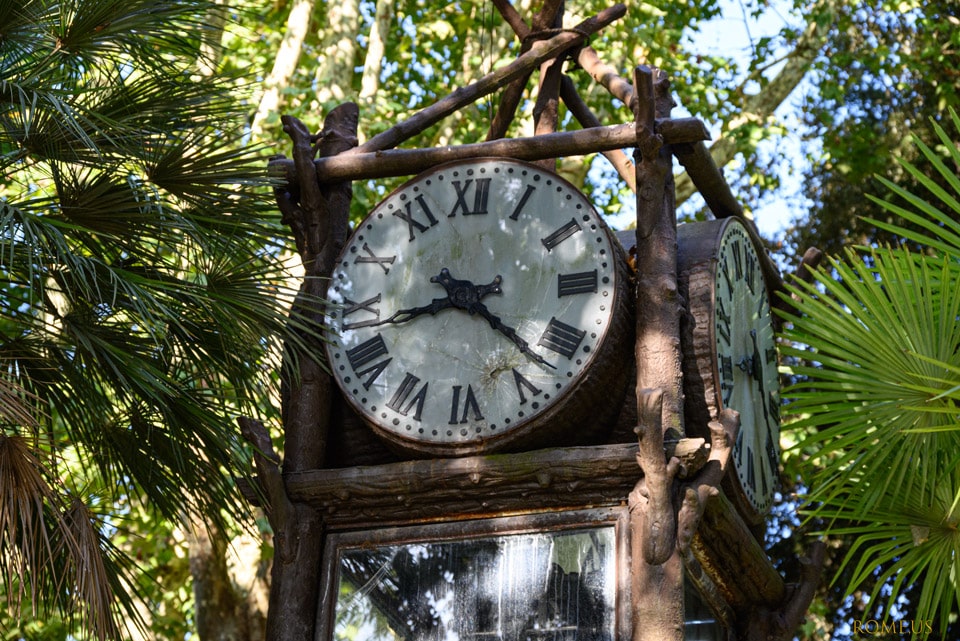
Hydrochronometer Villa Borghese Rome

A jet of water alternatively fills one of the two elongated leaf-shaped basins, oscillating like a balance’s arms. This movement activates the mechanism that turns the hands, marking the time. Additionally, the water flow charges the chime mechanism, creating an engineering marvel.

Read also about Borghese Gallery.

Legacy and Preservation

Over the years, the clock faced deterioration due to weather. However, since 2004, the Professional Training School of the ELIS Centre (www.elis.org) has been maintaining its maintenance. A recent inspection on 3 June 2021, confirmed that the clock is in working condition.
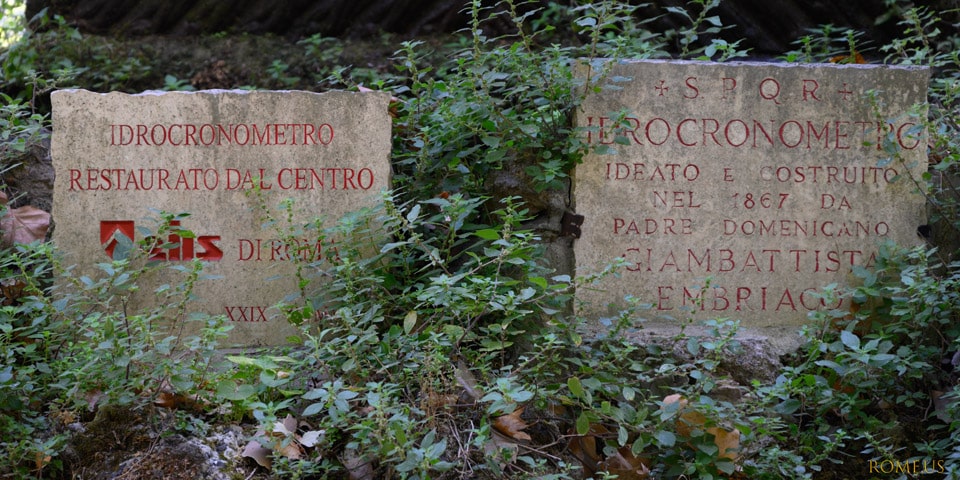
Restoration info Hydrochronometer Water Clock Villa Borghese Rome

The clock’s unique nature and artistic and decorative qualities have always sparked interest and curiosity. It’s considered a “unicum” since no other examples of water clocks are placed in public gardens.

In an era where digital technology often overshadows traditional craftsmanship, the Water Clock of Pincio stands as a tribute to timeless innovation and beauty. Its silence, broken only by the flowing water, the wooden bridge, and the rocky and lush islet on which the clock stands, all transport visitors into a magical, timeless dimension—a paradox considering the very nature of the object.

As the Director of the ELIS School, Pierluigi Bartolomei, stated, the restoration and ongoing care of the water clock are driven by passion and a desire to leave a trace. It serves as a lasting symbol of Rome’s cultural heritage, captivating the imagination of tourists and locals alike and reminding us of the intrinsic link between art, nature, and time.

Read also about Ancient Park of the Aqueducts.

How to Find the Water Clock at Villa Borghese

The easiest way to find the water clock at Villa Borghese (here are the coordinates on Google Maps) is to use the Pincio viewpoint as a guide. The easiest way to find the water clock at Villa Borghese is to use the Pincio lookout as a guide. Turn around 180 degrees so that the view of the dome of Peter’s Cathedral in the Vatican is behind you. Walk about 3 minutes past a lone palm tree and a Fountain of Moses.

Congratulations! You have arrived at an engineering marvel and one of Rome’s not-so-banal sights.

Artur Jakucewicz
Rome travel writer & expert Artur Jakucewicz
years in Rome
10+
guides published
81
article updated
Nov 2026
I’ve lived in Rome for over a decade and am delighted to share my knowledge and experience. Passionate about ancient history and architecture, I’m the author of travel guides to Italy designed especially for independent travellers.
All guides by Artur →

More Rome guides

Vatican Museums Visitor Guide

The Vatican Museums

Rome Italy Tourist Attractions

Top 30 Attractions in Rome

Rome hotels with a view

Rome hotels with a view and the rooms to book

How to Book Vatican Museums & Sistine Chapel Tickets

How to Book Vatican Museums & Sistine Chapel Tickets

St. Peter's Basilica dome seen through the trees from the far side of Piazzale Garibaldi, Rome

Janiculum Hill (Gianicolo): Viewpoints and Walking Route

Column of the Immaculate Conception

Column of the Immaculate Conception

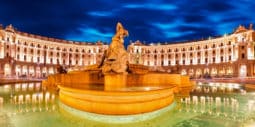
Fountain of the Naiads in Rome

Fountain of the Naiads in Rome

Piazza della Repubblica in Rome

Piazza della Repubblica in Rome

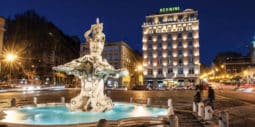
Piazza Barberini in Rome

Piazza Barberini in Rome

Show more

About us

About us ROME.US Authors Kate Zusmann and Artur Jakucewicz
We're Kate and Artur. Rome has been our home for more than ten years, and we write about the streets, churches and museums we know first-hand.

Explore Rome

  • Kaiser Hadrian

    Emperor Hadrian

  • What to wear in Rome in July

    What to wear in Rome in July

  • How many Colosseums are there in Italy?

    How many Colosseums are there in Italy?

  • Hotels near Rome Termini station

    Best hotels near Rome Termini station

  • Exterior of the Basilica of Sant’Agostino in Rome

    Basilica of Sant’Agostino in Rome

RomeItaly.guide

This website uses cookies. For more info read the cookies policy This site uses cookies

RomeItaly.guide © 2026. Created with love by Roman experts and guides.

  • American English
  • Español
  • Deutsch
  • Polski
  • Русский
  • Français