
At San Clemente you can visit the upper basilica and book the archaeological levels beneath it separately. Go down from the medieval church to the earlier basilica and then to Roman structures, including the room associated with the cult of Mithras. The underground route involves stairs. Check the official excavation booking page for current admission, opening times and accessibility information.
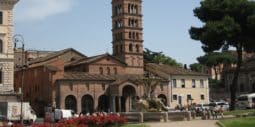
The Basilica of Saint Clement (Basilica di San Clemente al Laterano) is a Roman Catholic minor basilica dedicated to Pope Clement I.
It is a three-tiered complex of buildings:
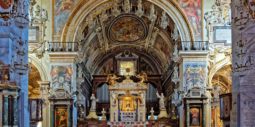
- The current Basilica was constructed just before 1100, during the height of the Middle Ages.
- Beneath the present Basilica is a 4th-century basilica that had been converted out of the home of a Roman aristocrat, part of which had within the 1st Century briefly served as an early church, and the basement of which had within the 2nd Century briefly served as a Mithraeum.
- The home of the Roman aristocrat had been built on the foundations of a republican-era villa and warehouse that had been destroyed in the Great Fire of 64 A.D.
Contents
Things to Know before Visit the Basilica di San Clemente al Laterano
Who was St Clement of Rome?
St Clement of Rome was the fourth Pope from 88 AD to 99 AD. He is considered one of the Apostolic Fathers, early Christian writers who had personal contact with the Apostles. His epistle, “First Clement,” is one of the earliest extant Christian documents outside the New Testament.
How did Clement of Rome die?
St Clement of Rome is believed to have been martyred around 99 AD. According to tradition, he was exiled to the Crimea by Emperor Trajan and forced to work in a stone quarry. He was then tied to an anchor and thrown into the sea, drowning as a result.
Who is buried in San Clemente Church, Rome?
San Clemente Church, Rome, is traditionally believed to house the relics of St Clement of Rome. The lower basilica contains a shrine to him. The remains of St Cyril, who brought Christianity to the Slavs, are also interred in the church.
Is Clement of Rome mentioned in the Bible?
Yes, St Clement of Rome is mentioned in the Bible. In Philippians 4:3, Paul refers to Clement, acknowledging his role as a fellow worker whose name is in the Book of Life. This reference is widely believed to be to St Clement of Rome.
What did Clement of Rome write?
Clement of Rome is best known for writing the “First Clement” epistle around 96 AD. Addressed the Church in Corinth, addressed issues of church order and discipline, and stressed the importance of maintaining harmony and the hierarchical structure within the church.
What is the prayer of St Clement?
The prayer of St Clement of Rome pleads for unity and peace among Christians. A notable part reads: “We beg Thee, Master, be our helper and defender. Rescue those of our number in distress, raise the fallen, assist the needy, heal the sick, turn back those of Thy people who wander, feed the hungry, ransom our prisoners, raise up the weak, comfort the fainthearted. Let all the nations know that Thou art God alone.”
Did Clement of Rome know Paul?
Yes, Clement of Rome is believed to have known the Apostle Paul. In Philippians 4:3, Paul mentions Clement as a fellow worker, suggesting a direct relationship.
Early Christian tradition holds that Clement was a disciple of both Paul and Peter.
Where was Clement of Rome born?
The exact birthplace of Clement of Rome is uncertain. Early sources suggest he was born in Rome, while others imply he might have come from a distinguished Roman family. Some traditions claim he was of Jewish descent.
What was Pope Clement known for?
Pope Clement is known for his leadership in the early Christian Church and his epistle “First Clement,” which addresses church order and discipline. He emphasized the importance of maintaining harmony and obedience within the church community, and he is revered for his pastoral care and doctrinal teachings.
Why was St Clement banished from Rome?
St Clement was banished from Rome by Emperor Trajan around 99 AD. His exile to the Crimea was due to his active Christian ministry, which threatened Roman religious and social stability. In exile, he continued to spread Christianity, leading to his eventual martyrdom by being drowned with an anchor tied around his neck.
What is St Clement, the patron saint of?
St Clement is the patron saint of mariners, sailors, marble-workers, and stone-cutters. His association with mariners stems from the legend of his martyrdom, where he was drowned in the sea with an anchor tied around his neck.
Why did Pope Clement I choose this name?
Pope Clement I did not choose his name, as papal names became a tradition later. The name “Clement” means “merciful” or “mild” in Latin, which may reflect his pastoral nature and dedication to maintaining harmony and order in the early Christian Church.
Is it possible to take photographs in the Basilica of St Clement?
Yes, taking photographs in the Basilica of St Clement is possible, but restrictions apply. Photography is generally allowed in the upper church, but it is prohibited in the lower basilica and the ancient Mithraeum to preserve the integrity of the frescoes and artifacts. Always check for the latest guidelines during your visit.
History
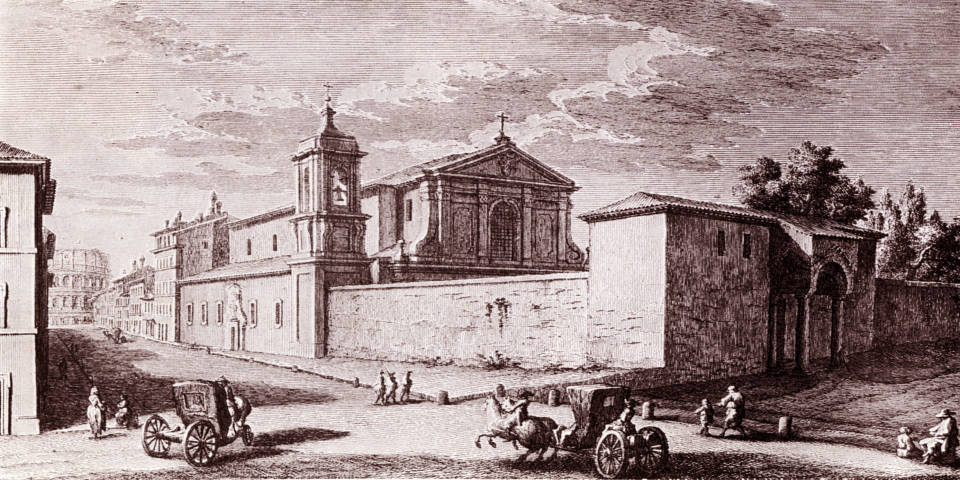
This old church was changed over the centuries from a private home that was the location of clandestine Christian worship within the 1st Century to a grand open basilica by the 6th Century, reflecting the emerging Catholic Church’s developing legitimacy and power. The archeological follows of the Basilica’s history were found in the 1860s by Joseph Mullooly, Prior of the house of Irish Dominicans at San Clemente (1847-1880).
The Basilica of San Clemente is arranged some three hundred yards above the Colosseum, on a street that rises gradually to St John Lateran from the valley between the Caelian Hill on the south and the Oppian Hill on the north. It is named after Pope St Clement, the third successor of St Peter in the See of Rome, who died about 100 A.D. Until a hundred years back, without a doubt, it was commonly thought that the present church was that to which St Jerome re¬ferred when he wrote about 390 that « a church in Rome preserves the memory of St Clement to this day.»
Before the 4th Century
Nowadays, there are remains of the foundation from the republican era building on the lowest levels of the Basilica. An industrial building from the imperial mint of Rome from the late 1st century A.D. was built on the same site during the Flavian period. Later, an insula was built on the site but separated from the industrial building by a narrow alleyway. At the beginning of 2 century A.D., a sanctuary of the cult of Mithras was built in the courtyard of the insula.
The main cult room was found in 1867 but could not be investigated until 1914 due to lack of drainage
From the 4th to 11th Centuries
In the 4th Century, the second floor of the lower level of the industrial building was remodeled. An apse was built over part of the Domus, where the lowest floor was also filled in.
The early basilica was the location where councils presided over by Pope Zosimus (417) and Symmachus (499). The last remarkable event that took place in the lower basilica was the election in 1099 of Cardinal Rainerius of St Clemente as Pope Paschal II
Four of the biggest frescoes within the Basilica were supported by a lay couple, Beno de Rapiza and Maria Macellaria, at some time in the last third of the 11th Century and focused on life, miracles, and interpretation of St Clement and the life of St Alexius. Beno and Maria are appeared in two of the compositions, once on the façade of the Basilica along with their children, Altilia and Clemens (“querulous Clemens,” i.e., “little boy Clement”), offering gifts to St Clement, and on a column on the left side of the nave, where they are depicted on a little scale witnessing a miracle performed by St Clement.
The Second Basilica
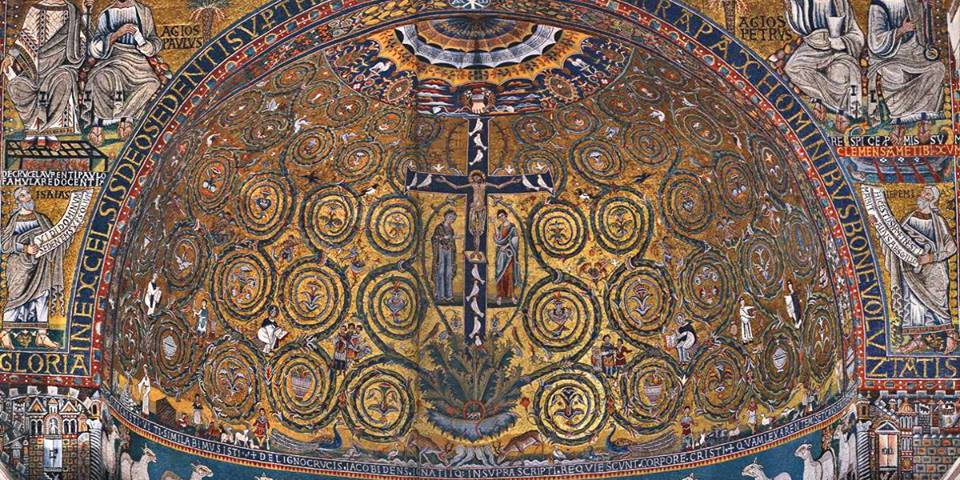
The present Basilica was rebuilt in one campaign by Cardinal Anastasius (1099-1120). The main hypothesis claims that the original church had burned out during the Norman sack of the city under Robert Guiscard in 1084. However, no proof of fire damage in the lower Basilica has been found to date.
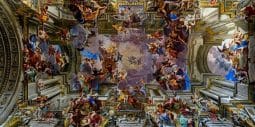
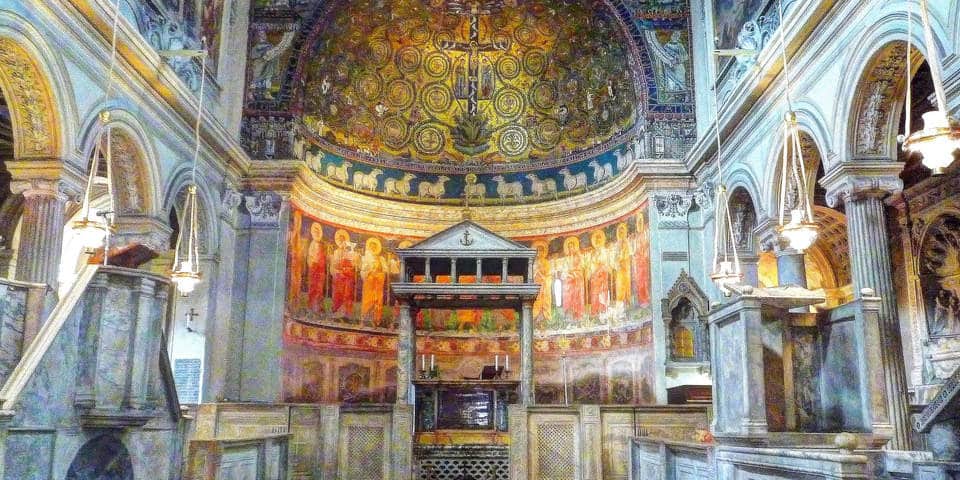
Nowadays it is one of the most beautiful and richly adorned churches in Rome
A ceremonial entrance is surrounded by arcades, which now serve as a cloister. Fronting the atrium is the façade of Carlo Stefano Fontana, supported on antique columns. Moreover, the Basilica behind it is in three naves separated by arcades on ancient marble with Cosmatesque inlaid paving.
In 1645 the Dominicans of San Sisto were put in as caretakers by Camillo Pamphilj, the Cardinal-nephew of Innocent X, the entire property being given over in perpetuity to the Dominican Order in 1667 by Cardinal Francis Maidalchini, Pamphilj’s successor as Commendatory abbot of San Clemente. Ten years afterwards, since religious persecution in Ireland, the Basilica and convent of San Clemente, together with those of San Sisto Vecchio inverse the Baths of Caracalla, were granted to the Irish Dominicans.
Visiting the basilica and the excavations
The upper church has its own visiting arrangements and may close to visitors during services. The excavation ticket is for the underground areas. Check exact times and current concession rules when booking with the basilica. For parish or archive requests, contact the basilica directly using its official site.