
RomeItaly.guide
  • About us
  • Where to Stay
    • Best 3-Star Hotels
    • Hostels for Solo Travellers
    • Hotels with Views
    • Near the Colosseum
    • Near Termini Station
  • Ancient Sites
    • Baths of Diocletian
    • Castel Sant’Angelo
    • Colosseum
    • Pantheon
    • Roman Forum
  • Visiting Vatican
    • Sistine Chapel
    • Vatican Museums
    • St Peter’s Basilica
    • St Peter’s Dome
  • Museums & Galleries
    • Ara Pacis Augustae
    • Borghese Gallery
    • Palazzo Farnese
  • Hills
    • Aventine
    • Capitoline
    • Janiculum
    • Pincian
  • Fountains & Squares
    • Acqua Paola
    • Altar of the Fatherland
    • Bernini’s Elephant
    • Four Rivers Fountain
    • Piazza Navona
    • Spanish Steps
    • Turtle Fountain
    • Trevi Fountain
  • Parks & Gardens
    • Knights of Malta Keyhole
    • Orange Garden
    • Rose Garden
    • Villa Doria Pamphilj
    • Villa Borghese
    • Villa Sciarra
    • Umbrella Pine Trees
  • How to Get
    • Fiumicino Airport ➡️ Rome
  1. Home ›
  2. Ancient Roman Sites and Ruins

Baths of Caracalla

Written by: Kate Zusmann

Thermen des Caracalla in Rom
Address Viale delle Terme di Caracalla, 52, Roma
Website Official seasonal hours and tickets

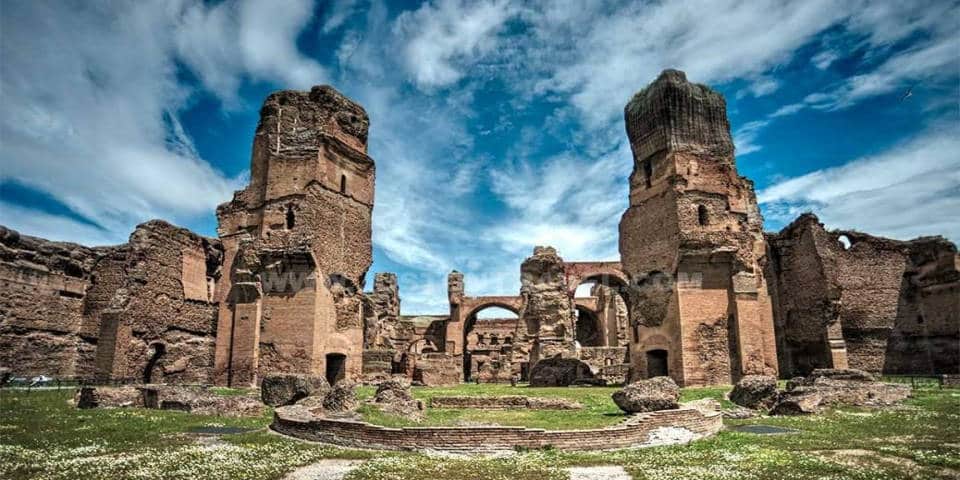
The Baths of Caracalla are the remains of a large public bathing complex in southern Rome, near the start of the ancient Appian Way. The imperial halls still stand high above the paths. Look for surviving mosaic floors, the large open-air pool and the layout of the rooms where bathers moved between hot and cold water.

Contents4 sections · ~2 min read
  1. Opening hours and tickets
  2. What the baths looked like
  3. What remains today
  4. Getting there and nearby sights

Opening hours and tickets

The entrance is at Viale delle Terme di Caracalla 52. The site normally opens at 09:00 from Tuesday to Sunday. Closing and last admission vary by season, and holiday openings can differ. Check the official opening calendar for your date before setting out.

The archaeological site uses named tickets. Book through Musei Italiani or use the box office or ticket machines at the site. Check the official ticket listing for the current full price, reduced rates and eligibility before choosing a ticket. Special events and temporary areas may have separate arrangements.

What the baths looked like

Construction began in the Severan period, and Caracalla inaugurated the central building in AD 216. The main complex had a caldarium for hot bathing, a tepidarium for warm bathing and a large frigidarium for cold bathing. There was also an open-air pool, alongside exercise courts and gardens. It was a place to exercise and meet people as well as bathe.
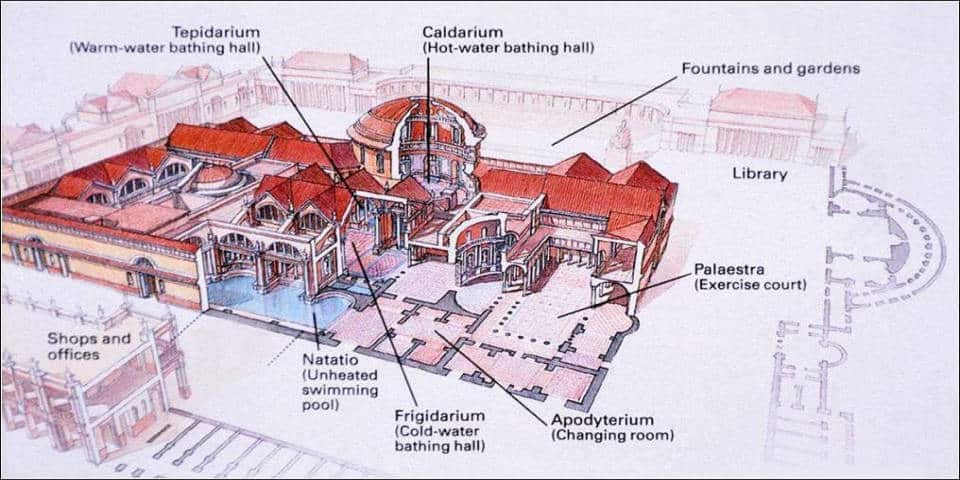
Scheme of the plan of the Baths of Caracalla in Rome

The baths used an aqueduct supply and a network of service passages. Furnaces heated air that circulated below the floors of the hotter rooms. The visible floors and walls give some idea of how much marble and mosaic originally covered the interiors.
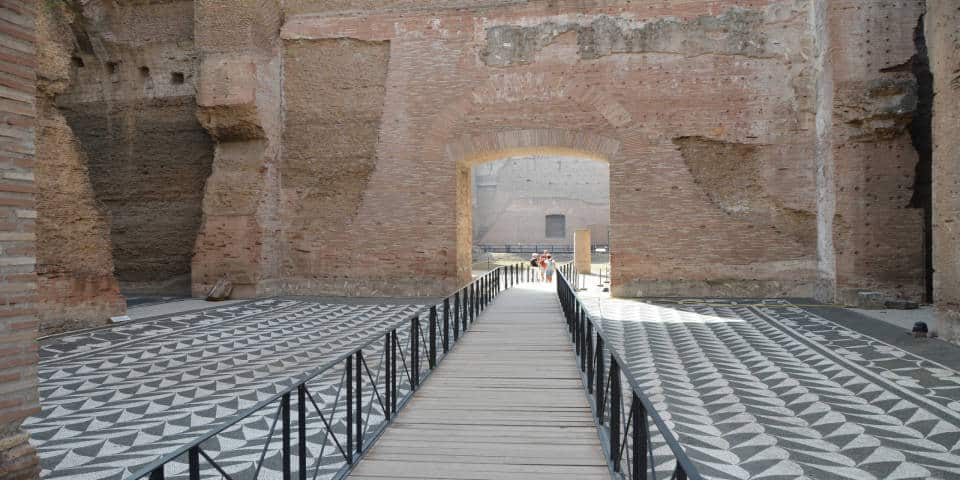
Interior of the Baths of Caracalla in Rome

What remains today

The sixth-century wars disrupted Rome’s water supply and helped bring bathing at the site to an end. Some of the stonework was reused elsewhere over the following centuries. The layout remains clear from ground level, even where the walls have lost their decoration.
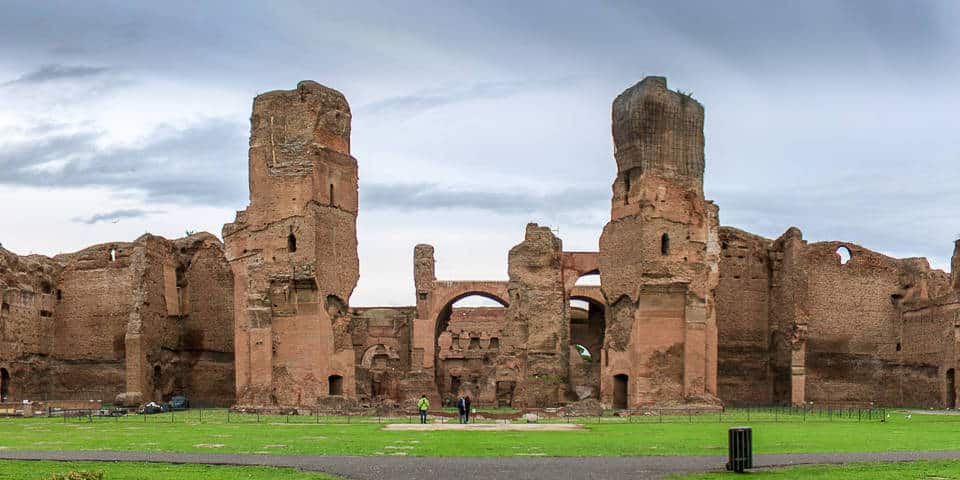
Baths of Caracalla in Rome today view from outside

Getting there and nearby sights

From Circo Massimo metro station, walk southeast along Viale delle Terme di Caracalla to the entrance. For a longer walk, continue towards Porta San Sebastiano and the Appian Way. If you are visiting for opera or another event, check the organiser’s own dates and entrance instructions.

Are the Baths of Caracalla open on Mondays?

Monday is normally the closing day. Consult the seasonal calendar for exceptions.

Where can I buy tickets for the Baths of Caracalla?

Use Musei Italiani or the site’s ticket office or machines. Check current prices and which reductions apply.

How were the baths heated?

Furnaces supplied hot air to spaces below the floors of the warmer rooms. This system is known as a hypocaust.
Planning a trip to Rome?

Google may show you more of our updates about tickets, opening hours, and visiting Rome.

Add as a preferred source on Google

Kate Zusmann
Rome travel writer & expert Kate Zusmann
years in Rome
12
guides published
117
article updated
Nov 2026
I’ve lived in the Eternal City for the past 12 years. They say every corner of Rome holds a story, and I’m here to share some of the most fascinating historical facts and local legends.
All guides by Kate →

More Rome guides

Vatican Museums Visitor Guide

The Vatican Museums

Rome Italy Tourist Attractions

Top 30 Attractions in Rome

Beste Hotels in Rom mit Aussicht

Best Hotels with Views in Rome

How to Book Vatican Museums & Sistine Chapel Tickets

How to Book Vatican Museums & Sistine Chapel Tickets

St. Peter's Basilica dome seen through the trees from the far side of Piazzale Garibaldi, Rome

Janiculum Hill (Gianicolo): Viewpoints and Walking Route

campus martius

Field of Mars in Rome (Campus Martius)

Trajansmärkte in Rom

Trajan’s Market

Largo di Torre Argentina archaeological site in Rome

Largo di Torre Argentina and the Cat Sanctuary

bridge of the angels

Ponte Sant’Angelo: Bridge of Angels

Show more

About us

About us ROME.US Authors Kate Zusmann and Artur Jakucewicz
We're Kate and Artur, a duo bound by our shared fascination with the Eternal City – Rome. Our paths, driven by a mutual passion for its timeless stories and architectural marvels, converged in a way we had never imagined.

Explore Rome

  • Open-top sightseeing bus in Rome

    Hop-On Hop-Off Buses in Rome

  • galleria sciarra vaulted courtyard ceiling rome

    Galleria Sciarra, the Art Nouveau Courtyard Most Tourists Miss

  • Kaiser Trajan

    Emperor Trajan

  • Fresco in Raphael’s Rooms at the Vatican Museums

    Raphael’s Rooms in the Vatican Museums

  • Oragne Garden in Rome

    Orange Garden

RomeItaly.guide

This website uses cookies. For more info read the cookies policy

RomeItaly.guide © 2026. Created with love by Roman experts and guides.

  • American English
  • Español
  • Deutsch
  • Polski
  • Français