RomeItaly.guide
  • About us
  • Where to Stay
    • Best 3-Star Hotels
    • Hostels for Solo Travellers
    • Hotels with Views
    • Near the Colosseum
    • Near Termini Station
  • Ancient Sites
    • Baths of Diocletian
    • Castel Sant’Angelo
    • Colosseum
    • Pantheon
    • Roman Forum
  • Visiting Vatican
    • Sistine Chapel
    • Vatican Museums
    • St Peter’s Basilica
    • St Peter’s Dome
  • Museums & Galleries
    • Ara Pacis Augustae
    • Borghese Gallery
    • Palazzo Farnese
  • Hills
    • Aventine
    • Capitoline
    • Janiculum
    • Pincian
  • Fountains & Squares
    • Acqua Paola
    • Altar of the Fatherland
    • Bernini’s Elephant
    • Four Rivers Fountain
    • Piazza Navona
    • Spanish Steps
    • Turtle Fountain
    • Trevi Fountain
  • Parks & Gardens
    • Knights of Malta Keyhole
    • Orange Garden
    • Rose Garden
    • Villa Doria Pamphilj
    • Villa Borghese
    • Villa Sciarra
    • Umbrella Pine Trees
  • How to Get
    • Fiumicino Airport ➡️ Rome
  1. Home /
  2. Roman Emperors

Emperor Caracalla

Written by: Kate Zusmann

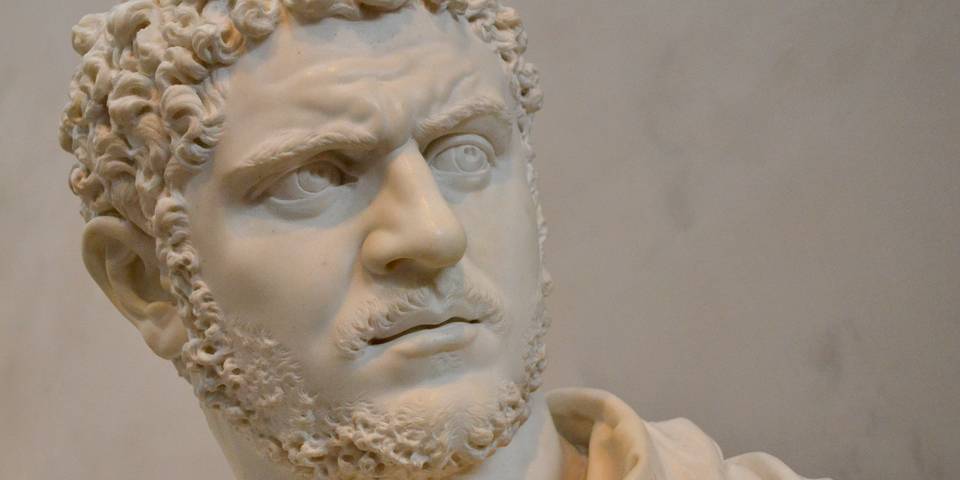
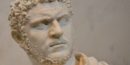
Portrait of Emperor Caracalla

Caracalla ruled as a Roman emperor from AD 198 to 217. His early years as emperor were shared with his father Septimius Severus, and for part of that period with his younger brother Geta. His sole rule began after Geta’s murder in AD 211. In Rome, his name is still attached to the great baths near the Appian Way.

Contents
  1. From the Severan household to joint rule
  2. Geta’s murder
  3. The citizenship edict of AD 212
  4. Campaigns and death
  5. What to see in Rome

From the Severan household to joint rule

Caracalla was born at Lugdunum, modern Lyon, in AD 188. His parents were Septimius Severus and Julia Domna. When Severus raised him to the rank of Augustus in AD 198, Caracalla joined his father as emperor. Geta became Augustus in AD 209. The brothers succeeded their father after he died at Eboracum, modern York, in AD 211.

Geta’s murder

The two brothers did not rule together for long after their father’s death. Geta was killed on Caracalla’s orders later in AD 211. A painted portrait of the family, the Severan Tondo, survives with the face usually identified as Geta’s erased. It is one example of how the regime removed Geta’s image from public life.

The citizenship edict of AD 212

The law known as the Constitutio Antoniniana extended Roman citizenship to almost all free inhabitants of the empire. The surviving papyrus is damaged. One possible exception is a group called the dediticii, whose status and treatment remain debated. Enslaved people were outside the grant.

The ancient writer Cassius Dio associated the edict with tax revenue. The surviving text does not establish a single motive. See the study of the edict’s surviving texts for the other explanations scholars have considered.

Campaigns and death

Caracalla campaigned on the Rhine and later turned east against Parthia. He was assassinated near Carrhae in AD 217. Macrinus, his praetorian prefect, became emperor. The Metropolitan Museum’s account of the Severan dynasty places his reign alongside those of his relatives and successors.

What to see in Rome

The Baths of Caracalla opened under Caracalla. The surviving walls give a sense of the height of the bath halls. If you visit the site, look for the remains of mosaic floors at ground level before following the walls around the complex.

Author: Kate Zusmann

Kate Zusmann

I’ve lived in the Eternal City for the past 12 years. They say every corner of Rome holds a story, and I’m here to share some of the most fascinating historical facts and local legends.

Dive Deeper into Rome's Stories

Vatican Museums Visitor Guide

992138 travellers read

The Vatican Museums

Rome Italy Tourist Attractions

29431 travellers read

Top 30 Attractions in Rome

Beste Hotels in Rom mit Aussicht

11440 travellers read

Best Hotels with Views in Rome

How to Book Vatican Museums & Sistine Chapel Tickets

16778 travellers read

How to Book Vatican Museums & Sistine Chapel Tickets

St. Peter's Basilica dome seen through the trees from the far side of Piazzale Garibaldi, Rome

12113 travellers read

Janiculum Hill (Gianicolo): Viewpoints and Walking Route

Portrait of Emperor Claudius

26 travellers read

Emperor Claudius

Roman monument associated with the Five Good Emperors

33 travellers read

The Five Good Emperors of Rome

Portrait of Marcus Aurelius

20 travellers read

Emperor Marcus Aurelius

Portrait of Emperor Domitian

21 travellers read

Emperor Domitian

Show more

About us

About us ROME.US Authors Kate Zusmann and Artur Jakucewicz
We're Kate and Artur, a duo bound by our shared fascination with the Eternal City – Rome. Our paths, driven by a mutual passion for its timeless stories and architectural marvels, converged in a way we had never imagined.

Explore Rome

  • Koloss von Konstantin in Rom

    Colossus of Constantine

  • Basilika Santa Cecilia in Trastevere

    Basilica di Santa Cecilia in Trastevere

  • How many Colosseums are there in Italy?

    How many Colosseums are there in Italy?

  • Portrait of Emperor Caracalla

    Emperor Caracalla

  • Sights of the Aventine Hill in Rome

    Aventine Hill

RomeItaly.guide

This website uses cookies. For more info read the cookies policy

RomeItaly.guide © 2026. Created with love by Roman experts and guides.
  • American English
  • Español
  • Deutsch
  • Polski
  • Русский
  • Français