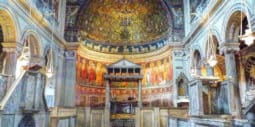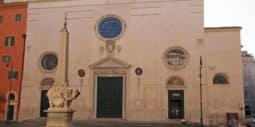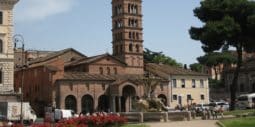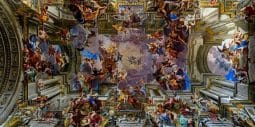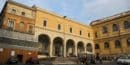

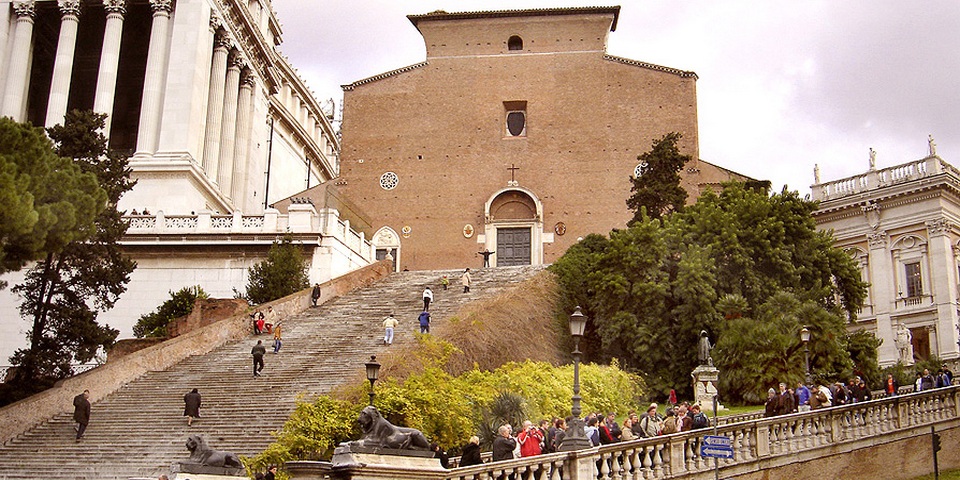
Santa Maria in Ara Coeli is a Franciscan basilica on the northern summit of the Capitoline Hill. A staircase of 124 marble steps leads up from the street beside the Vittoriano. Inside, look for the frescoes by Pinturicchio, the Cosmatesque floor, and the ancient columns reused in the nave.
Contents
The staircase and the history of the basilica
A church and monastery probably stood on the hill by the early Middle Ages. The Franciscans took over the complex in the 13th century. The marble staircase dates to 1348, when it was dedicated to the Virgin in connection with the plague then sweeping through Europe.
According to a medieval legend, the Tiburtine Sibyl showed Augustus a vision of the Virgin and Child at this spot. The story was later associated with the name Ara Coeli, or Altar of Heaven.
The site of the Temple of Juno Moneta
The church stands on the ancient Arx, the northern summit of the hill above the Roman Forum. The Temple of Juno Moneta is traditionally placed near this spot. The temple was associated with Rome’s mint. Its precise footprint under or beside the later church is uncertain.
What to look for inside
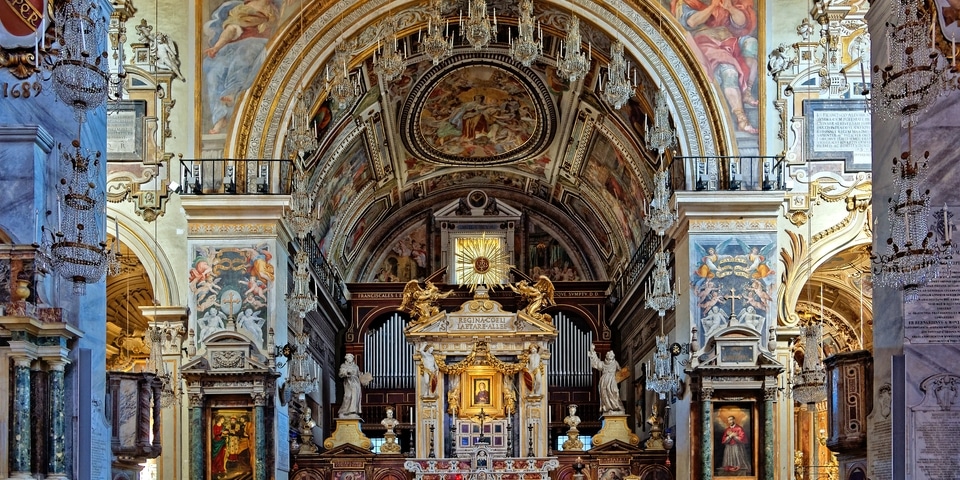
The columns that divide the nave came from older Roman buildings. Their shafts and capitals differ in material and design. The inlaid floor incorporates tomb slabs, and the gilded wooden ceiling commemorates the victory at Lepanto in 1571.
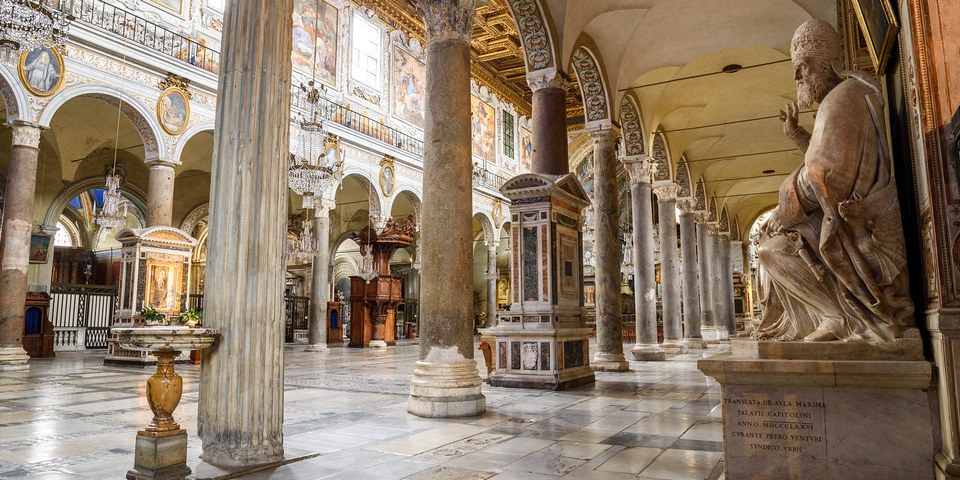
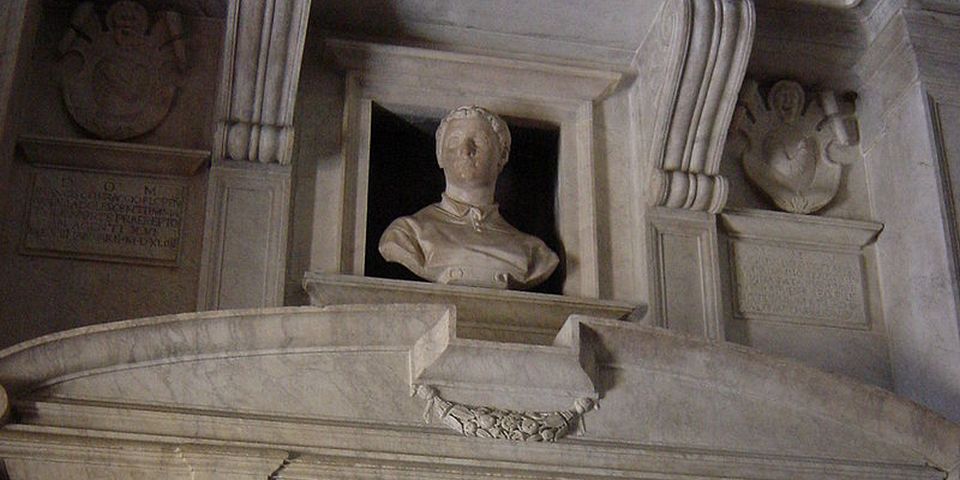
The Bufalini Chapel, first on the right, contains Pinturicchio’s fresco cycle on the life of Saint Bernardino of Siena. Other works include Donatello’s tomb slab for Giovanni Crivelli and Michelangelo’s monument to Cecchino dei Bracci. Queen Catherine of Bosnia is also buried in the church.
The Santo Bambino
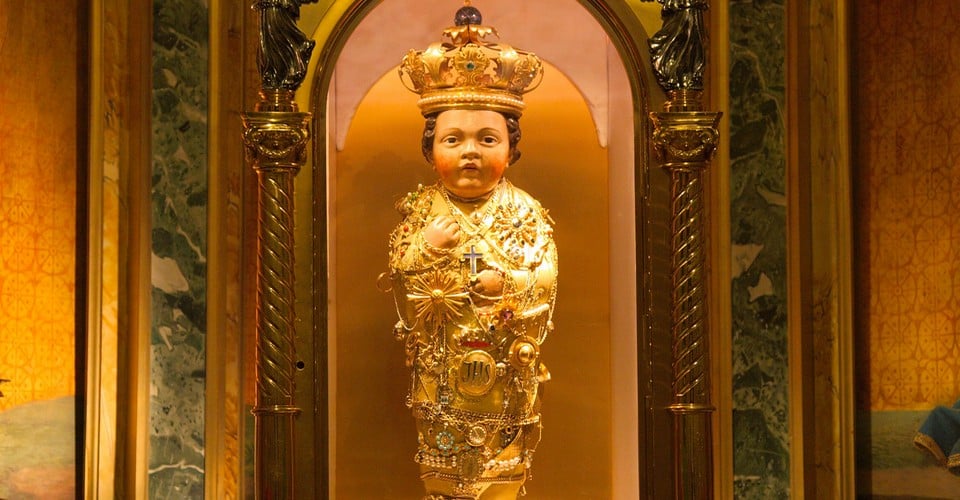
The original wooden figure of the infant Jesus, known as the Santo Bambino, was stolen in 1994. The figure now displayed in the basilica is a replacement. The devotion associated with the figure continues.
Planning your visit
The church is at Scala dell’Arce Capitolina on the Capitoline Hill. The city’s visitor page lists Mass times and contact details. Contact the church directly for current visiting hours, especially on Sundays and feast days. For buses, Piazza Venezia is a short walk from the foot of the steps.