
Written by: Kate Zusmann
Rome’s best-known columns tell different stories. The spiral reliefs of Trajan and Marcus Aurelius commemorate military campaigns, while the Column of Phocas marks the end of monumental building in the Roman Forum. The Column of the Immaculate Conception belongs to a much later chapter of the city.
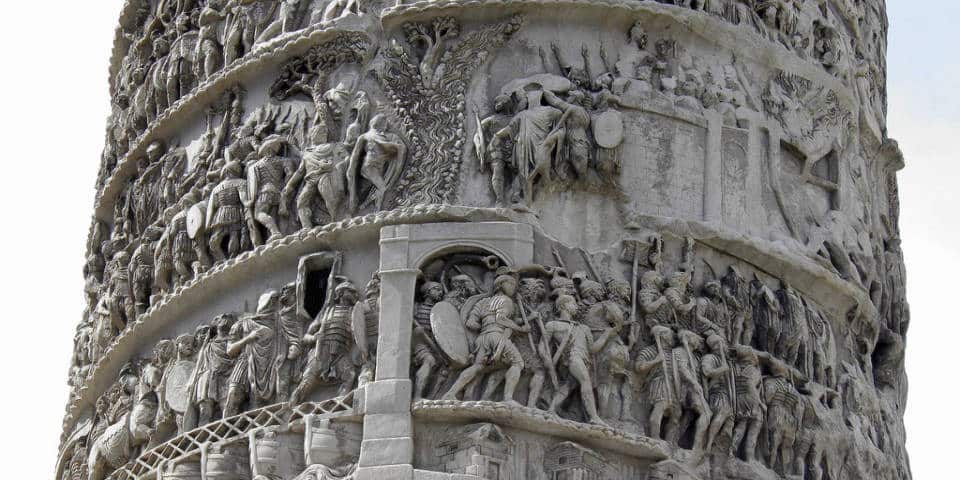
Look for the column in Piazza Colonna, in front of Palazzo Chigi. Its spiral relief shows the northern campaigns of Marcus Aurelius. The marble shaft stands about 30 metres high. The bronze figure at the top today is St Paul, installed during the restoration ordered by Pope Sixtus V in 1589. The ancient figure no longer survives.
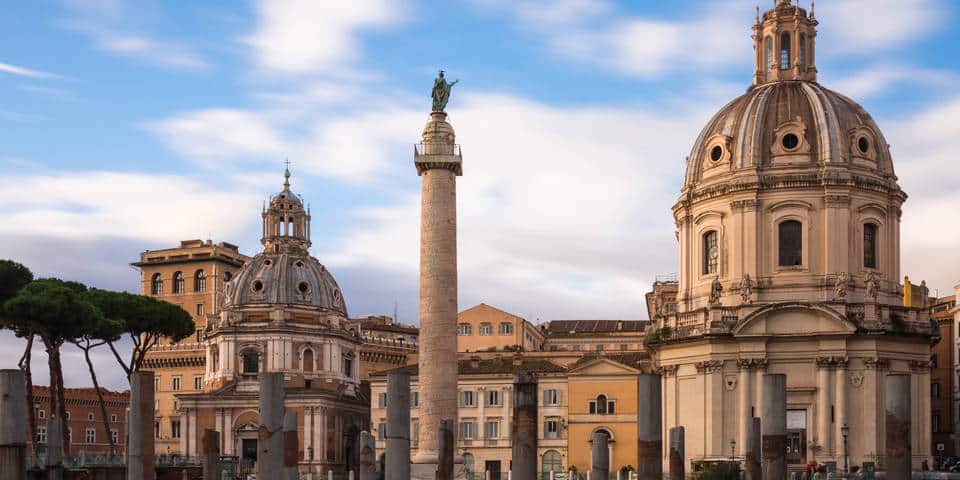
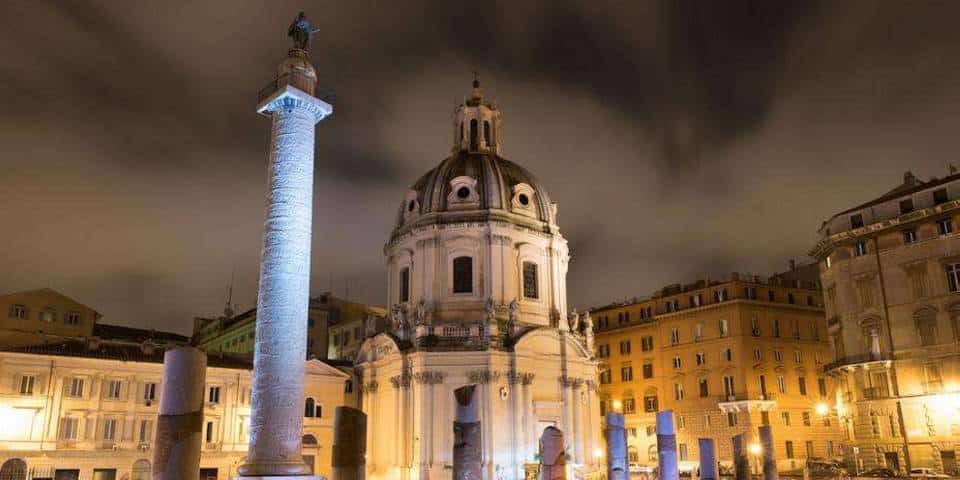
The monument in Trajan’s Forum was inaugurated in AD 113. Its spiral frieze follows Trajan’s two wars in Dacia. Alongside battles, the relief shows soldiers crossing rivers, building camps, and receiving orders. The monument is about 38 metres high including the pedestal. The figure at the top today is St Peter. The city’s entry on Trajan’s Column explains the monument and its carvings.
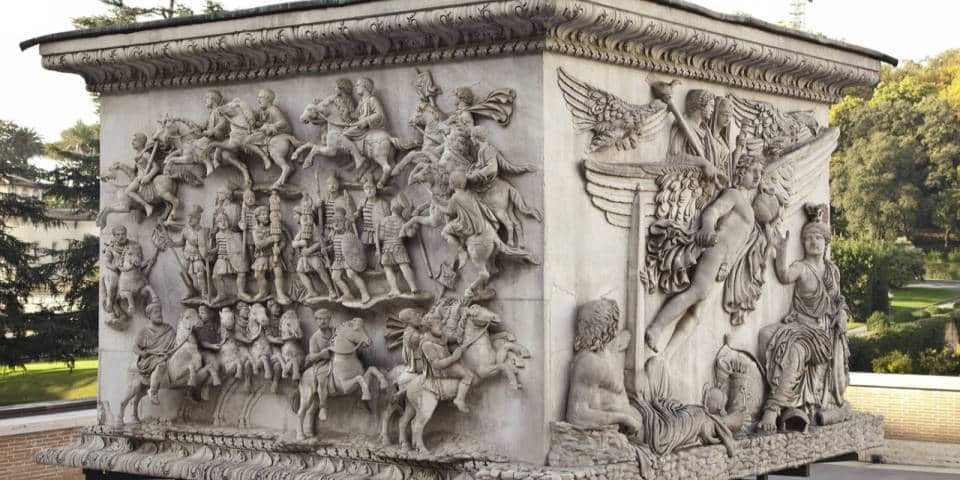
This is the one on the list whose shaft no longer stands. It had a smooth shaft of Egyptian granite. Its marble pedestal survives in the Vatican Museums. On one side a winged figure carries Antoninus Pius and Faustina upwards. The relief is known as an apotheosis, a representation of the couple’s ascent to divine status.
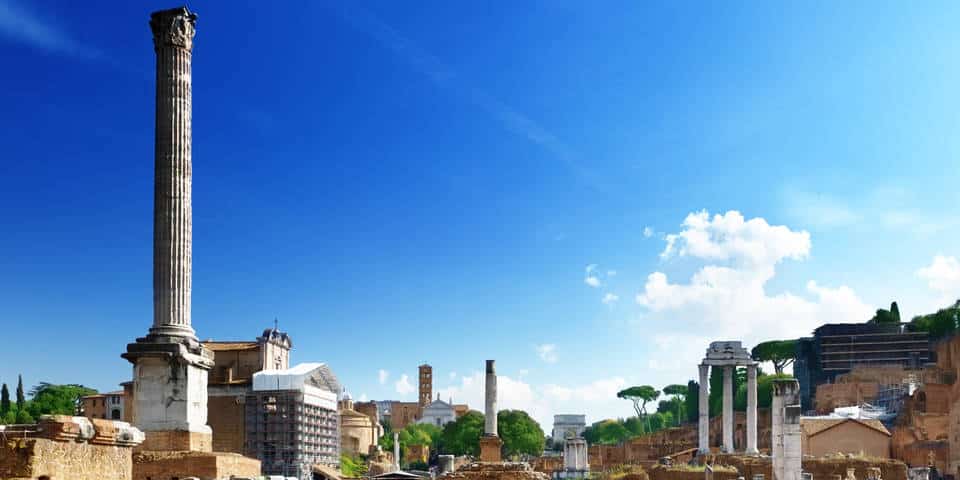
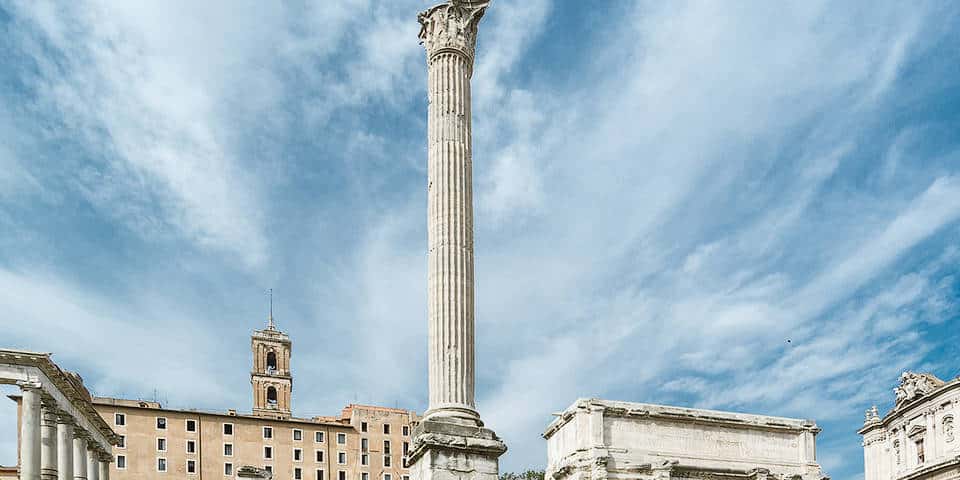
The reused column on the main square of the Roman Forum was dedicated to the Byzantine emperor Phocas in AD 608. Its dedication marks the final phase of monumental building in the Forum. The column is much older than its inscription.
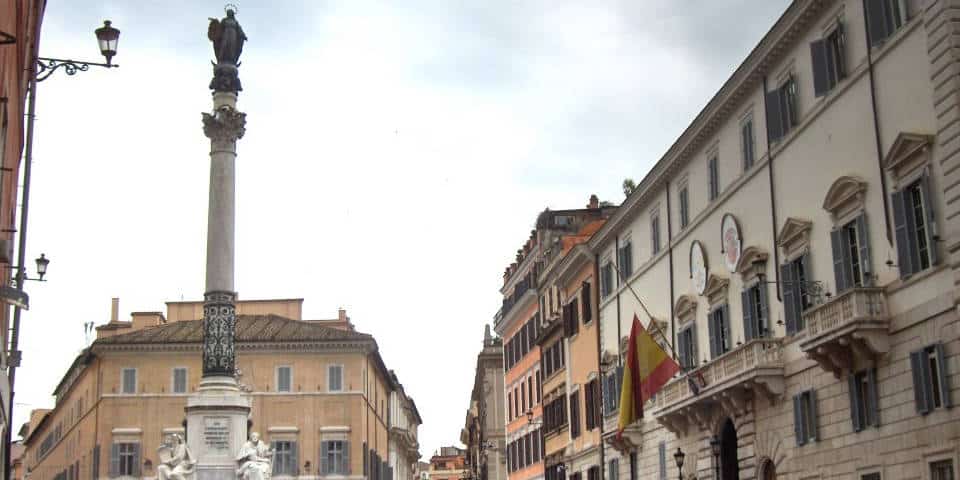
This monument stands in Piazza Mignanelli beside the Spanish Steps. The ancient marble shaft was reused for the monument inaugurated in 1857. Four prophets sit around the base, and Giuseppe Obici’s bronze figure of the Virgin stands on top. See the separate guide to the Column of the Immaculate Conception.
RomeItaly.guide © 2026. Created with love by Roman experts and guides.