
RomeItaly.guideRomeItaly.guide
Get the app
  • Taxi fares calculator
  • About us
Rome Italy GuideGet it on Google Play ›
  • Plan your trip
    • Weather
      • January
      • February
      • March
      • April
      • May
      • June
      • July
      • August
      • September
      • October
      • November
      • December
    • Neighbourhoods
      • Quartiere Coppedè
      • Trastevere
    • Day Trips
      • To Ostia Antica
      • Beaches near Rome
      • To Tivoli
  • Getting around
    • Fiumicino Airport
    • Termini Railway Station
    • Public Transport
    • To Ostia Antica
    • To Milan
    • Ciampino Airport
    • To Florence
    • To Naples
  • Sights
    • Ancient Sites
      • Castel Sant’Angelo
      • Colosseum
      • Mamertine Prison
      • Mouth of Truth
      • Pantheon
      • Roman Forum
      • Arch of Constantine
      • Catacombs
      • Theatre of Marcellus
    • Museums
      • Ara Pacis Augustae
      • Borghese Gallery
      • Caravaggio’s Paintings
      • Great Synagogue
      • Palazzo Farnese
      • Capitoline Museums
      • Spada Gallery
    • Churches
      • Capuchin Crypt
      • Holy Stairs
      • Sant’Agnese in Agone
      • San Giovanni in Laterano
      • Santa Maria Maggiore
      • Saint Paul Outside the Walls
      • St Peter in Chains
      • St. Ignatius of Loyola
    • Fountains & Squares
      • Navona Square
      • Spanish Steps
      • Trevi Fountain
      • Altar of The Fatherland
      • Fontana della Barcaccia
      • Fountain of the 4 Rivers
      • Fountain of the Pantheon
      • Piazza del Popolo
      • Piazza Venezia
      • Turtle Fountain
      • Triton Fountain
    • Hills
      • Aventine
      • Capitoline
      • Janiculum
      • Palatine
      • Pincian
    • Parks
      • Appian Way
      • Orange Garden
      • Pincio Terrace
      • Vatican Gardens
      • Villa Borghese
      • Villa Torlonia
      • Park of the Aqueducts
      • Villa Ada
      • Villa Celimontana
      • Zoo
    • Emperors
      • Good Emperors
      • Marcus Aurelius
      • Gaius Julius Caesar
      • Nero
      • Octavian Augustus
      • Caligula
      • Hadrian
      • Vespasian
      • Trajan
      • Commodus
  • Vatican City
    • St Peter’s Basilica
    • Sistine Chapel
    • Vatican Museums
    • Raphael’s Rooms
    • Michelangelo’s Pieta
    • St Peters Dome
    • St Peter’s Square
    • Swiss Guard
    • Pilgrims of Hope Jubilee
  • Where to stay
    • How to Choose a Hotel in Rome
    • Hotels with Best Views
    • Hotels near Termini
    • Hotels near the Colloseum
    • Best Hostels
    • Hotels near Navona Square
    • 3 Star Hotels
    • 4 Star Hotels
    • 5 Star Hotels
    • Apartments For Rent
  • Food & shopping
    • Where to Eat
      • Best Pizza Places
      • Best Pasta Places
      • Local Italian Food
      • Best Gelato Places
      • Best Rooftop Bars
    • Shopping
      • Castel Romano Outlet
      • Farmers Markets
      • Souvenirs from Rome
  • Tips & FAQ
    • Free Things to Do
    • TOP Attractions
    • Tickets to Vatican museums
    • Rome Three Day Itinerary
    • Renting a Car in Rome
    • Apps for Tourists
    • Instagram
    • Rainy Days in Rome
    • Buying a Sim Card in Italy
    • Unusual Things to do
    • Information About Rome – FAQ
  1. Home ›
  2. Fountains and Squares

Bernini’s Triton Fountain

Written by: Kate Zusmann

Bernini’s Triton Fountain
Tip The easiest way to get to the fountain is by taking the metro to the Barberini station. Right near the fountain, you can also visit: the Capuchin Crypt, Fountain of the Bees, and quickly reach the famous Trevi Fountain. The square where the fountain of Triton is located is full of bars and restaurants, but try to avoid tourist places on the main squares because they are overpriced and often have worse food quality.
Closest bus stops
Piazza Barberini1 min 42 m: 52 53 61 63
Veneto/Emilia5 min 269 m: 52 53 61 63 83
Closest subway stations
Repubblica12 min 598 m: A
Termini19 min 960 m: B
Address P.za Barberini, 00187, Rome

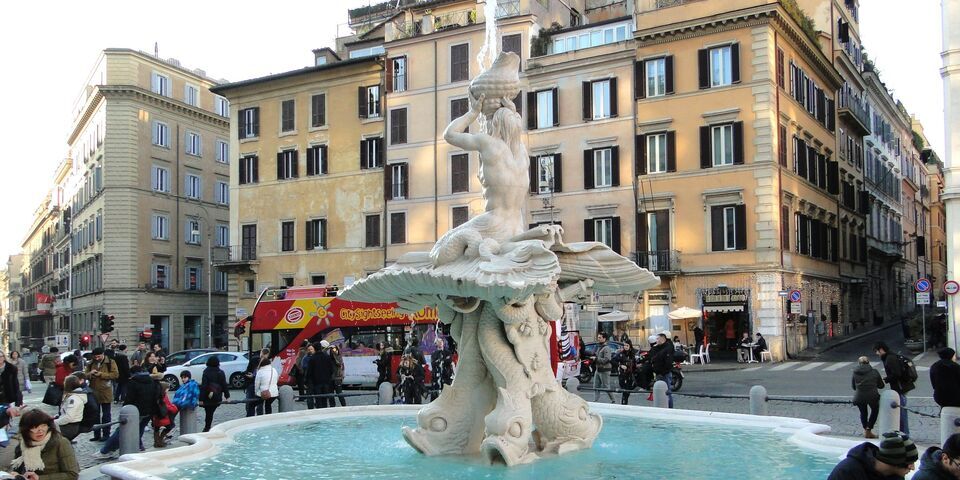
Bernini’s Triton Fountain sits in Piazza Barberini. Look for the dolphins supporting the shell and the Triton blowing into a conch. The Barberini bees link the fountain to Pope Urban VIII. The square is busy with traffic, so use the crossings to see it from different sides.

The Fountain of Triton (Fontana del Tritone), located in the Piazza Barberini in Rome, is a striking Baroque masterpiece created by the sculptor Gian Lorenzo Bernini. Commissioned by Pope Urban VIII in the 17th century, the fountain features a central figure of Triton, the Greek god of the sea, riding on a shell chariot pulled by seahorses. The dynamic and exquisitely detailed sculpture captures the essence of Bernini’s artistry, making it a notable landmark in the city.

Contents3 sections · ~4 min read
  1. History
  2. 8 Interesting Facts about Triton Fountain
  3. Things to Know Before Visit

History

The Fountain of Triton, situated in the Piazza Barberini in Rome, is a significant Baroque masterpiece designed by the renowned Italian sculptor Gian Lorenzo Bernini. Commissioned by Pope Urban VIII in the 17th century, the fountain was part of a broader project to enhance the city’s water supply system and beautify its public spaces. The pope specifically tasked Bernini with creating a new fountain for the square before the Barberini Palace.
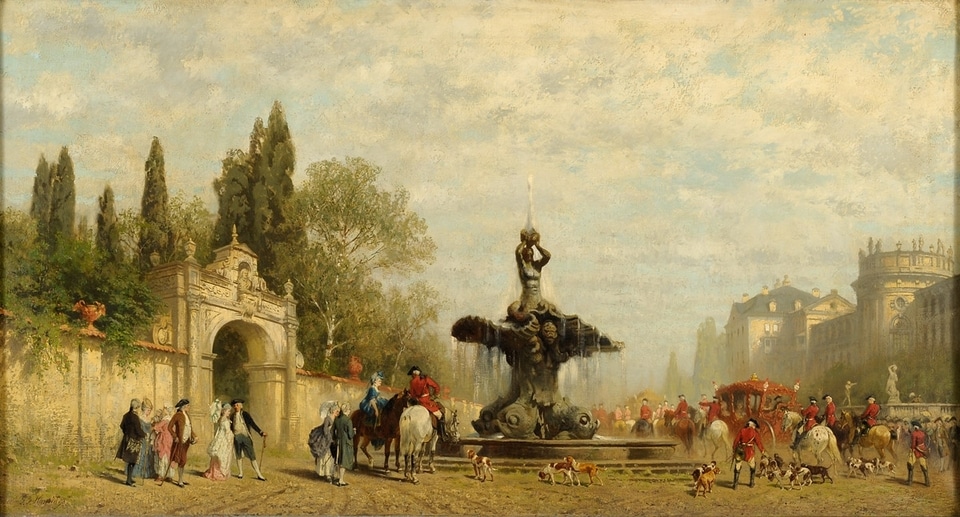
What the fountain of Tritons looked like in Rome in the 17th-18th century

Gian Lorenzo Bernini began work on the Fountain of Triton in 1642 and completed it in 1643. The central focus of the fountain is the dynamic sculpture of Triton, the son of the sea god Neptune in Roman mythology, riding on a giant shell chariot pulled by four seahorses. Triton is depicted as a powerful and muscular figure, blowing a conch shell to symbolize the triumph of the Barberini family’s naval forces. The fountain’s design exudes a sense of movement and energy, characteristic of Bernini’s innovative Baroque style.
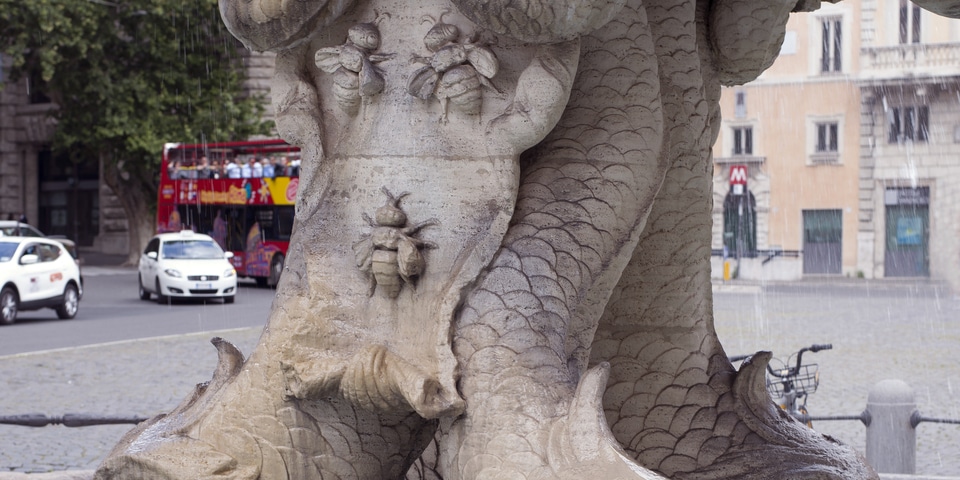
bees symbol of the Barberini family on the Triton Fountain in Rome

The Fountain of Triton is a testament to Bernini’s skill and creativity, representing a pivotal period in the Baroque era. It remains an iconic landmark in Rome, contributing to its rich artistic and architectural heritage. The fountain is an artistic masterpiece and a symbol of the Barberini family’s influence during the Baroque period in Rome’s history.

Read tips about what to see in 3 days in Rome.

8 Interesting Facts about Triton Fountain

  1. The Fountain of Triton was commissioned by Pope Urban VIII, who belonged to the Barberini family. This influential family significantly shaped Rome’s cultural and artistic landscape during the Baroque period.
  2. The fountain is the work of Gian Lorenzo Bernini, one of the most renowned sculptors and architects of the Baroque era. Bernini was known for his dynamic and passionate sculptures, and the Fountain of Triton is a prime example of his artistic genius.
  3. Triton’s central figure symbolizes the Barberini family’s triumph at sea. Triton, the son of Neptune, is depicted blowing a conch shell, a powerful symbol of maritime victory. The fountain’s design captures the essence of movement and energy, characteristic of Bernini’s innovative Baroque style.
  4. Triton is shown riding on a giant shell chariot pulled by four seahorses. The depiction of seahorses in the fountain adds a mythical and nautical element to the sculpture, emphasizing the theme of the sea and naval prowess.
  5. The Fountain of Triton is in the Piazza Barberini, a square named after the Barberini family. The fountain contributes to the square’s overall beauty and artistic richness, creating a focal point for locals and visitors alike.
  6. Like many other fountains in Rome, the Fountain of Triton was part of a broader project to enhance the city’s water supply system. Fountains were decorative and served practical purposes in providing water to the population.
  7. The Fountain of Triton has undergone several restorations over the centuries to preserve its artistic integrity. The fountain has been carefully maintained to ensure its beauty and historical significance endure for future generations.
  8. Today, the Fountain of Triton is a popular tourist attraction, drawing visitors who appreciate its artistic merit and historical importance. It remains an iconic example of Baroque sculpture and contributes to the visual allure of Rome’s public spaces.

Read also about Piazza Navona

Things to Know Before Visit

What is the Triton fountain?
The Triton Fountain, located in Rome’s Piazza Barberini, is a Baroque masterpiece sculpted by Gian Lorenzo Bernini in the 17th century. Commissioned by Pope Urban VIII, the fountain features a dynamic depiction of Triton, the son of Neptune, riding a shell chariot pulled by seahorses, symbolizing the naval triumphs of the Barberini family.
What to see on Piazza Barberini?
On Piazza Barberini in Rome, visitors can marvel at the Triton Fountain, a Baroque masterpiece by Gian Lorenzo Bernini depicting Triton riding a shell chariot pulled by seahorses. The square is also home to the Barberini Palace, a grand 17th-century building, and the nearby Capuchin Crypt, known for its unique displays of human bones.
Which statues are on the fountain of Triton?
The Fountain of Triton in Rome features a central statue of Triton, the son of Neptune, riding a shell chariot drawn by four seahorses. Gian Lorenzo Bernini created the dynamic and detailed sculpture in the 17th century and serves as the focal point of the fountain in Piazza Barberini.
Kate Zusmann
Rome travel writer & expert Kate Zusmann
years in Rome
12
guides published
198
article updated
Nov 2026
I write about Rome’s museums, neighbourhoods and places to stay. My aim is to help you decide what’s worth your time and where to base yourself while you explore.
All guides by Kate →

More Rome guides

Vatican Museums Visitor Guide

The Vatican Museums

Rome Italy Tourist Attractions

Top 30 Attractions in Rome

Rome hotels with a view

Rome hotels with a view and the rooms to book

How to Book Vatican Museums & Sistine Chapel Tickets

How to Book Vatican Museums & Sistine Chapel Tickets

St. Peter's Basilica dome seen through the trees from the far side of Piazzale Garibaldi, Rome

Janiculum Hill (Gianicolo): Viewpoints and Walking Route

Column of the Immaculate Conception

Column of the Immaculate Conception

Fountain of the Naiads in Rome

Fountain of the Naiads in Rome

Piazza della Repubblica in Rome

Piazza della Repubblica in Rome

Fountain of the Goddess Roma

Fountain of the Goddess Roma

Show more

About us

About us ROME.US Authors Kate Zusmann and Artur Jakucewicz
We're Kate and Artur. Rome has been our home for more than ten years, and we write about the streets, churches and museums we know first-hand.

Explore Rome

  • Santa Maria in Trastevere

    Santa Maria in Trastevere

  • Italo high-speed train in Italy

    How to Book Italo Train Tickets in Italy

  • Portrait of Emperor Commodus

    Emperor Commodus

  • Largo di Torre Argentina archaeological site in Rome

    Largo di Torre Argentina and the Cat Sanctuary

  • Casino del Bel Respiro above the geometric hedges of the Secret Garden in Villa Doria Pamphilj

    Villa Doria Pamphilj

RomeItaly.guide

This site uses cookies

RomeItaly.guide © 2026. Created with love by Roman experts and guides.

  • American English
  • Español
  • Deutsch
  • Polski
  • Русский
  • Français