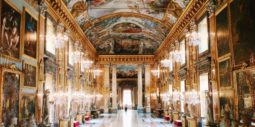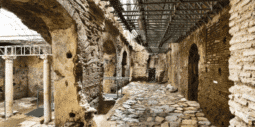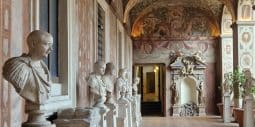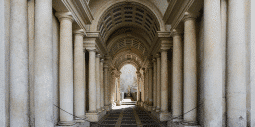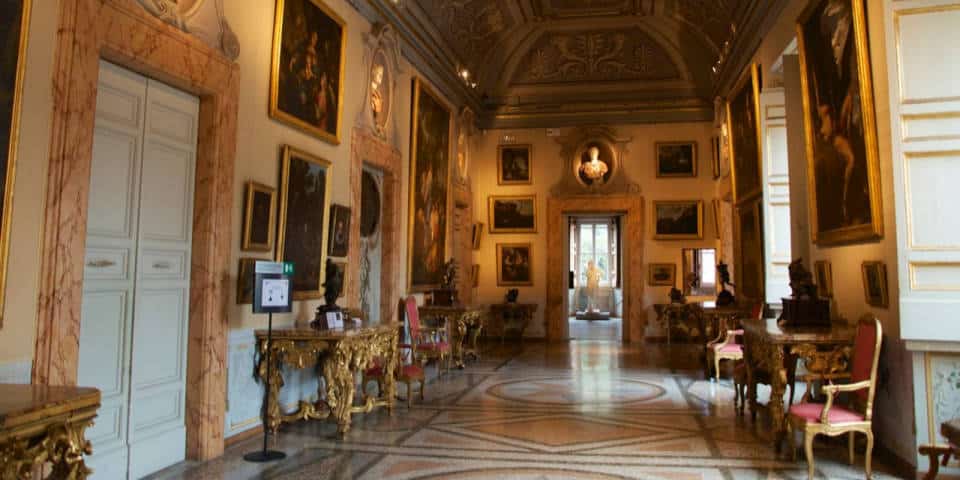

The Corsini Gallery is on Via della Lungara in Trastevere, across the road from Villa Farnesina. Its rooms retain much of the character of a private picture gallery. Check the gallery’s official visitor information for the opening day and current ticket conditions. Palazzo Barberini and Palazzo Corsini are two separate sites, so check which visits your ticket covers.
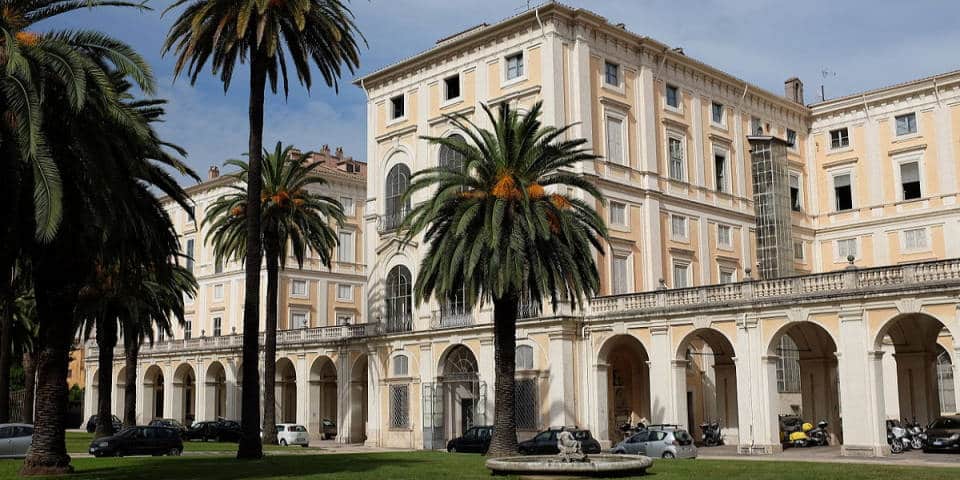
The Corsini Gallery (Galleria Corsini) located in the 15th-century Corsini Palace (Palazzo Corsini) in Trastevere Neighbourhood. The original building had modifications from 1659 until 1689. It served as the residence for Queen Christina of Sweden, who lived in Rome from 1654 until she died in 1689.
Moreover, the art museum is part of Italy’s Arte Antica collection, where the Corsini family donated most of the masterpieces in the 1800s.
Contents
History
The 15th-century palazzo in the Trastevere area served as an away-from-home palace for Queen Christina of Sweden, who abdicated her throne and lived in Rome for 35 years. Today, the Corsini Palace houses the original half of Rome’s National Gallery (Galleria Nazionale d’Arte Antica) paintings, while another part is in the Barberini Palace.
Most of the works are by 16th and 17th century Italian artists.
The building started to belong to the Corsini family when Lorenzo Corsini became pope in 1736 with the name Clement XII. He commissioned the architect Ferdinando Fuga to restructure the building and expand it.
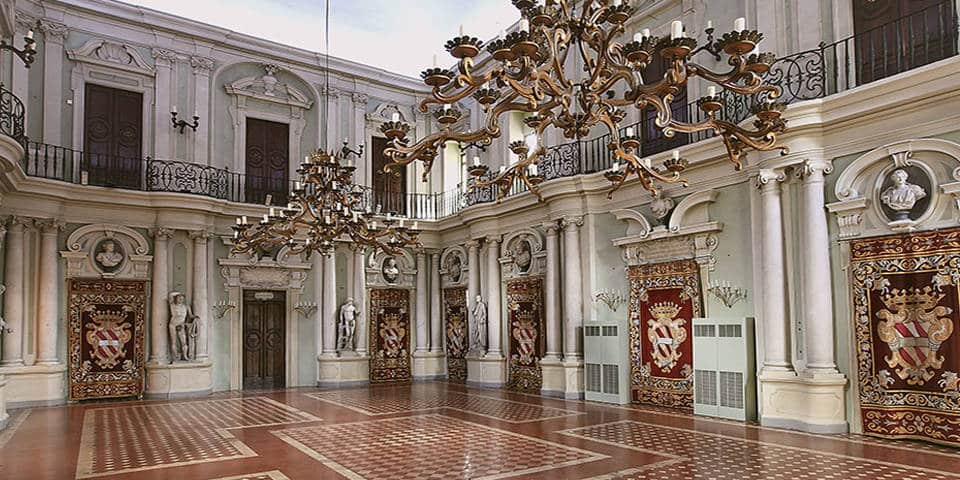
In 1883, the Corsini Gallery became the first national gallery of Italy and its collections were donated to the newly-formed Kingdom of Italy.
Today, the part of the palace is home to the Accademia dei Lincei. Moreover, the library of the Academy contains a collection of books by Cardinal Neri Corsini. Also, the garden nowadays houses the Botanical Gardens of Rome.
You might also like the Best Restaurants in Trastevere with Local Italian Food.
What to See Inside – TOP 25 Artworks
- Disputa di Gesú fra i dottori by Luca Giordano – A dynamic and vibrant depiction of Jesus disputing with the doctors, showcasing Giordano’s mastery of dramatic composition and vivid colour.
- Trittico (Ascensione, Giudizio Universale, Pentecoste) by Beato Angelico – A magnificent triptych capturing three significant events in Christian theology, reflecting Angelico’s spiritual depth and detailed artistry.
- Giuditta e Oloferne by Giambattista Piazzetta – A powerful and dramatic portrayal of Judith beheading Holofernes, highlighting Piazzetta’s skill in creating intense and emotional scenes.
- Battesimo di Cristo by Alessandro Algardi – A serene and divine depiction of the baptism of Christ, reflecting Algardi’s ability to convey spiritual themes with grace and precision.
- Il supplizio di Prometeo by Salvator Rosa – A dramatic and intense scene of Prometheus’s torment, showcasing Rosa’s talent for capturing raw emotion and movement.
- Madonna col Bambino by Orazio Gentileschi – A tender and intimate portrayal of the Madonna and Child, highlighting Gentileschi’s delicate use of light and colour.
- San Sebastiano curato dagli angeli by Pieter Paul Rubens – A powerful and uplifting depiction of Saint Sebastian being tended by angels, reflecting Rubens’ dynamic composition and vibrant colour palette.
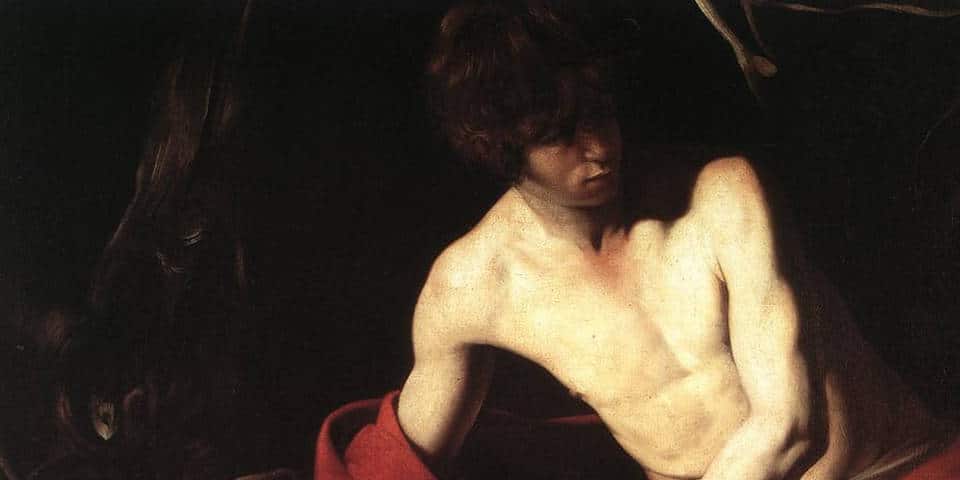
- San Giovanni Battista by Caravaggio – A dramatic and intense portrayal of Saint John the Baptist, showcasing Caravaggio’s signature use of chiaroscuro and realism.
- Venere raggiunge Adone morente by Jusepe de Ribera – A moving and emotional scene of Venus reaching the dying Adonis, highlighting Ribera’s skill in depicting human suffering and divine intervention.
- Il tributo della moneta by Mattia Preti – A detailed and expressive portrayal of the tribute money scene, showcasing Preti’s mastery of composition and dramatic lighting.
- Polittico con Madonna con Bambino by Giovanni da Milano – A beautifully detailed and serene polyptych of the Madonna and Child, reflecting da Milano’s refined and delicate style.
- Madonna della paglia by Antoon Van Dyck – A tender and intimate portrayal of the Madonna and Child, showcasing Van Dyck’s skill in capturing emotion and detail.
- Adorazione dei pastori by Jacopo Bassano – A vibrant and detailed depiction of the Adoration of the Shepherds, highlighting Bassano’s ability to convey warmth and divine light.
- Lo spuntino elegante by Christian Berentz – An elegant and refined still life, capturing the elegance and detail of Berentz’s style.
- Allegoria dei quattro elementi – L’aria, L’acqua, La Terra, Il fuoco by Rosalba Carriera – A detailed and symbolic depiction of the four elements, showcasing Carriera’s refined and delicate technique.
- Trono Corsini – An elaborate and majestic throne, representing the opulence and grandeur of the Corsini family.
- Salomè con la testa del Battista by Guido Reni – A dramatic and intense portrayal of Salome holding the head of John the Baptist, reflecting Reni’s mastery of emotion and light.
- La lepre by Hans Hoffmann – A detailed and lifelike depiction of a hare, showcasing Hoffmann’s skill in capturing the natural world.
- Negazione di Pietro by Jusepe de Ribera – A powerful and emotional portrayal of Peter’s denial, highlighting Ribera’s talent for capturing human vulnerability.
- Madonna del latte by Bartolomé Esteban Murillo – A tender and intimate depiction of the Madonna nursing the Child, reflecting Murillo’s soft and warm style.
- San Pietro liberato dall’angelo by Johann Heinrich Schönfeld – A dramatic and divine scene of Saint Peter’s liberation, showcasing Schönfeld’s skill in creating dynamic and moving compositions.
- Il trionfo del poeta Ovidio by Nicolas Poussin – A majestic and detailed depiction of the triumph of the poet Ovid, highlighting Poussin’s classical composition and refined style.
- Sacra Famiglia con san Giovannino by Fra’ Bartolomeo – A serene and harmonious depiction of the Holy Family, showcasing Bartolomeo’s delicate and balanced composition.
- Sant’Agata risanata in carcere da san Pietro by Giovanni Lanfranco – A dramatic and uplifting scene of Saint Agatha being healed by Saint Peter, reflecting Lanfranco’s dynamic and expressive style.
- Coppa Corsini, kantharos con Judicium Orestis – A beautifully crafted kantharos depicting the judgment of Orestes, showcasing the artistry
Saint John the Baptist by Caravaggio
Around 1605, Caravaggio dealt with St John the Baptist about two compositions: one in the Kansas City Gallery and the second in Rome’s National Gallery. The first one is laid out vertically, while the second one is horizontal. In the Roman version, only one cypress tree trunk is located on the left, while the Kansas version is set before many plants. Undoubtedly, both masterpieces are impressive.
Guido Reni, in turn, created “Salome with the Head of St John the Baptist” 30 years later than Caravaggio, in 1630-35.
The Bolognese painter depicted one of the New Testament’s stories. Salome, the daughter of Herodias, pleased her father, Herod Antipas, by dancing at his birthday celebration; he promised to realize her wish. However, prompted by her vengeful mother, Salome asked for the head of John the Baptist, whom Herod had imprisoned for condemnation of marriage. So the painting illustrates the moment when the head of the saint is presented to the daughter.
See also a list of artworks by Caravaggio that can be seen in Rome.