
991228 travellers read
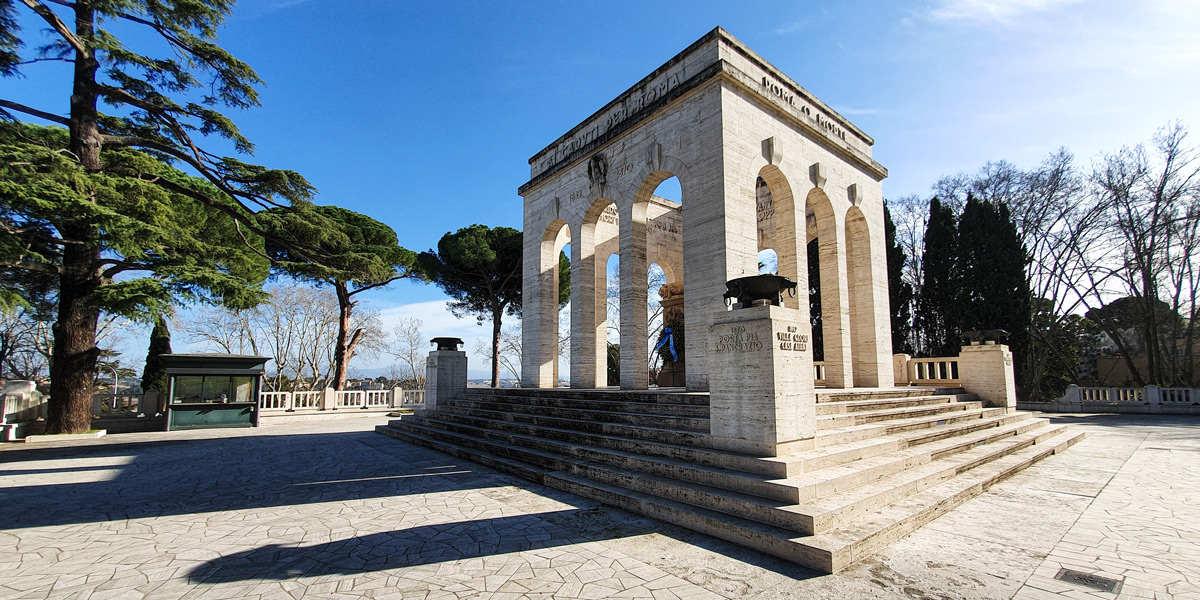
From Via Garibaldi, the white travertine portico appears to be the entire memorial. The monument continues below ground. At the rear, twin staircases descend to a crypt containing the remains of about 200 mostly unidentified people, plaques with more than 1,600 names, and the porphyry sarcophagus of Goffredo Mameli, who wrote the words of Italy’s national anthem.
The numbers describe two different forms of remembrance. The crypt preserves remains recovered from old graves and battlefields while recording a much wider community of people who died during the struggles for Rome between 1849 and 1870.
The name Garibaldi Ossuary Mausoleum can mislead English-speaking visitors. Giuseppe Garibaldi is buried at Caprera, his island home off Sardinia. The Italian word garibaldino refers to his followers and, more broadly, to volunteers associated with his cause.
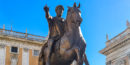
The equestrian monument at Piazzale Garibaldi presents the commander above the city. This ossuary commemorates the people who fought alongside him and in related campaigns. They include defenders of the Roman Republic as well as participants in later attempts to end papal rule and make Rome the capital of a united Italy.
Its position has a direct connection with that history. This part of the Janiculum, known as Colle del Pino, formed part of the republic’s final defensive ground in 1849. The nearby Museum of the Roman Republic at Porta San Pancrazio provides the clearest introduction to the siege before a visit to the mausoleum.
A Roman Republic was proclaimed on 9 February 1849, after Pope Pius IX had fled the city. French forces arrived to restore papal government. Garibaldi repelled their first attack on 30 April, but a new offensive began on 3 June. Fighting around Porta San Pancrazio, Villa Corsini, Villa Spada, and the western Janiculum continued until the republic fell in early July.
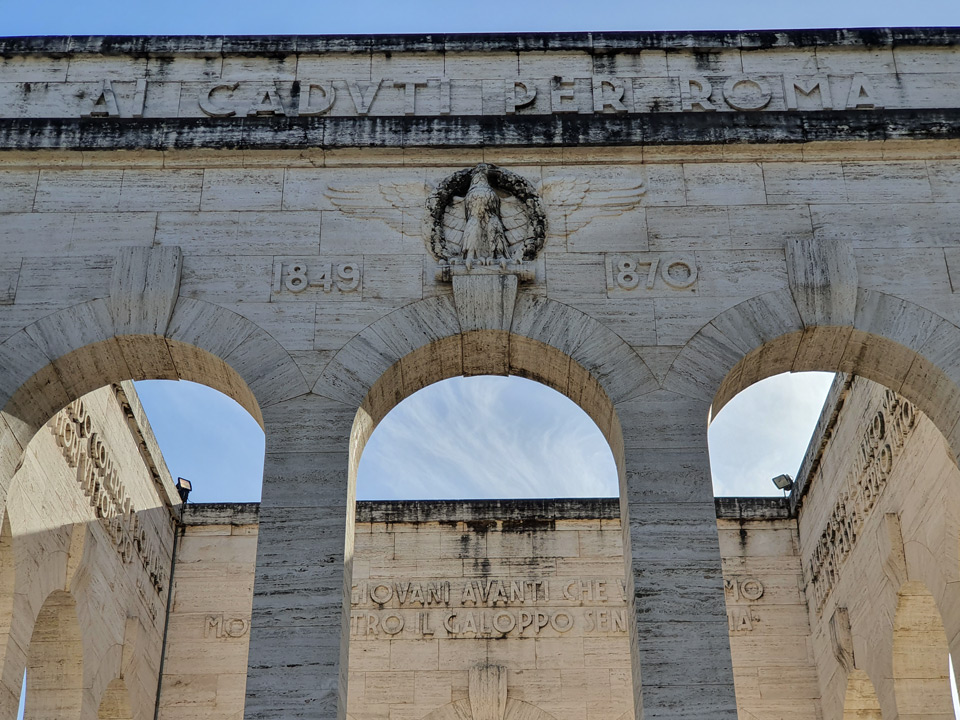
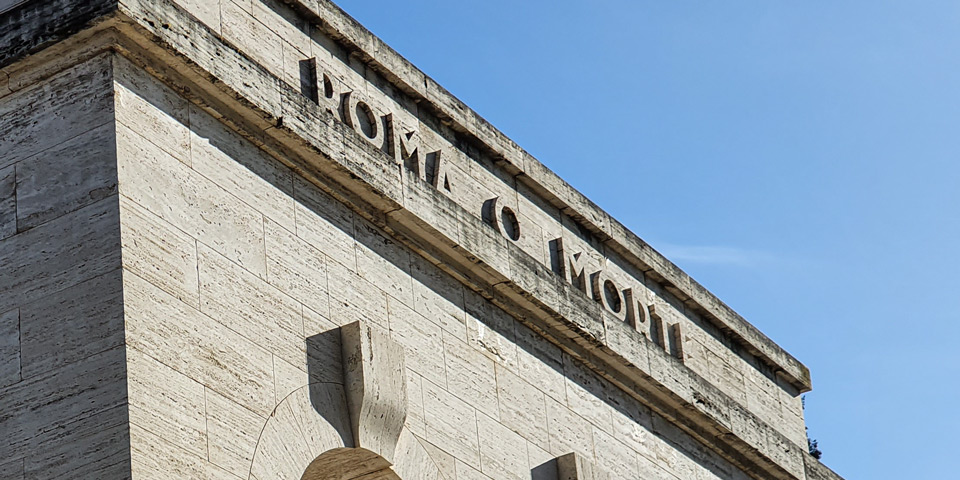
The inscription Ai caduti per Roma 1849-1870 means “To those who fell for Rome, 1849-1870.” Those dates frame the monument’s main story, from the defence of the republic to the capture of Rome by the Kingdom of Italy. The four corner pedestals add a more detailed chronology. They name battle sites from 1849, Aspromonte in 1862, the campaigns of 1867, and Porta Pia and San Pancrazio in 1870.
The words Roma o Morte, “Rome or Death,” are closely associated with Garibaldi’s 1862 campaign. Volunteers rallied under the slogan and marched towards Rome before troops of the recently formed Kingdom of Italy stopped them at Aspromonte. Garibaldi was wounded there. Another volunteer campaign ended in defeat at Mentana in 1867. Italian troops finally entered Rome through the breach at Porta Pia in 1870.
The effort to gather the dead began soon after the capture of Rome. A law passed in 1879 authorised a burial place on the Janiculum for people killed in the campaigns for the city. Search teams recovered remains from Campo Verano, battle sites beside the Aurelian Walls, Villa Borghese, La Giustiniana, and vineyards between San Pancrazio and Porta Maggiore. The first burials took place in 1879, followed by further transfers in 1884.
That early ossuary was modest and eventually fell into neglect. During the 1930s, Giuseppe Garibaldi’s grandson Ezio promoted a permanent replacement through the veterans’ association he led. The government funded the project. Architect Giovanni Jacobucci designed the present complex, built in two years and inaugurated on 3 November 1941.
Jacobucci used a severe interpretation of Roman classicism: a square portico with three round arches on each side, a broad staircase, and an altar carved from a single block of red granite from Baveno. The Capitoline she-wolf, imperial eagle, shields, swords, and military standards cover the altar. Bronze braziers decorated with wolf heads stand on the four corner pedestals and are lit during official commemorations.
The date of construction explains the monument’s imposing visual language. A Fascist government placed the democratic experiment of 1849 and the volunteer tradition of the Risorgimento inside the imperial imagery it favoured. The architecture records the politics of 1941 as clearly as the inscriptions record the campaigns of the nineteenth century.
The double staircase behind the portico leads to a heavy bronze door. Gold mosaic covers the low vault, coloured marble lines the floor and walls, and a circular central pillar carries palms and illuminated alabaster crosses.
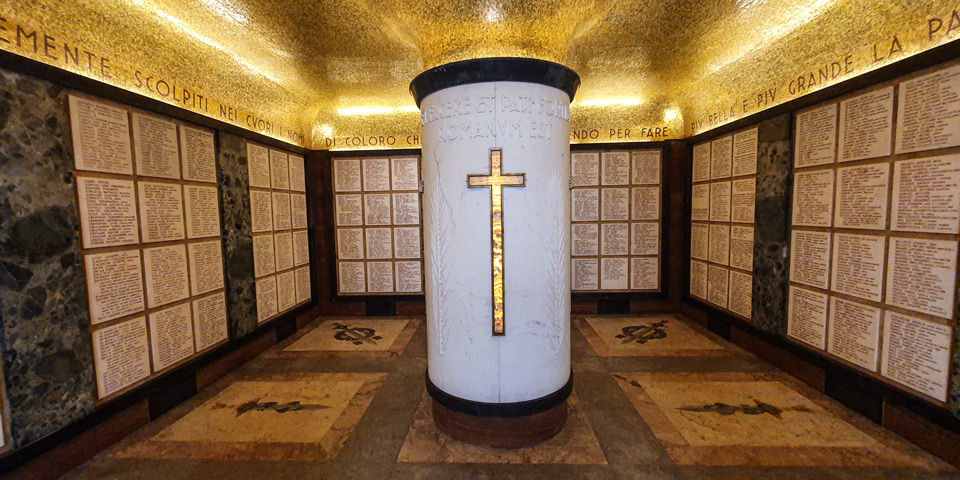
Thirty-six masonry niches contain the recovered remains of about 200 people, most of them unidentified. The surrounding panels record more than 1,600 names. They serve as a collective roll of remembrance rather than a precise guide to the contents of each niche.
The names include Luciano Manara, Enrico Dandolo, Andrea Aguyar, Colomba Antonietti, and Giuditta Tavani Arquati. The memorial also records Ciceruacchio and his sons. Soldiers appear alongside civilians, and people killed in combat share the walls with prisoners executed after capture. Their connection is the political struggle represented by the monument.
One burial occupies a separate place. A polished red porphyry sarcophagus holds Goffredo Mameli, the Genoese poet who wrote Il Canto degli Italiani, commonly known by its opening words, Fratelli d’Italia. Michele Novaro composed the music.
Mameli came to Rome as a committed republican and served with Garibaldi. He suffered a severe wound to his left leg during the fighting at Villa Corsini on 3 June 1849. Infection followed, and an amputation failed to save him. He died on 6 July, shortly after French troops had entered Rome.
His remains moved several times before their transfer to this crypt in 1941. The sarcophagus gives the young poet a distinct physical tomb within a monument otherwise devoted to collective memory.
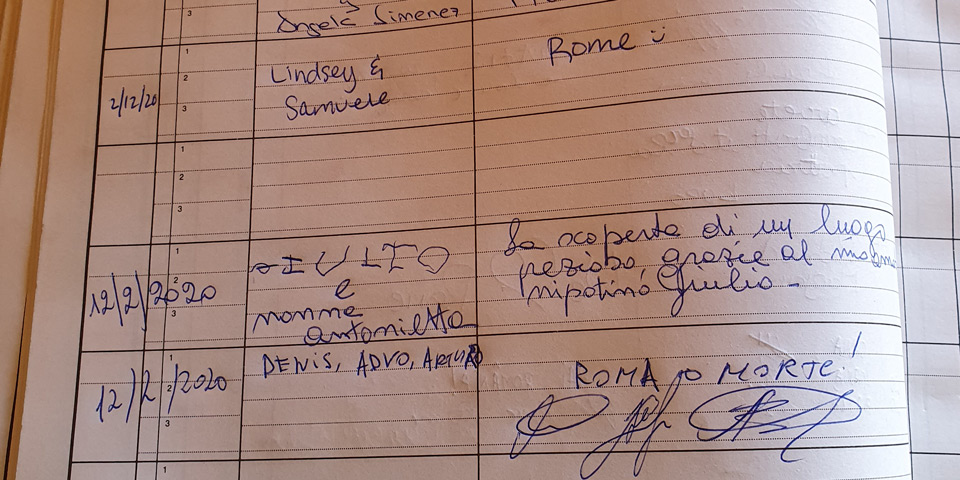
Before leaving, look for the visitor book near the crypt. Its signatures and short messages form an informal record beside the official names fixed to the walls.
RomeItaly.guide © 2026. Created with love by Roman experts and guides.