

992108 travellers read
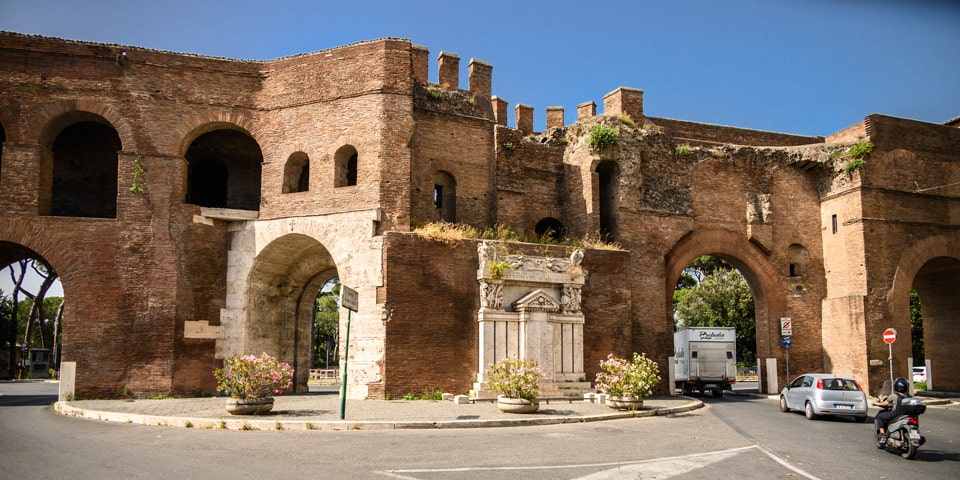
The Aurelian Walls (Le Mura Aureliane) were built around Rome in the third century AD and are about 19 kilometres long. Emperor Aurelian began the work during a period of insecurity in Italy and the wider empire. The walls were repaired several times in antiquity and remain well preserved. They had 17 major gates and several smaller openings.
After five centuries during which Rome faced no direct threat, Emperor Aurelian (AD 270–275) decided that the city needed defensive walls as groups near the empire’s northern borders posed a threat.
From the first century BC until the third century AD, Rome’s military strength meant that the city had no need for a defensive wall.
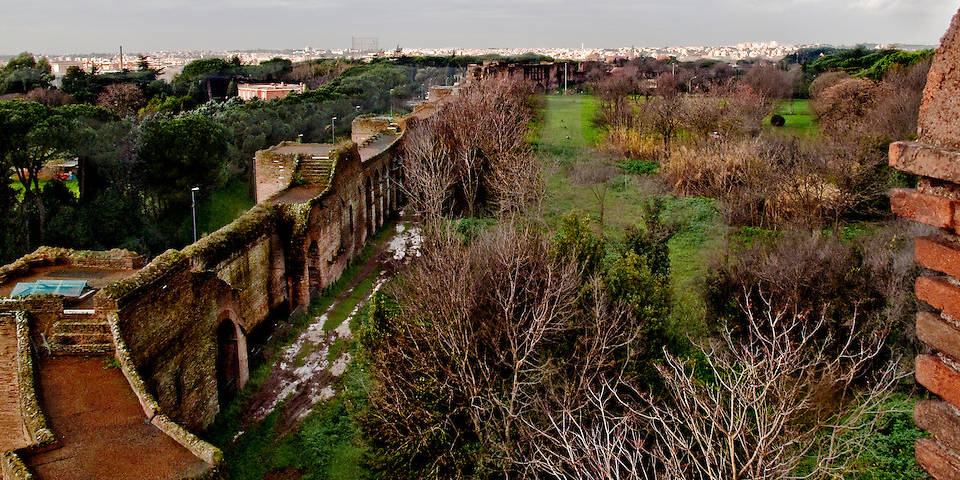
A small number of soldiers patrolled the fortifications. The Aurelian Walls continued to help defend the city until the 19th century.
Originally, the Aurelian Walls were 19 kilometres long and 6–8 metres high. They included a square tower of about 30 metres. Probus, Aurelian’s successor, completed the work.
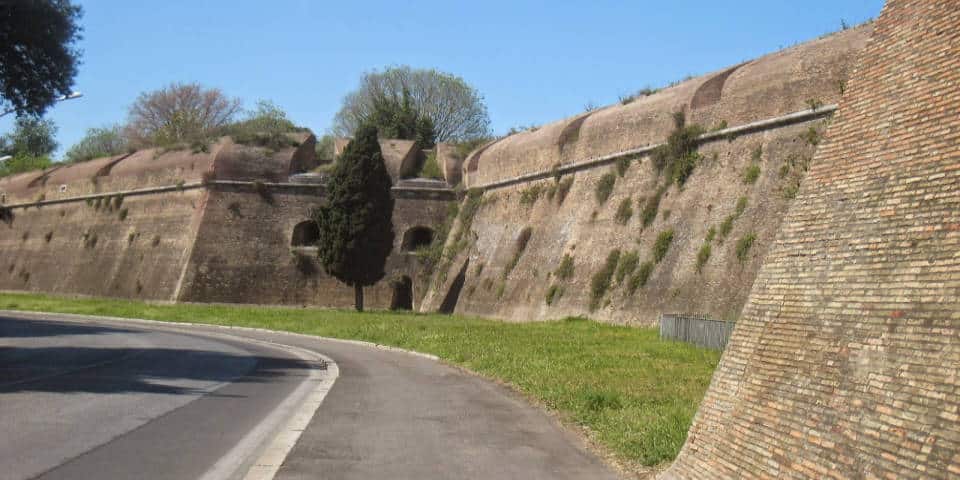
The Aurelian Walls were larger and stronger than the Servian Wall. They enclosed all seven hills of Rome and Trastevere.
Several major structures form part of the walls, including Castel Sant’Angelo, the Amphitheatre Castrense, the Pyramid of Cestius and a section of the Aqua Claudia aqueduct.
Inscriptions at the Portae Portuensis, Praenestina and Tiburtina record repairs carried out under Arcadius and Honorius in AD 403. Brick stamps also attest to repairs under Theodoric and Cassiodorus.
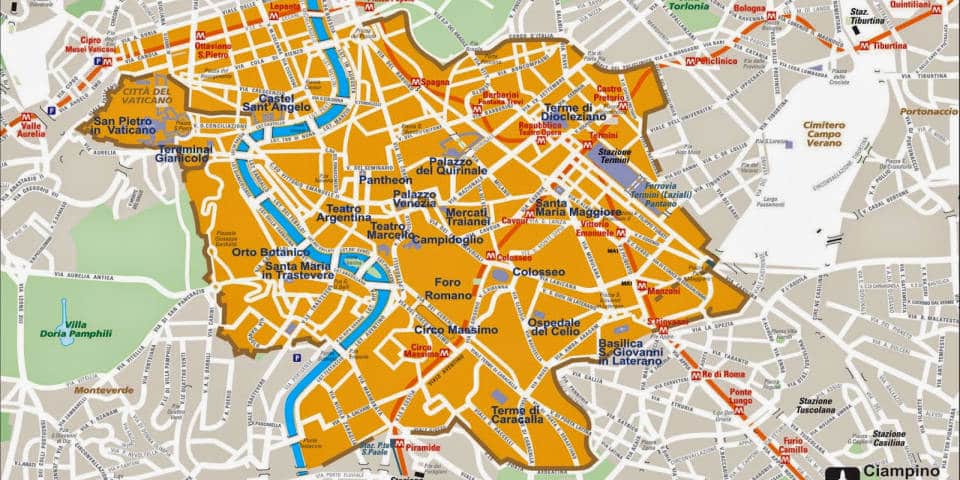
These five figures show the scale and history of Rome’s Aurelian Walls:
Today, the Aurelian Walls are among Rome’s largest ancient monuments. They still mark the boundary of the historic centre.
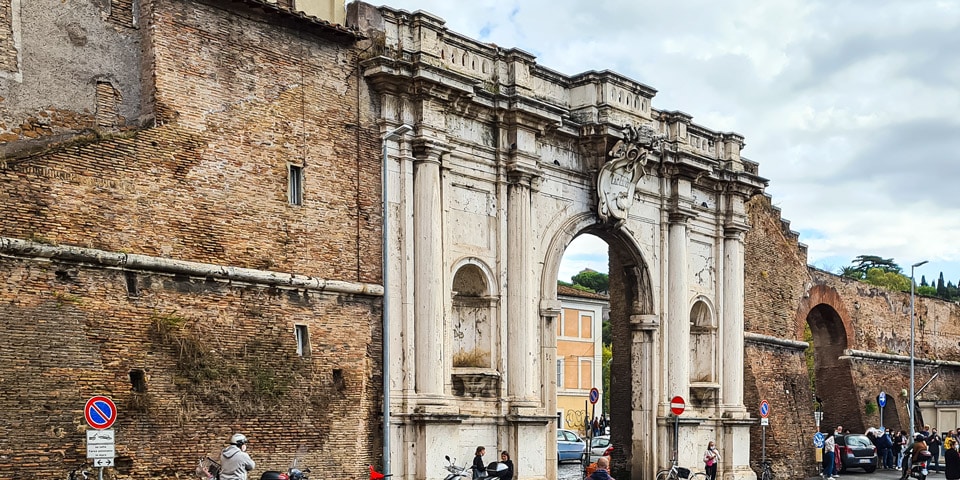
About two-thirds of the Aurelian Walls remain well preserved.
The Museo delle Mura near the San Sebastian Gate tells the history of the walls. Porta Maggiore and Porta Asinaria are among their most substantial gates. Most sections cannot be walked along for structural and safety reasons, though you can follow the main line of the walls around their original perimeter.
You can check whether your hotel is inside the Aurelian Walls.
Taxi drivers use the Aurelian Walls as a boundary for different fare zones. Read more about taxi fares here, or use our taxi calculator.
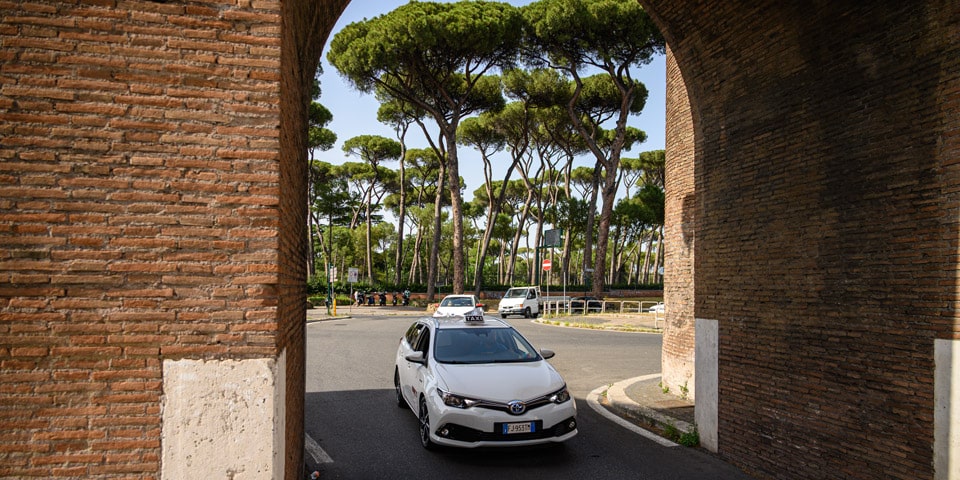
The Aurelian Walls are among the Eternal City‘s most extensive ancient monuments. They still define much of central Rome and are visible from several parts of the city.
RomeItaly.guide © 2026. Created with love by Roman experts and guides.