992122 travellers read
Written by: Kate Zusmann
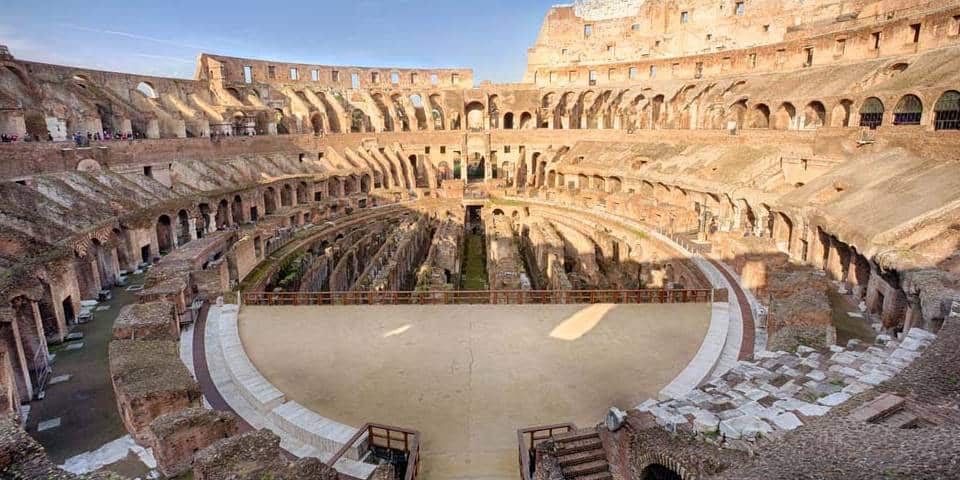
The Colosseum was chosen as one of the New Seven Wonders of the World in a public vote announced in Lisbon on 7 July 2007. In ancient Rome it was famous for its public spectacles. Today it is also remarkable for the way its builders managed the movement of crowds through an amphitheatre on this scale.
The 2007 New7Wonders vote was an international public campaign. The Colosseum is part of the historic centre of Rome, a separate UNESCO World Heritage Site that was first inscribed in 1980.
Emperor Vespasian began the project in the early AD 70s. His son Titus opened the amphitheatre in AD 80, and Domitian later altered it. The Colosseum Archaeological Park explains how the arena and its underground service spaces changed over time.
The building could hold tens of thousands of spectators. Arches supported the outer structure, while stairs, corridors and numbered entrances directed spectators to their seats. Under the arena floor, passages and lifts helped stage the shows. Gladiatorial combats and animal hunts are among the spectacles associated with the building. The Roman historian Cassius Dio describes festivities at the opening, though accounts of individual events should be read with care.
For the details behind the arena’s design and its shows, see these interesting Colosseum facts and our guide to when the Colosseum was built and opened.
RomeItaly.guide © 2026. Created with love by Roman experts and guides.