
990640 travellers read
At 184 hectares, Villa Doria Pamphilj is Rome’s largest public park. A first visit needs a route. Otherwise, its best sequence of pine avenues, fountains, architecture, and Janiculum history can disappear inside a very large green space.
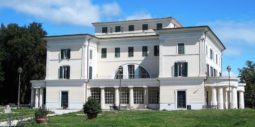
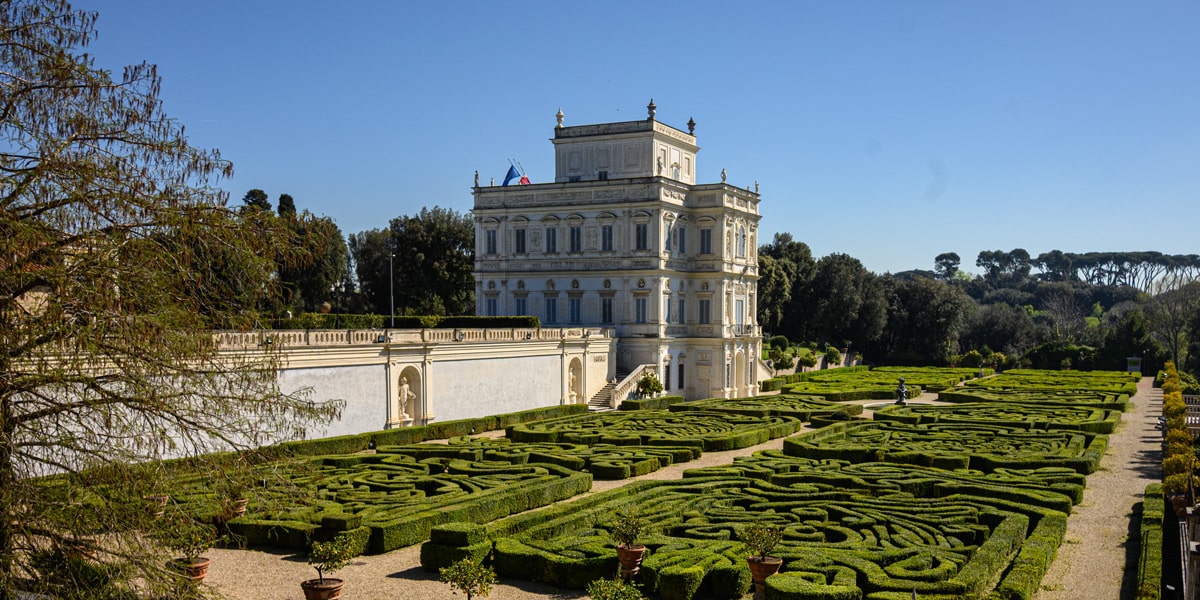
Romans use the park for early runs and dog walks. On Sundays, families spread picnic blankets across the lawns. The Casino del Bel Respiro, the ornate building in the main photograph, occupies only a small part of the grounds and normally remains closed to visitors. This walk crosses the historic eastern section from Via Vitellia near Casaletto to Porta San Pancrazio.
Do not confuse the park with the Doria Pamphilj Gallery on Via del Corso. The gallery displays the family’s art collection in central Rome. Villa Doria Pamphilj lies several kilometres away in Monteverde.
I usually enter through Via Vitellia, about five minutes on foot from the Casaletto terminus of Tram 8. You have to choose a direction almost immediately.
A pedestrian bridge on the left crosses Via Leone XIII and leads into the much larger western section, where runners can cover 10 or 15 kilometres without repeating a short loop. First-time sightseers should stay east of the road, close to the historic buildings and fountains.
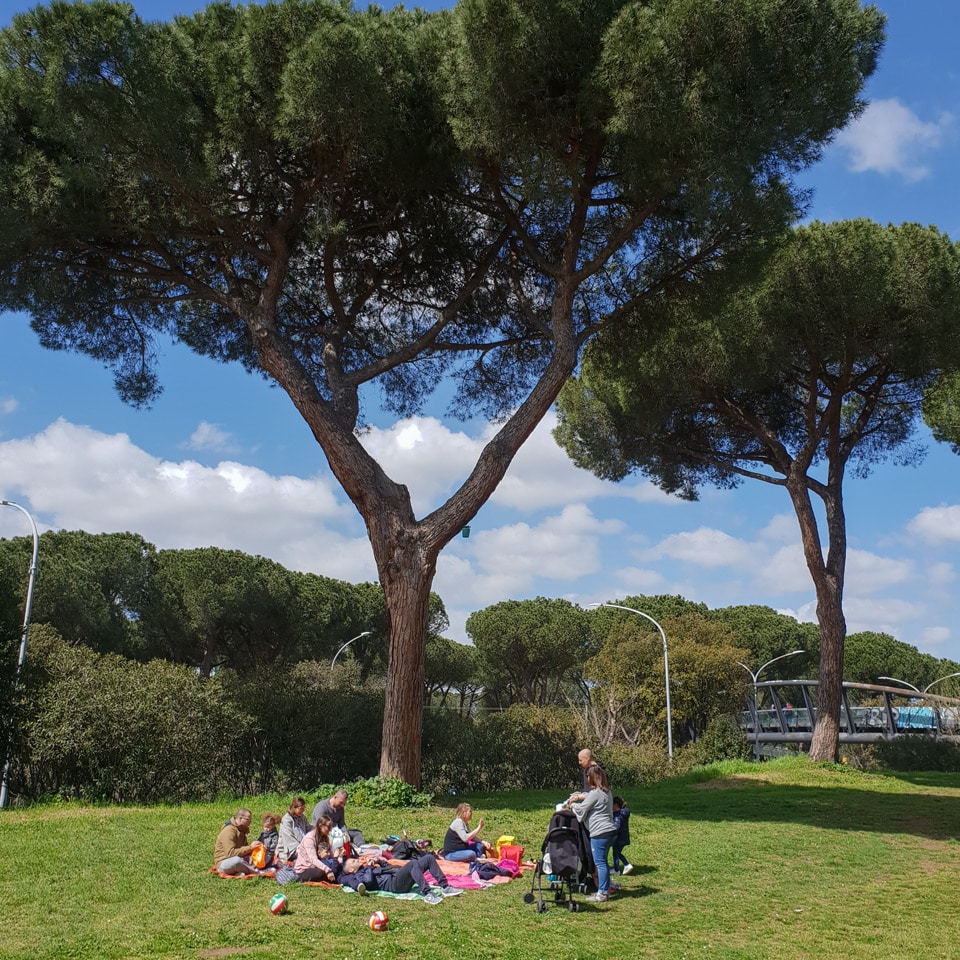
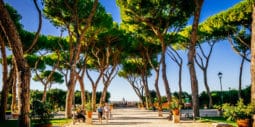
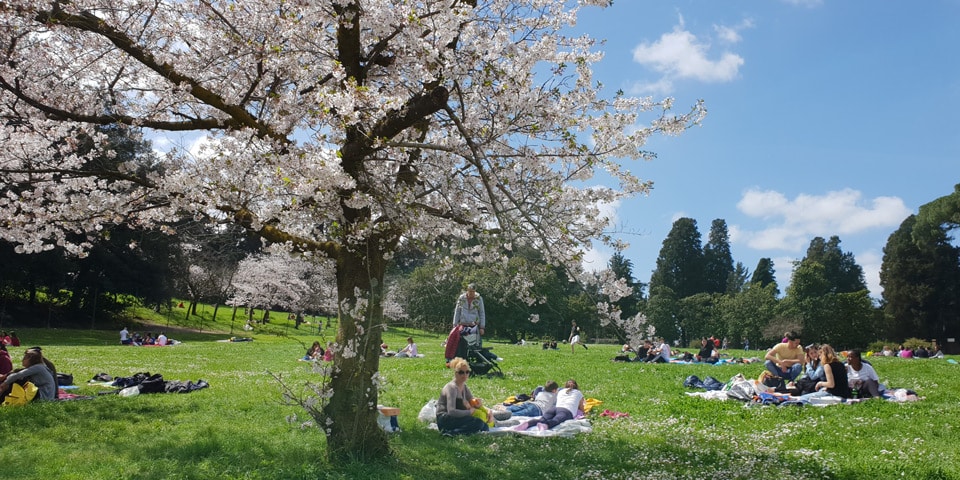
The bridge appears behind the families in this photograph. Romans spread blankets under the pines on clear weekends even in winter. Sundays grow busier from May through October, when long dry spells make outdoor plans reliable. Go on a weekday morning for emptier paths. Choose Sunday around midday to see how nearby families actually use the park.
Continue along the avenue of Roman umbrella pines. Their high crowns leave the broad dirt path open below, with Via Leone XIII running on the left.
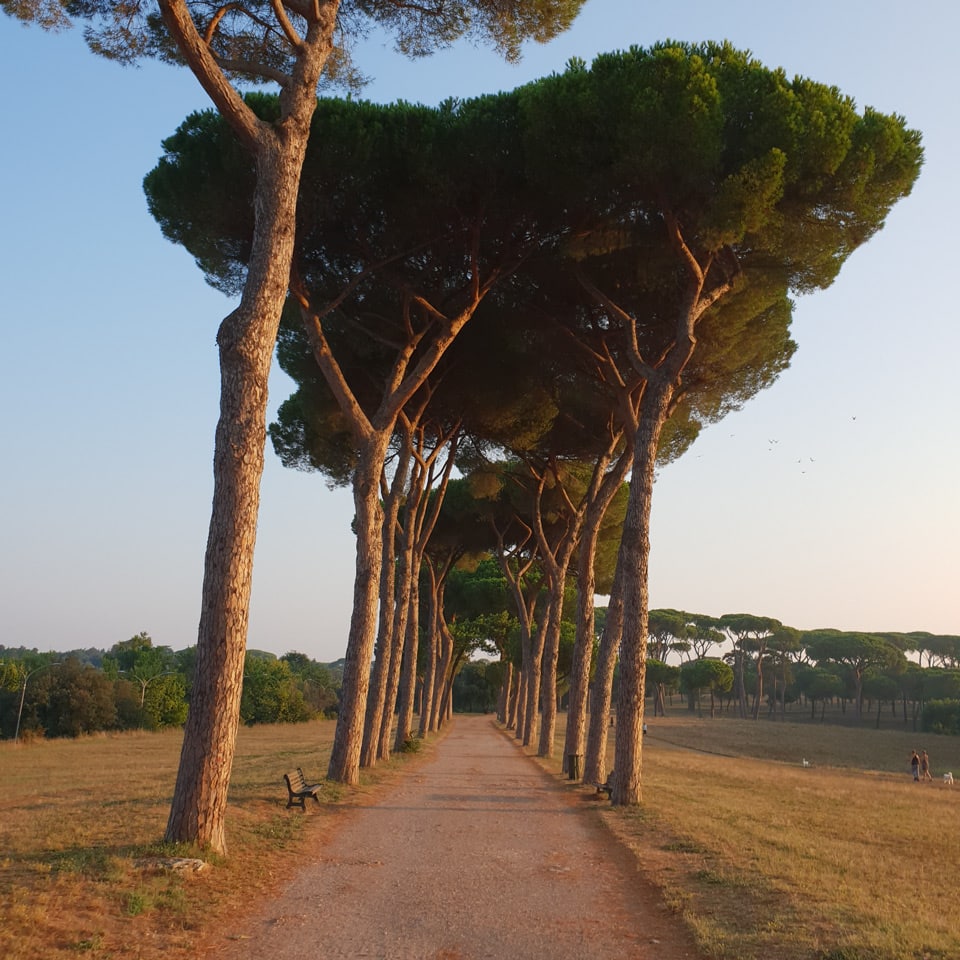
The road dividing the estate is relatively recent. Via Leone XIII opened for the 1960 Olympics, and the footbridge now reconnects the two halves that Rome opened to the public in stages: the western section in 1965 and the monument-rich eastern section in 1971.
Bear right after the pine avenue and use the Fontana del Giglio as the next landmark. Alessandro Algardi and Giovanni Francesco Grimaldi designed it in the mid-17th century. The stone lily at the top refers to the Pamphilj family emblem.
In 1785, Francesco Bettini moved the fountain a short distance, connected it to the canal, and altered the surrounding lake and cascades. Today, moss and maidenhair fern cover much of the pale stone, while mineral deposits mark the waterline.
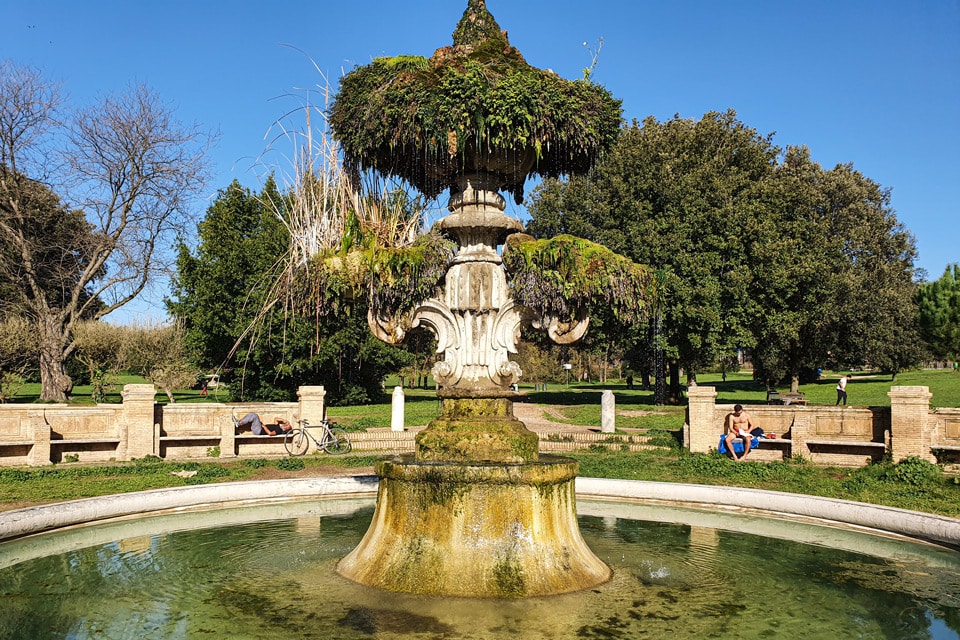
I took this photograph on 25 December. The water was running and the evergreen canopy still held its colour. People were sitting in the sun. A winter visit can look exactly like this.
From the fountain, continue north-east towards the open field used by runners and cyclists. A stone bench near an opening in the trees faces the dome of St Peter’s Basilica. No sign marks the viewpoint, so the map pin helps.
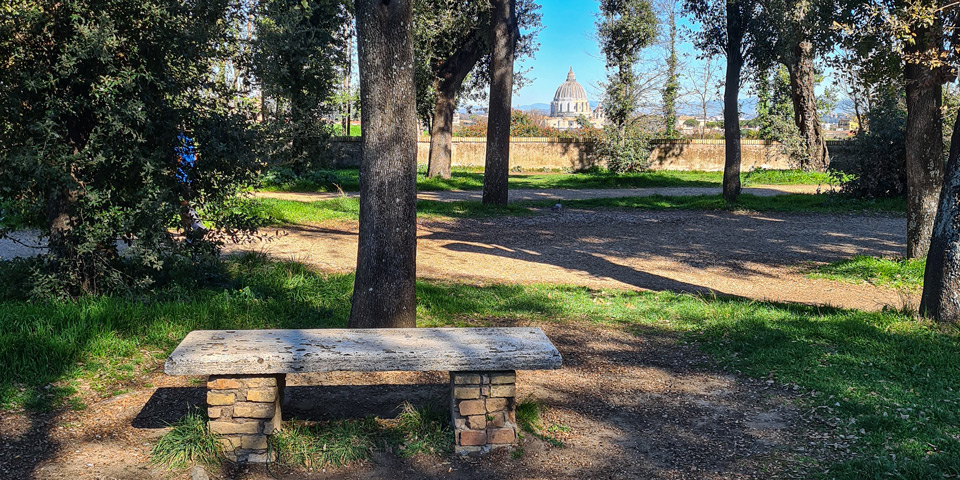
The wall hides the lower part of the Vatican. Above it, trunks and branches frame the dome. The running track circles the field behind the bench. From here, turn south-east towards the Casino del Bel Respiro.
Camillo Pamphilj began reshaping the family estate in 1644, the year his uncle became Pope Innocent X. Construction of the Casino del Bel Respiro followed between 1645 and 1652. Alessandro Algardi directed the design, with Giovanni Francesco Grimaldi also playing an important role.
The name refers to fresh air and relief from the dense city below. The building is also known as Casino Algardi. In this context, casino means a small country residence, with no connection to gambling.
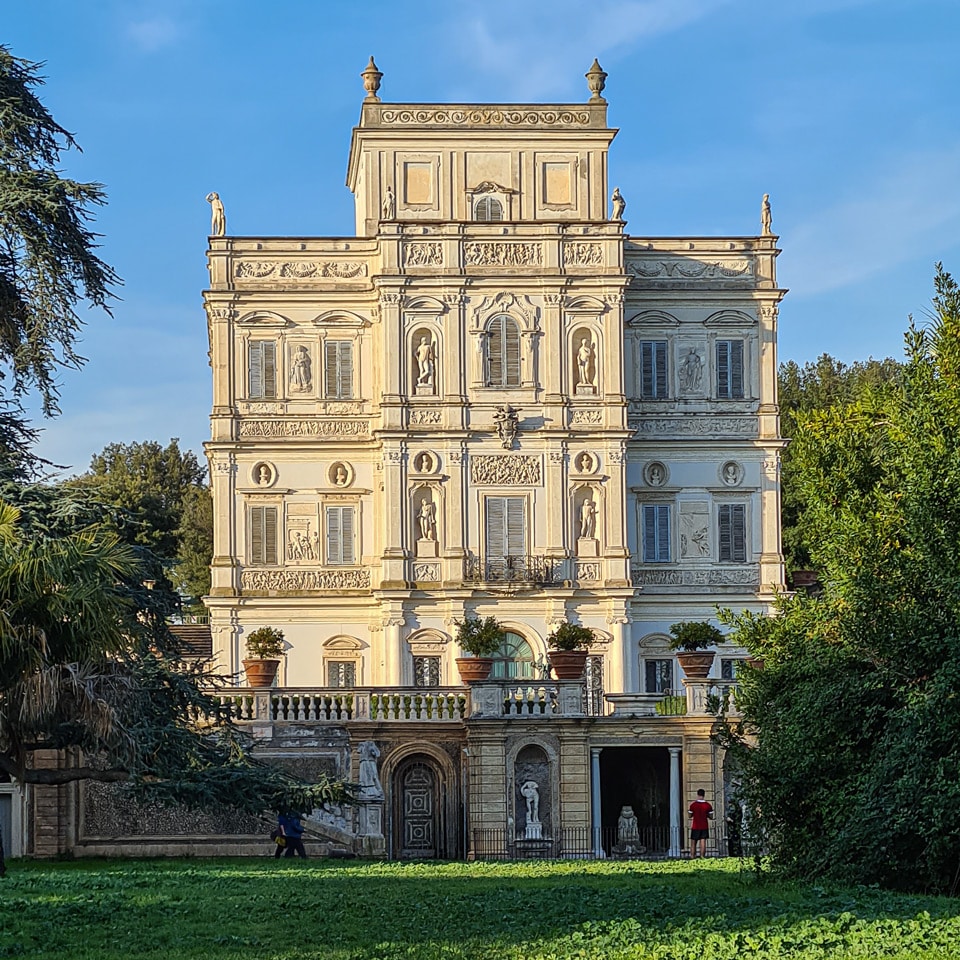
Ancient and modern sculptures occupy the niches and roofline. Reliefs and portrait medallions cover the façade. Friezes run between them. Below, the clipped hedges of the Secret Garden control the long approach.
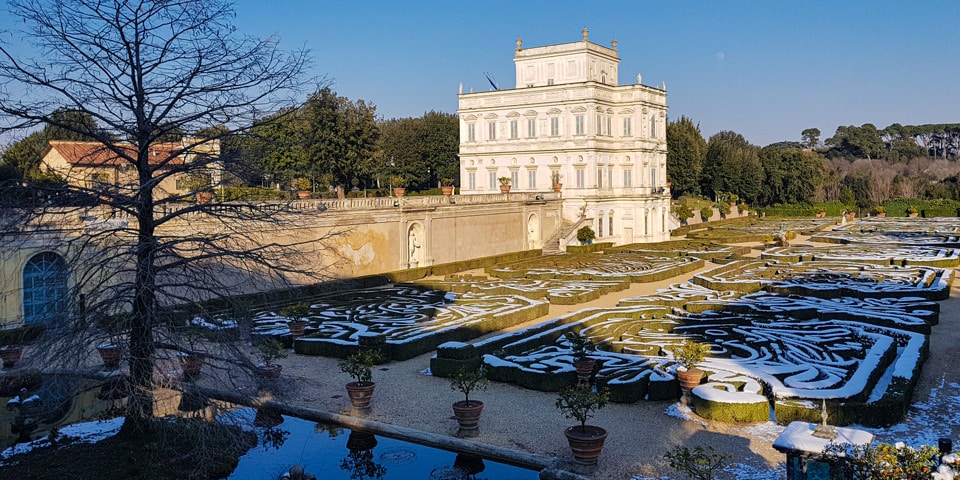
The Italian state uses the Casino for official functions. Although regular park visitors cannot enter the building or the restricted garden, paths around the accessible perimeter provide several clear exterior views, and its proportions change sharply between the long garden side and the tall façade shown above.
The route continues into the Giardino del Teatro. Andrea Busiri Vici assembled its Fontana del Putto in 1855 from older stonework and newly made elements.
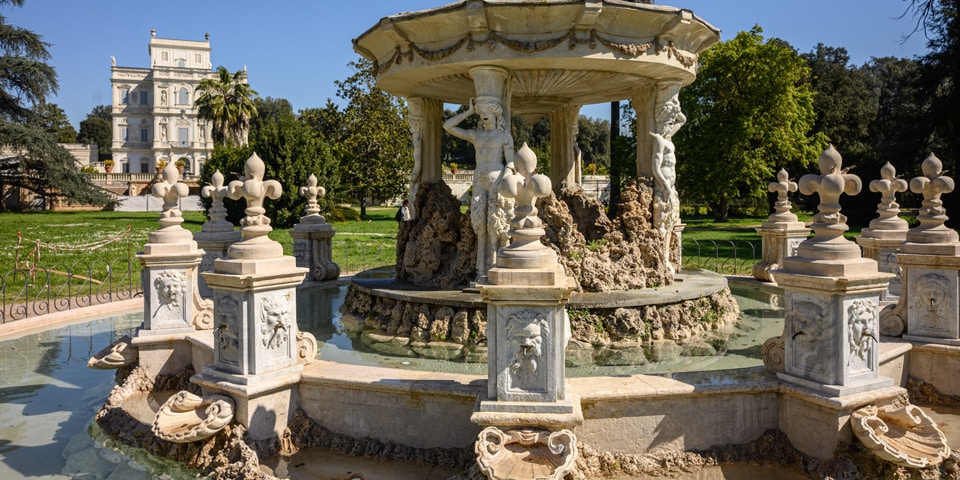
Circle the basin. Female caryatids and male telamons support the upper structure. Carved masks release water into shell-shaped bowls, and large Pamphilj lilies repeat along the enclosure.
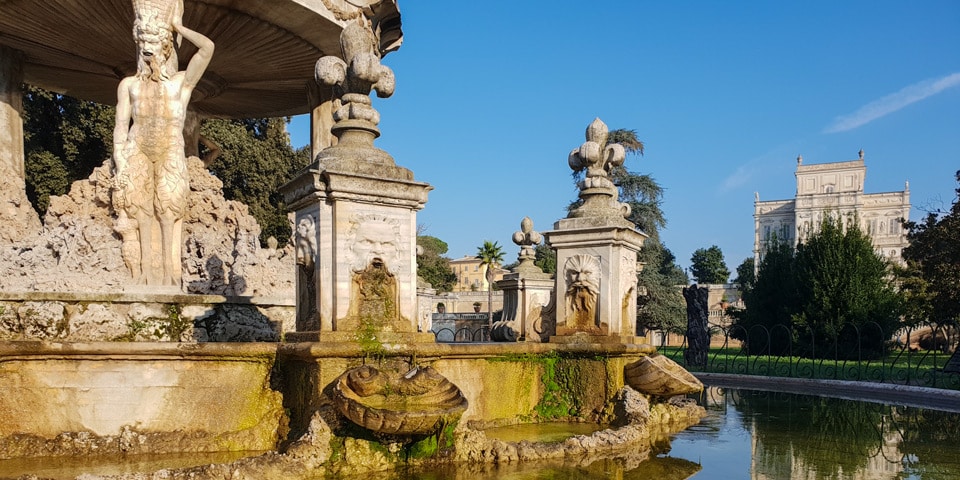
The small putto that gave the fountain its name was stolen after the park opened to the public. A copy was later installed, but the original remains lost.
The Cappella Doria Pamphilj stands nearby. Edoardo Collamarini designed the family funerary chapel, which was built between 1896 and 1902; decorative work continued for several more years. Striped brick, round arches, mosaics, and carved stone give it a medieval appearance that differs sharply from the Casino.
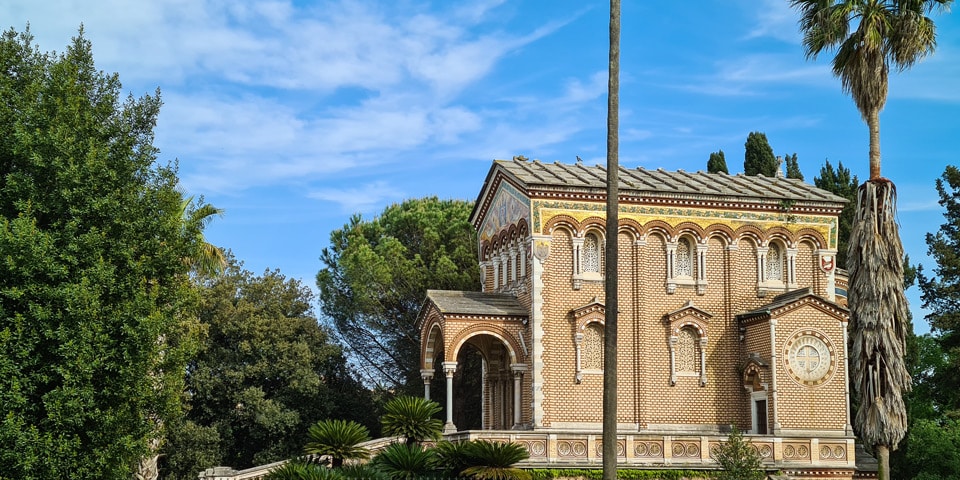
The family mausoleum occupies the lower level, with the chapel above. It remains Doria Pamphilj property and usually stays locked, so plan on seeing the exterior.
After the chapel, turn north-east. The long arcade towards San Pancrazio is the Acquedotto Traiano-Paolo. Its double name records two stages of the same water route.
The original Aqua Traiana was completed under Emperor Trajan in AD 109. Pope Paul V restored the ancient supply in 1609. The renewed system became the Acqua Paola and carried water towards the monumental Fontana dell’Acqua Paola on the Janiculum.
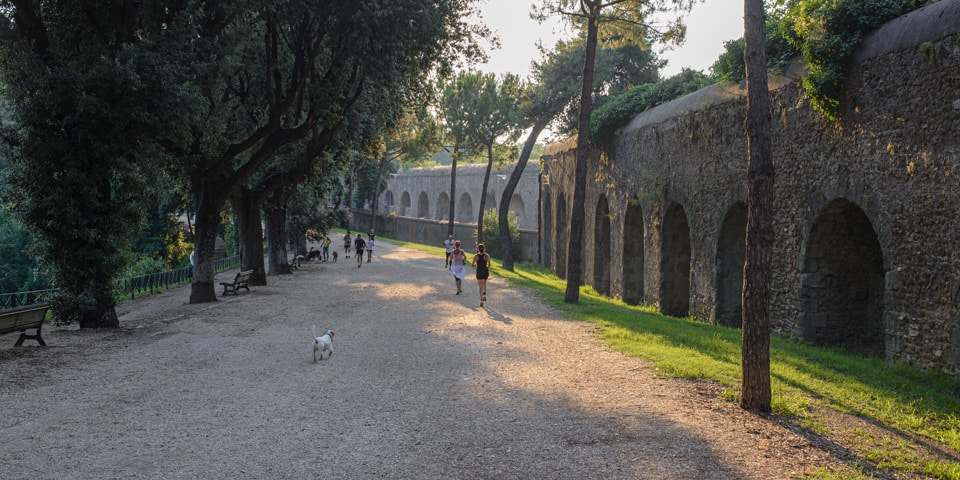
The photograph shows the aqueduct in its present setting. People run beside it, walk dogs under its arches, and use the benches along the path.
Near this stretch, the Arco di Tiradiavoli crosses Via Aurelia Antica. Its nickname belongs to a Roman legend about Donna Olimpia Maidalchini, the powerful sister-in-law of Innocent X. After her death, devils were said to drag her carriage through the arch. The story is folklore; the masonry belongs to the later Acqua Paola system laid over the ancient route.
The Arco dei Quattro Venti looks like a ceremonial gate. Parts of the earlier Casino dei Quattro Venti, once attached to neighbouring Villa Corsini, survive inside it.
The site controlled a strategic height during the defence of the Roman Republic. On 3 June 1849, French troops commanded by General Oudinot fought the republic’s defenders here and badly damaged the Casino. Filippo Andrea V Doria Pamphilj later bought the Corsini property and commissioned Andrea Busiri Vici to turn the ruins into the present arch. Work lasted from 1856 to 1859.
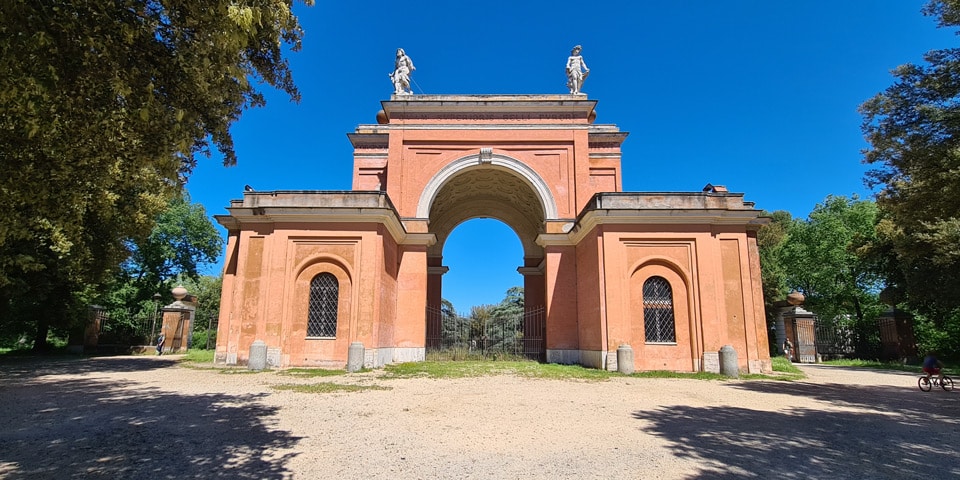
Four limestone figures by Luigi Roversi were installed in 1860. They personify the winds and face the corresponding cardinal directions, preserving the old Quattro Venti name.
The façade inscription is heavily abbreviated. Its key phrase, quam superioris belli furore subversam, describes the acquired villa as “destroyed by the fury of the previous war.” Other lines name Filippo Andrea Doria Pamphilj, date the new entrance to 1859, and record his restoration and embellishment of the property. The war mentioned here was the battle of 1849, only ten years before the inscription was carved.
Continue to the San Pancrazio exit. The Museum of the Roman Republic inside Porta San Pancrazio is a few minutes away, followed by the Fontana dell’Acqua Paola. At this point the park route joins the historic landscape of the Janiculum.
Drinking fountains make long runs here much easier. Their water is potable unless a sign says non potabile, although an individual fountain may occasionally be out of service. Carry some water during very hot weather or before heading deep into the western section.
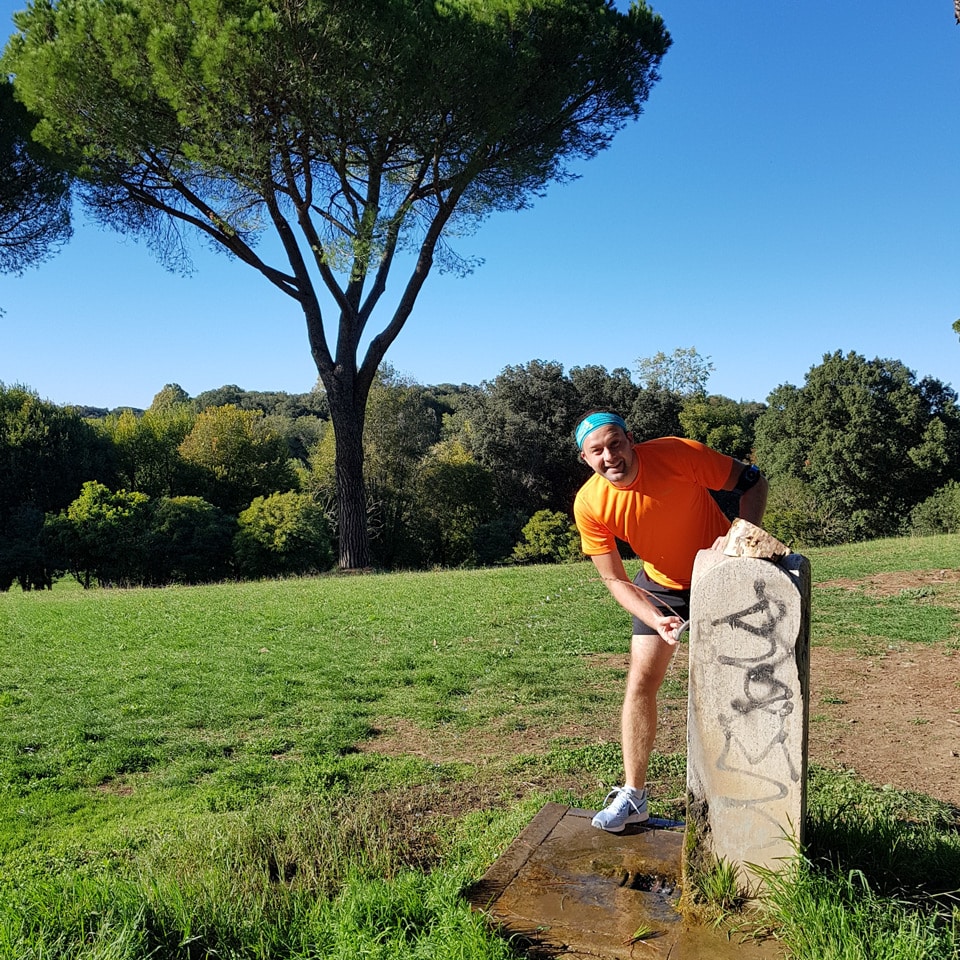
I stopped at this stone fountain during an October run. Many Roman fontanelle have a small hole on top of the spout. Cover the main outlet gently with one finger and the pressure sends a drinking jet upwards.
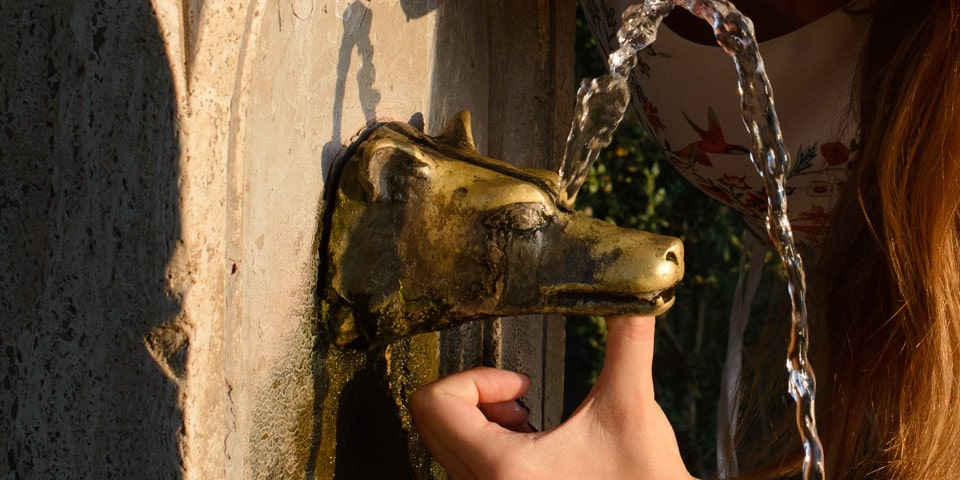
Let the water run briefly first. Use the main stream when filling a bottle.
Spring changes the park quickly. Lawns fill with picnics, and ornamental Prunus trees open masses of white flowers. The tree in this April photograph appears to be an ornamental cherry, although a precise cultivar cannot be identified from the image alone.
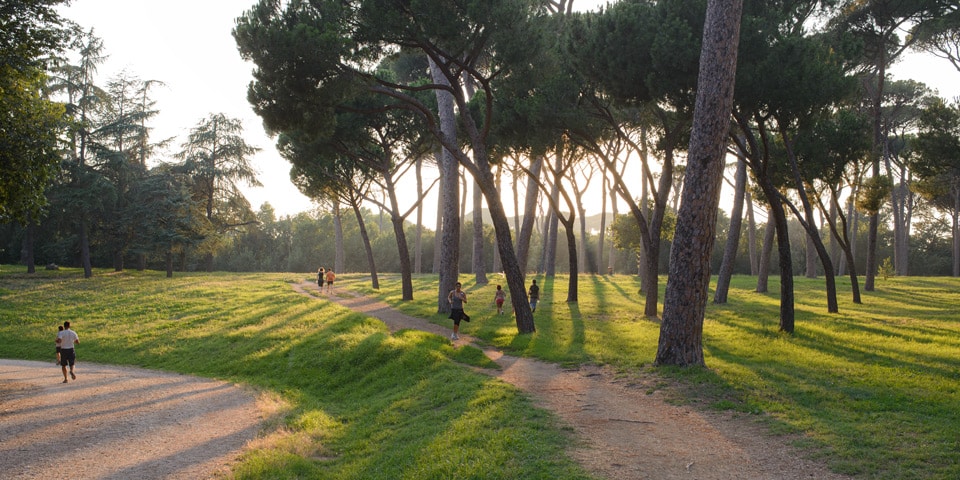
By July, early morning and the hour before sunset are far more comfortable for running than midday. Low evening light passes between the umbrella pines and marks the informal paths worn across the grass.
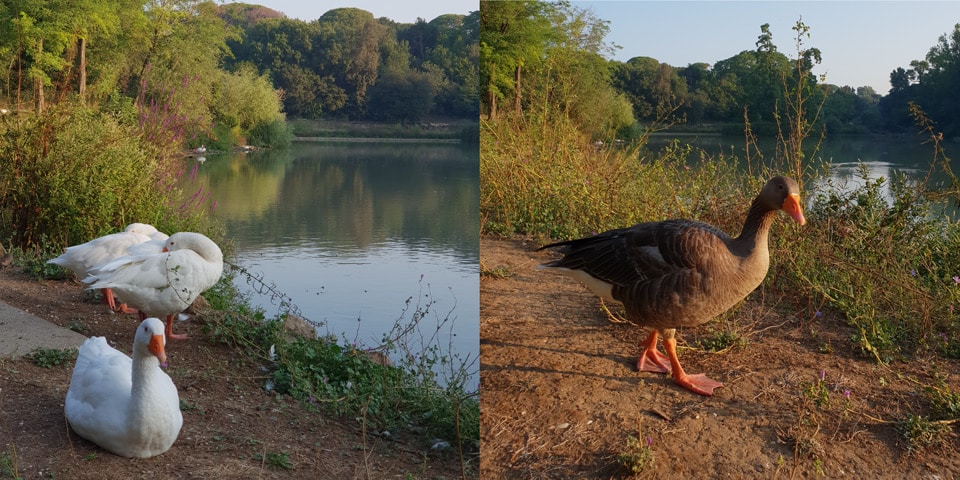
Geese and ducks live around the lake. Other water birds often wander onto nearby paths. Give them room, especially when young birds are present.
Most winter visits resemble the sunny December scene at Fontana del Giglio. Snow is rare in Rome. Rome received substantial snowfall on 26 February 2018. I photographed the Secret Garden the following morning, but much of the snow had melted by lunchtime.
Villa Pamphilj remains my favourite park in Rome. I lived for years in Monteverde Vecchio and have crossed these paths in every season, usually on foot or while running. Over time, the distance adds up to thousands of kilometres.
The photographs below were taken at the same bench in 2013 and 2026. During the thirteen years between them, this was my normal place to run or walk towards the Janiculum.
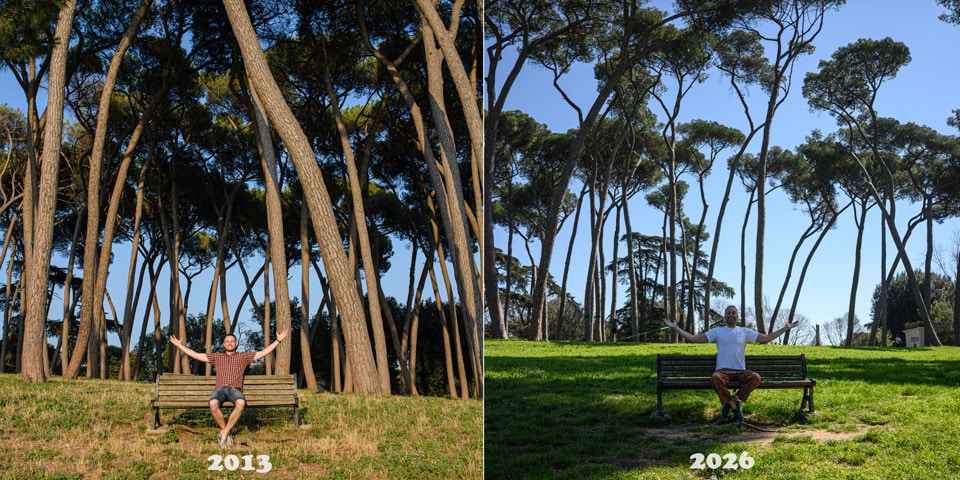
For a first visit, I would follow the eastern route described above. The western park makes more sense when the goal is a long run, a picnic, or several unhurried hours outdoors.
Returning visitors who want a residential base should consider Monteverde Vecchio, ideally towards Porta San Pancrazio. Check the exact walking route before booking because Monteverde is large and hilly. From that side, Villa Pamphilj becomes your daily park, the Janiculum is next door, and Trastevere lies downhill.
RomeItaly.guide © 2026. Created with love by Roman experts and guides.