
991242 travellers read
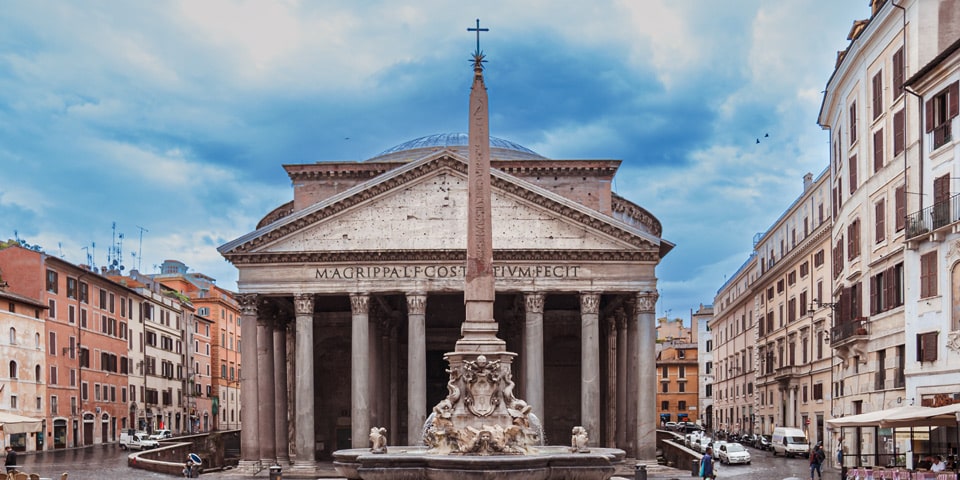
Directly in front of the Pantheon, the Fontana del Pantheon combines work from several periods. Giacomo della Porta designed the first fountain in 1575. Pope Clement XI added the Macuteo Obelisk during a major redesign in 1711, placing an Egyptian monument carved for Ramesses II above a Renaissance basin in Piazza della Rotonda.
Pope Gregory XIII commissioned the fountain in 1575 as part of a broader urban renewal programme. The same initiative produced the Fountain of the Moor in Piazza Navona.
Giacomo della Porta designed it, and Leonardo Sormani carved the original marble basin. The fountain had no obelisk at this stage. It consisted of a basin with masks, supplied by the restored Aqua Virgo aqueduct, and served as a public water source.
The present composition dates largely from 1711, when Pope Clement XI commissioned architect Filippo Barigioni to redesign it with a larger stone basin and four dolphins supporting a central plinth. Papal coats of arms decorate the base, while the Macuteo Obelisk rises above it.
The obelisk is much older than the fountain beneath it. It was carved during the reign of Pharaoh Ramesses II of the 19th Dynasty, between 1279 and 1213 BC, and originally stood at the Temple of Ra in Heliopolis. Two cartouches of Ramesses II remain visible near the top.
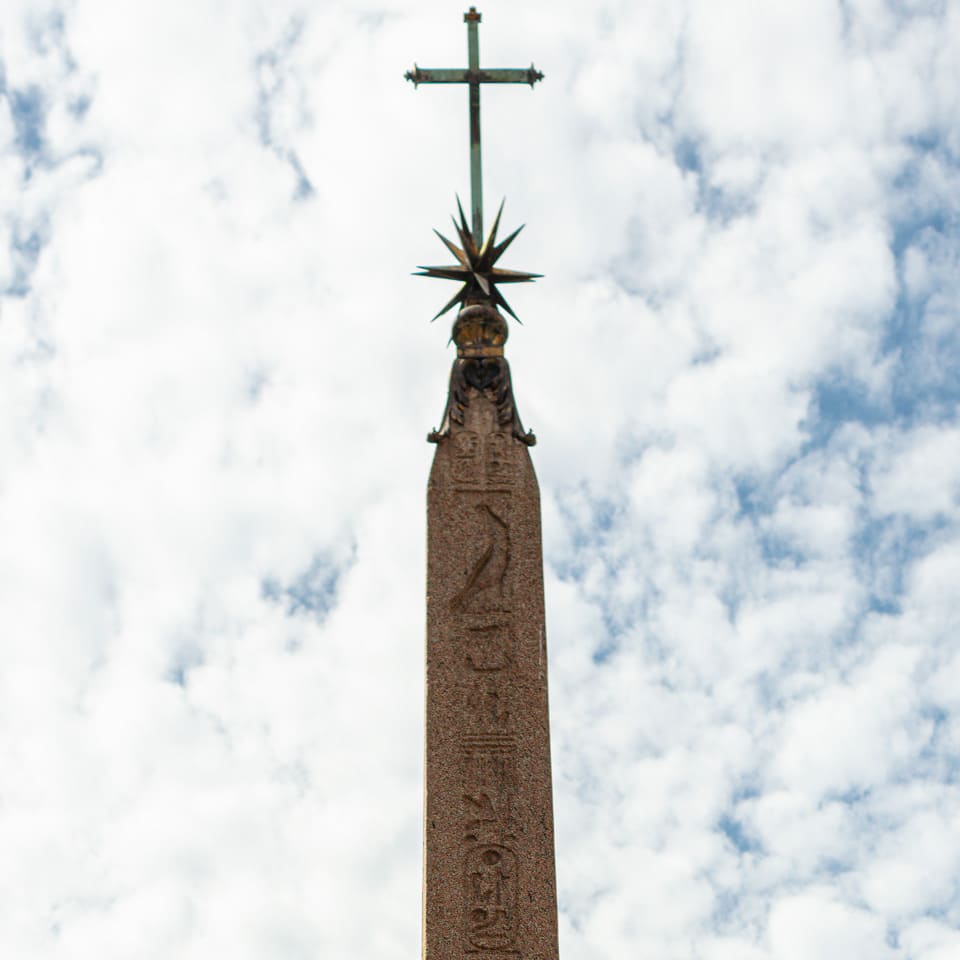
The obelisk was brought to Rome in antiquity and reused in the Iseum Campense, a sanctuary of the Egyptian goddess Isis south-east of the Pantheon. After the sanctuary fell into ruin, the stone disappeared beneath rubble for centuries. It was rediscovered in 1374 under the apse of the nearby Basilica of Santa Maria sopra Minerva.
For a time, the obelisk stood on simple blocks outside the nearby church of San Macuto, the source of its name Macuteo. Clement XI later transferred it to the fountain.
The obelisk measures 6.34 metres; together with the fountain base, the monument reaches just over 14 metres. A dove crowns the top. It represents the Holy Spirit and gives a Christian conclusion to the ancient Egyptian monument below.
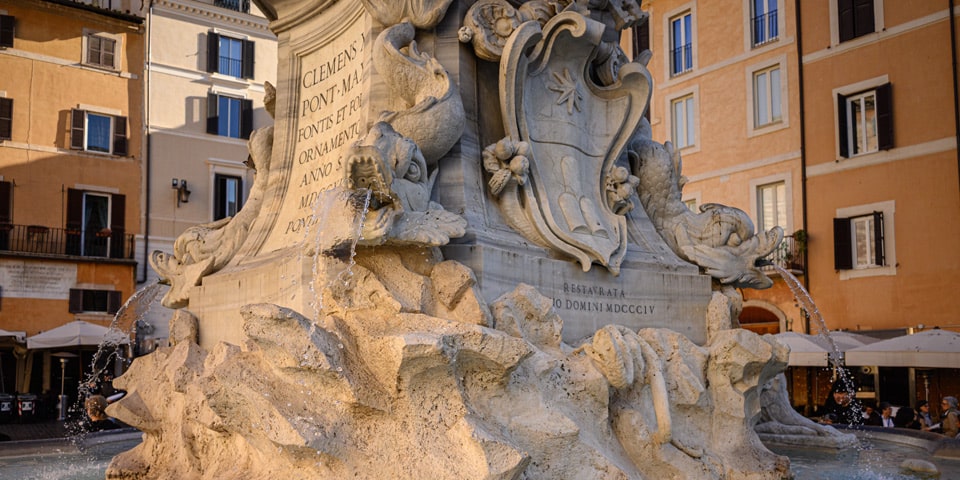
The stone plinth directly below the obelisk carries a Latin inscription: Clemens XI Pont. Max. Fontis et Fori Ornamento Anno Sal. MDCCXI. It translates as “Clement XI, Supreme Pontiff, for the adornment of the fountain and the square, in the year of salvation 1711.” The wording publicly records the pope who commissioned the work.
Each face of the plinth displays the papal coat of arms of Clement XI. A star appears above an open book, the heraldic device of the Albani family, to which the pope belonged. The emblem repeats on all four sides and records the patronage behind the fountain.
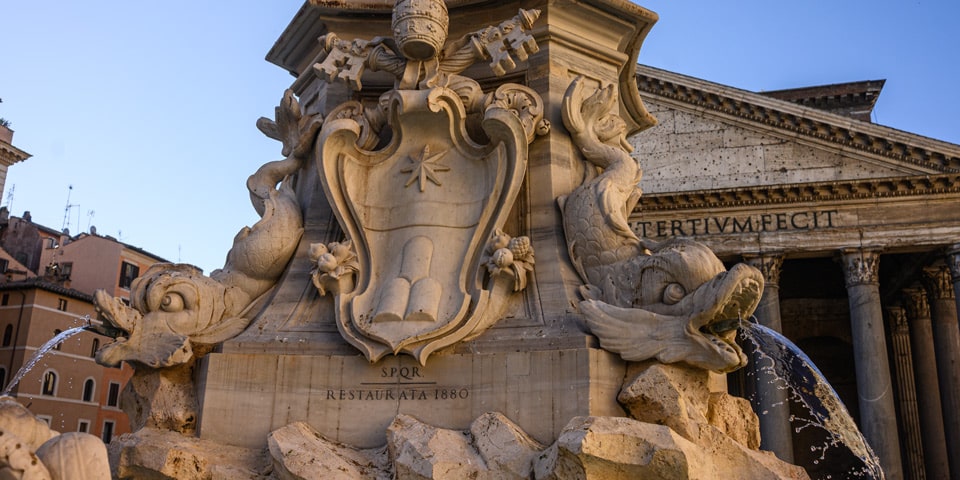
Farther down the base is another inscription: SPQR Restaurata 1880. It marks a restoration financed by Rome’s municipal government 15 years after Italian unification.
SPQR abbreviates Senatus Populusque Romanus, “the Senate and People of Rome.” The new Italian state revived the ancient formula as a sign of civic continuity, and it still appears on Rome’s manhole covers. During the 1880 restoration, the deteriorating marble masks carved by Sormani in 1575 were replaced with copies by Luigi Amici. The originals entered the Museum of Rome.
The four creatures supporting the obelisk’s plinth represent dolphins, although their gaping jaws, protruding eyes, and scaled bodies have little in common with real animals.
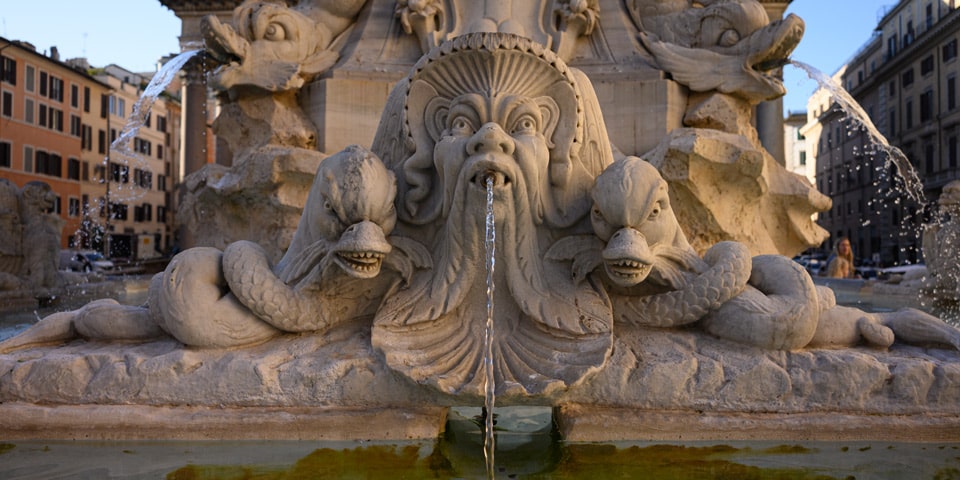
Their strange anatomy is deliberate. Renaissance and Baroque artists copied the dolphin imagery inherited from classical antiquity instead of working from living animals. Della Porta used similar creatures on the Fountain of the Moor, and the convention spread through Rome’s papal fountains.
The present dolphins are replacements rather than Barigioni’s originals. In 1928, sculptor Francesco Sicciardi made copies of the deteriorating Baroque figures, which then entered the Museum of Rome. Several visible components are therefore later restorations of earlier designs.
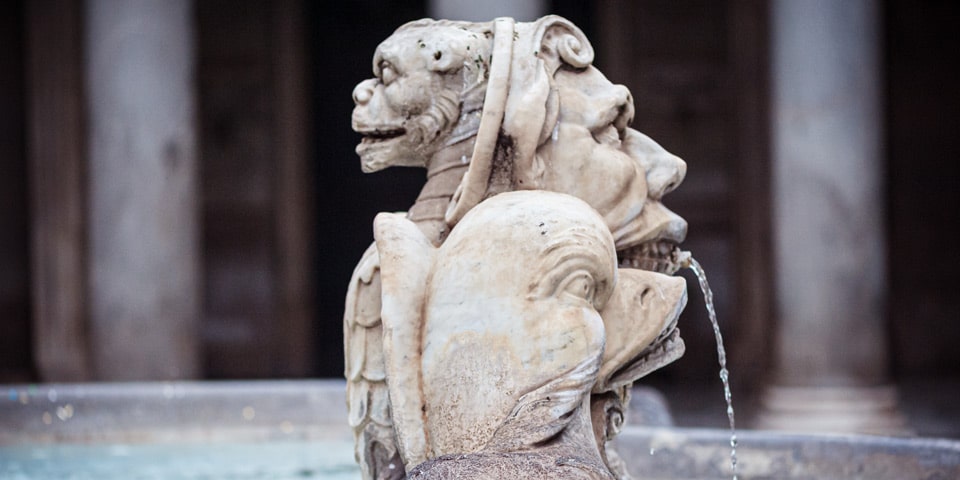
The choice of dolphins also carried meaning. Greco-Roman art associated them with Neptune, sailors, and rescue at sea. Christian artists later connected the dolphin with Christ as saviour. On this fountain, the water creatures support a papal monument crowned by the dove of the Holy Spirit.
The masks between the dolphins are human faces with water flowing from their open mouths. This type of waterspout comes from the same classical tradition seen on many public fountains in Rome. The present masks are Luigi Amici’s 1880 copies of della Porta’s 1575 originals.
The Macuteo Obelisk has a companion. The Minerva Obelisk originally stood beside it in Heliopolis and was later brought to Rome.
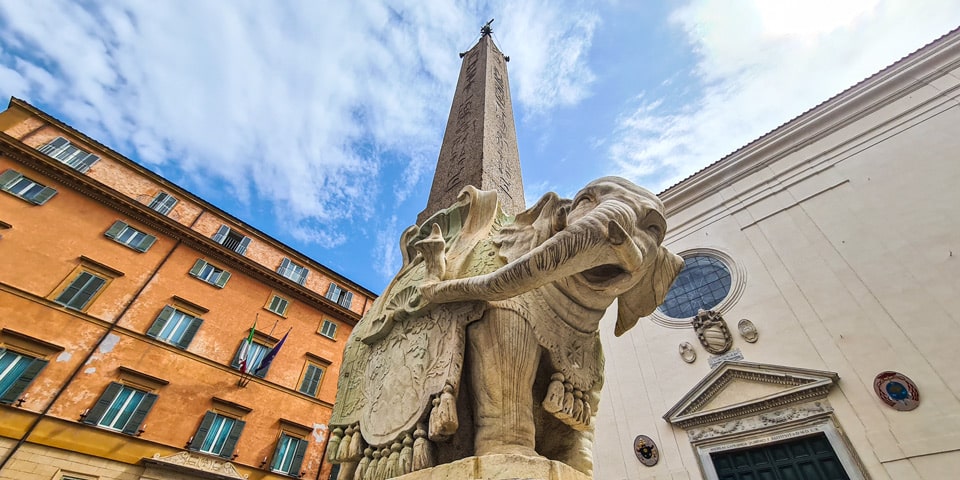
You can see it about 200 metres behind the Pantheon in Piazza della Minerva, balanced on Bernini’s famous marble elephant. The short detour places two monuments made for the same Egyptian setting side by side in a Roman walk. One now rises from a Baroque fountain; the other rests on an elephant.
The fountain occupies the centre of Piazza della Rotonda, directly in front of the Pantheon.
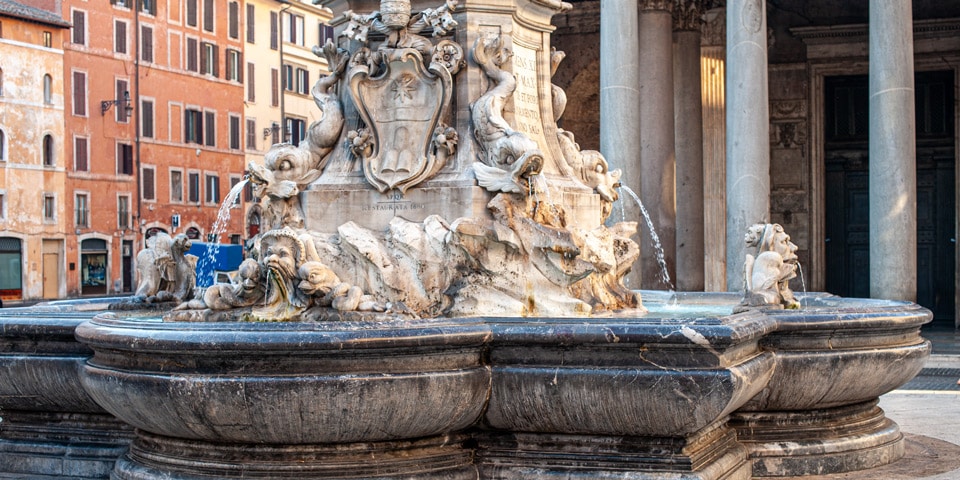
The present basin is stone, installed during the 1711 redesign in place of della Porta’s marble basin. Four dolphins support the central plinth and obelisk. The masks along the edge recall the 1575 composition and use the same decorative language as the Fountain of the Moor in Piazza Navona.
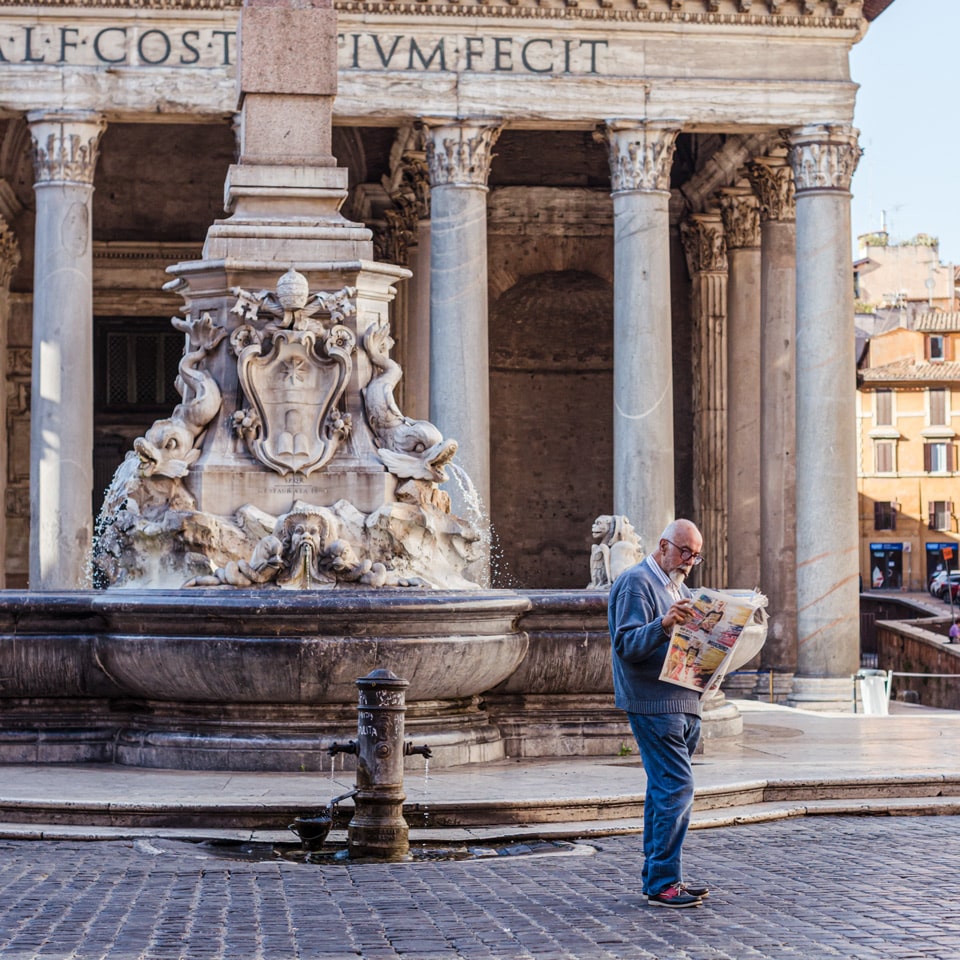
I prefer seeing the fountain before 9 am. The eastern light reaches the obelisk at a low angle, and there is usually enough room to inspect the inscriptions and coats of arms. By mid-morning, café seating and tour groups occupy much more of the square.
Water still reaches the fountain through the Aqua Virgo, the aqueduct first built under Agrippa in 19 BC. From Piazza della Rotonda, the Trevi Fountain is about 850 metres away. The route makes it easy to compare two very different monuments supplied by the same ancient water system.
RomeItaly.guide © 2026. Created with love by Roman experts and guides.