RomeItaly.guide
  • About us
  • Where to Stay
    • Best 3-Star Hotels
    • Hostels for Solo Travellers
    • Hotels with Views
    • Near the Colosseum
    • Near Termini Station
  • Ancient Sites
    • Baths of Diocletian
    • Castel Sant’Angelo
    • Colosseum
    • Pantheon
    • Roman Forum
  • Visiting Vatican
    • Sistine Chapel
    • Vatican Museums
    • St Peter’s Basilica
    • St Peter’s Dome
  • Museums & Galleries
    • Ara Pacis Augustae
    • Borghese Gallery
    • Palazzo Farnese
  • Hills
    • Aventine
    • Capitoline
    • Janiculum
    • Pincian
  • Fountains & Squares
    • Acqua Paola
    • Altar of the Fatherland
    • Bernini’s Elephant
    • Four Rivers Fountain
    • Piazza Navona
    • Spanish Steps
    • Turtle Fountain
    • Trevi Fountain
  • Parks & Gardens
    • Knights of Malta Keyhole
    • Orange Garden
    • Rose Garden
    • Villa Doria Pamphilj
    • Villa Borghese
    • Villa Sciarra
    • Umbrella Pine Trees
  • How to Get
    • Fiumicino Airport ➡️ Rome
  1. Home /
  2. Information About Rome – FAQ

Why Does the Colosseum Have Holes?

Written by: Kate Zusmann

Holes in the Colosseum’s stonework

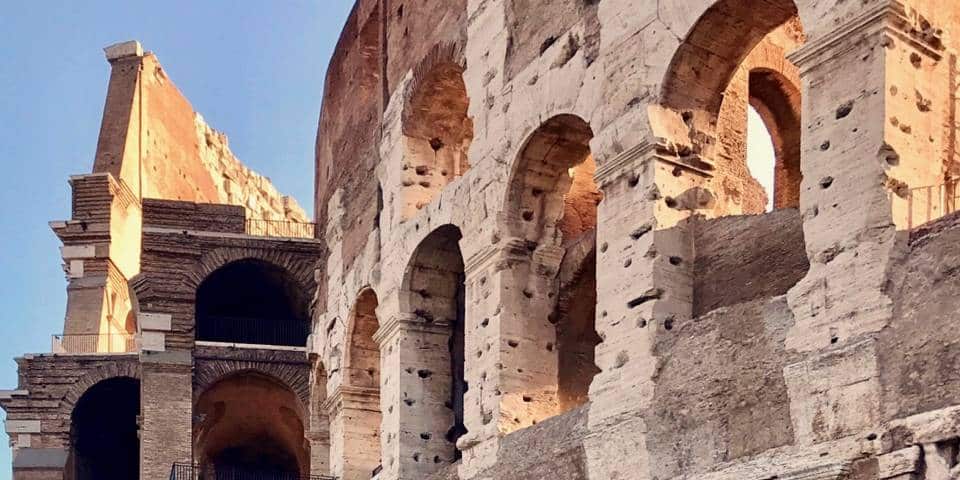
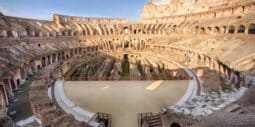
The Roman Colosseum is covered in “mysterious” holes, but most of them are not a mystery at all. They are the scars of systematic stone-robbing after antiquity, when the monument stopped functioning as an arena and gradually became a convenient quarry.

Many of the holes were left behind when people pried out the iron clamps and metal fittings that once held the structure and its decorative elements together.

During construction, the builders connected heavy travertine blocks with iron clamps and dowels set into carved pockets. Those metal ties helped lock masonry courses together and secure architectural elements without relying on thick mortar joints. When Rome’s population and resources declined after the empire’s peak, iron became valuable. Over time, workers chiselled into the stone to extract the metal, often leaving the familiar rectangular or wedge-like cavities you can still see across the walls.

Other holes reflect a second wave of reuse. The Colosseum once had extensive marble revetment and decorative stonework. As centuries passed, much of that material was stripped away and reused elsewhere in Rome. Travertine blocks and marble from the amphitheatre contributed to later construction projects, including church and palace building campaigns in the Renaissance and later periods. The precise origin of stone used in any one building needs separate evidence.

Natural disasters also played a role. Strong earthquakes, especially medieval shocks, damaged the structure and caused major collapses. Once large sections fell, they became even easier to dismantle and cart away. In other words, earthquakes weakened the building, but people removed what was left usable and left the “pockmarks” behind.

If you want the bigger picture, from its construction under the Flavians to abandonment, reuse and modern conservation, read the full timeline at Colosseum.how

Author: Kate Zusmann

Kate Zusmann

I’ve lived in the Eternal City for the past 12 years. They say every corner of Rome holds a story, and I’m here to share some of the most fascinating historical facts and local legends.

Dive Deeper into Rome's Stories

Vatican Museums Visitor Guide

992138 travellers read

The Vatican Museums

Rome Italy Tourist Attractions

29431 travellers read

Top 30 Attractions in Rome

Beste Hotels in Rom mit Aussicht

11440 travellers read

Best Hotels with Views in Rome

How to Book Vatican Museums & Sistine Chapel Tickets

16778 travellers read

How to Book Vatican Museums & Sistine Chapel Tickets

St. Peter's Basilica dome seen through the trees from the far side of Piazzale Garibaldi, Rome

12113 travellers read

Janiculum Hill (Gianicolo): Viewpoints and Walking Route

Vatican City in Rome

34 travellers read

What Is the Area of Vatican City?

The Colosseum in Rome

30 travellers read

Why Is the Colosseum a Wonder of the World, and What Is It Famous For?

The Colosseum in Rome

38 travellers read

When Was the Colosseum Built and Finished?

View across Vatican City

24 travellers read

What Is the Capital of Vatican City?

Show more

About us

About us ROME.US Authors Kate Zusmann and Artur Jakucewicz
We're Kate and Artur, a duo bound by our shared fascination with the Eternal City – Rome. Our paths, driven by a mutual passion for its timeless stories and architectural marvels, converged in a way we had never imagined.

Explore Rome

  • The Fountain of the Four Rivers Piazza Navona Rome

    Fountain of the Four Rivers

  • What to wear to the Colosseum?

    What to Wear to the Colosseum?

  • Visiting Sistine Chapel

    Sistine Chapel

  • Sights of the Aventine Hill in Rome

    Aventine Hill

  • Kapitolinischer Hügel

    Capitoline Hill

RomeItaly.guide

This website uses cookies. For more info read the cookies policy

RomeItaly.guide © 2026. Created with love by Roman experts and guides.

  • American English
  • Deutsch
  • Polski
  • Français