RomeItaly.guide
  • About us
  • Where to Stay
    • Hotels with Views
  • Visiting Vatican
    • Sistine Chapel
    • Vatican Museums
    • St Peter’s Basilica
    • St Peter’s Dome
  • Fountains & Squares
  • How to Get
Home / Information About Rome – FAQ /

Why the Colosseum is Important?

Written by: Kate Zusmann

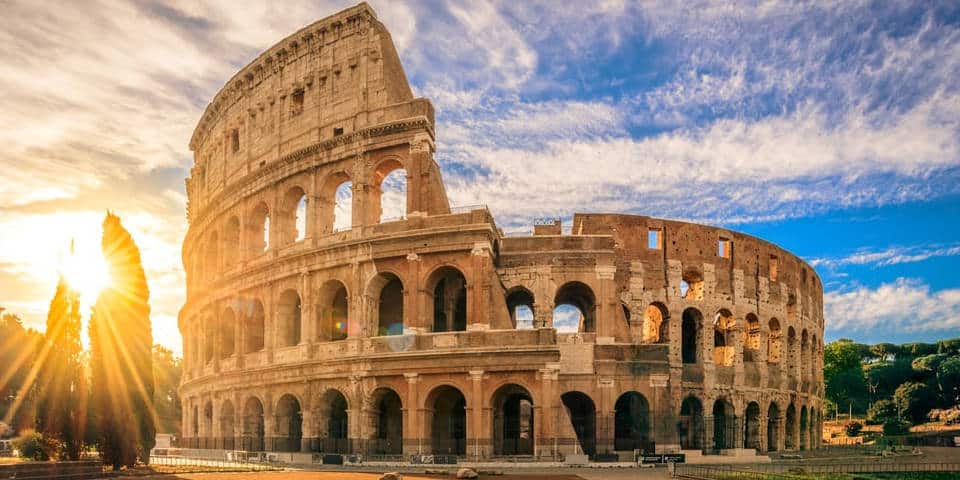
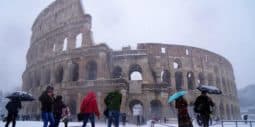
The Colosseum in Rome

The Colosseum is important because it is the largest and most influential amphitheatre of ancient Rome—a building that shaped how mass entertainment, politics and engineering operated in the Roman Empire. Its formal name is the Flavian Amphitheatre. Construction began under Vespasian around AD 72 and the monument was inaugurated under Titus in AD 80 with games said to have lasted 100 days.

The nickname “Colosseum” likely comes less from its size and more from what stood nearby: the Colossus of Nero, a gigantic ancient statue that became a famous local reference point. Over time, the amphitheatre took the name that people associated with the area.

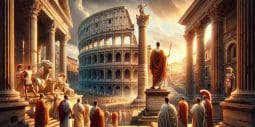
The Colosseum became the empire’s best-known stage for gladiatorial combat and large-scale public spectacles.

What makes the Colosseum truly exceptional is how it combined scale with efficiency. The building was designed to manage enormous crowds through around 80 numbered entrances, ring corridors and stair systems that funnelled spectators directly to their seating tiers. At full capacity, it could hold roughly 50,000–80,000 people, depending on how seating is calculated.

The events inside were equally monumental. Gladiator combats drew the biggest attention, but the programme also included wild animal hunts and staged punishments, featuring animals brought from across the empire. Many spectacles were offered as public entertainment, and in various periods entry was free, funded as a political statement of imperial generosity.

If you want a quick list of bite-sized highlights—engineering details, surprising numbers and lesser-known stories—read more at Colosseum facts.

Author: Kate Zusmann

Kate Zusmann

I’ve lived in the Eternal City for the past 12 years. They say every corner of Rome holds a story, and I’m here to share some of the most fascinating historical facts and local legends.

Dive Deeper into Rome's Stories

Vatican Museums Visitor Guide

989822 travellers read

The Vatican Museums

Rome Italy Tourist Attractions

27696 travellers read

Top 30 Attractions in Rome

Beste Hotels in Rom mit Aussicht

9490 travellers read

Best Hotels with Views in Rome

How to Book Vatican Museums & Sistine Chapel Tickets

13646 travellers read

How to Book Vatican Museums & Sistine Chapel Tickets

when vatican was built

6478 travellers read

When was the Vatican Built?

What to wear to the Colosseum?

11656 travellers read

What to Wear to the Colosseum?

Eternal City – Why Is Rome Called This?

3569 travellers read

Eternal City – Why Is Rome Called This?

Where is The Sistine Chapel in Rome?

4197 travellers read

Where to Buy Sistine Chapel Tickets?

How many Colosseums are there in Italy?

7365 travellers read

How many Colosseums are there in Italy?

Show more

About us

About us ROME.US Authors Kate Zusmann and Artur Jakucewicz
We're Kate and Artur, a duo bound by our shared fascination with the Eternal City – Rome. Our paths, driven by a mutual passion for its timeless stories and architectural marvels, converged in a way we had never imagined.

Explore Rome

  • The Colosseum in Rome

    Colosseum

  • San Carlo alle Quattro Fontane Rome Francesco Borromini

    San Carlo alle Quattro Fontane

  • The Fountain of the Four Rivers Piazza Navona Rome

    Fountain of the Four Rivers

  • Große Synagoge von Rom

    The Great Synagogue of Rome

  • the best italian ice cream

    Where to Find the Best Gelato in Rome – Local Tips & Top Spots

RomeItaly.guide

This website uses cookies. For more info read the cookies policy

RomeItaly.guide © 2026. Created with love by Roman experts and guides.

  • American English